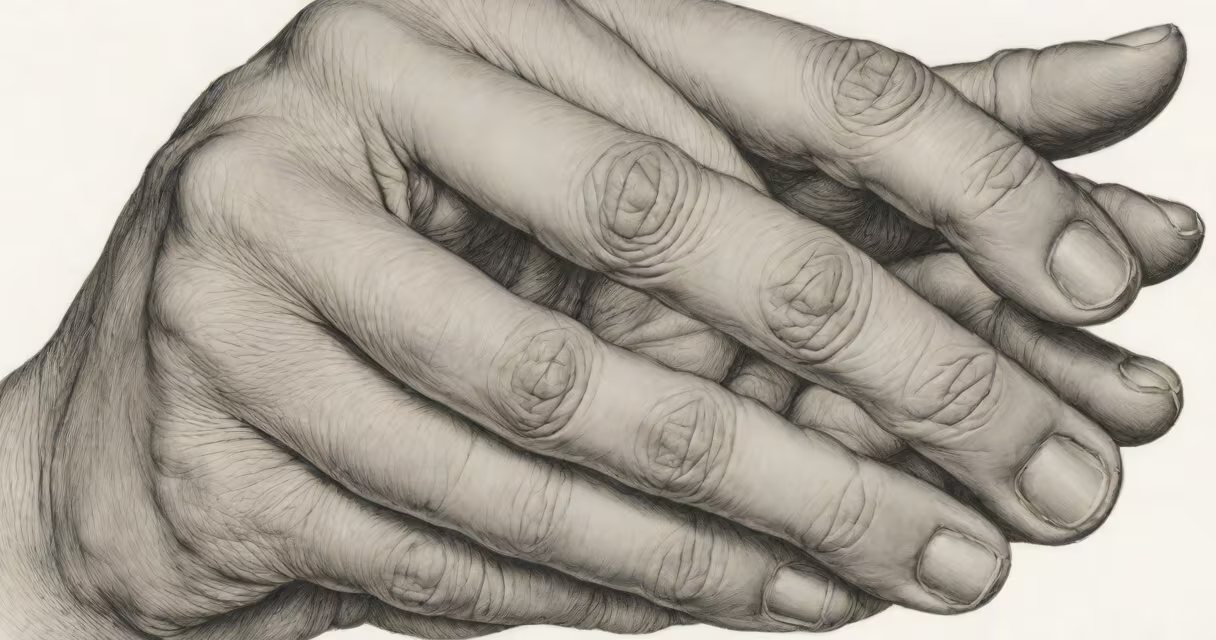
Acromegaly means abnormal enlargement of bones and tissues caused by prolonged exposure to excess growth hormone, typically due to a benign tumor in the pituitary gland. It develops slowly over years and affects adults, not children.
The term comes from Greek roots: "acro" meaning extremities (hands, feet, face), and "megaly" meaning enlargement. It is not a condition of childhood overgrowth-those cases are called gigantism. Acromegaly occurs only after the epiphyses (growth plates) have closed, so height doesn't increase. Instead, soft tissue and bone in the hands, feet, and facial features grow disproportionately.
According to the National Institute of Diabetes and Digestive and Kidney Diseases (NIDDK), acromegaly affects about 60 in 1 million people. It most often appears between ages 30 and 50, though diagnosis is frequently delayed by 5 to 10 years due to gradual symptom onset.
Acromegaly results from sustained high levels of growth hormone (GH), which the pituitary gland produces. GH stimulates the liver to release insulin-like growth factor 1 (IGF-1), responsible for tissue and bone growth. When GH remains elevated, IGF-1 stays high, leading to uncontrolled growth in connective tissues, cartilage, and bones.
A pituitary adenoma-usually a noncancerous tumor-causes over 95% of cases. These tumors secrete excess GH directly into the bloodstream. The remaining cases stem from ectopic GH production, such as tumors in the lungs or pancreas, though this is rare.
Without treatment, excess GH disrupts metabolism, increases cardiovascular risk, and can lead to diabetes, sleep apnea, and joint degeneration. A 2021 study in *The Journal of Clinical Endocrinology & Metabolism* found that untreated acromegaly reduces life expectancy by an average of 10 years due to heart disease and stroke.
There are two primary categories based on origin:
| Type | Source | Prevalence | Key Feature |
|---|---|---|---|
| Pituitary acromegaly | Pituitary adenoma | ~95% | Benign tumor secreting GH |
| Ectopic acromegaly | Non-pituitary tumor (e.g., lung, pancreas) | <5% | GH secretion not from pituitary |
Genetic forms exist but are extremely rare. McCune-Albright syndrome, for example, involves mutations in the GNAS gene and can cause acromegaly-like symptoms, but it's not true acromegaly. True acromegaly is not inherited-it arises sporadically.
One overlooked distinction: acromegaly is not the same as gigantism. Gigantism occurs when excess GH begins before puberty, when growth plates are still open. This leads to extreme height. Acromegaly happens after those plates close, so height remains unchanged. Only the hands, feet, jaw, and skull expand.
Early signs are subtle and often dismissed. Patients may notice their rings no longer fit, shoes becoming tight, or facial features changing-brow thickening, nose widening, lips thickening. Joint pain, fatigue, and excessive sweating are common early complaints.
Diagnosis relies on blood tests measuring IGF-1 and GH levels. A glucose suppression test confirms excess GH: normally, glucose suppresses GH, but in acromegaly, GH remains high. MRI scans identify pituitary tumors. The Mayo Clinic notes that 80% of acromegaly patients have a tumor visible on MRI.
For example, a 42-year-old woman presented with worsening joint pain and swollen hands. Her IGF-1 was 2.3 times the upper limit of normal. A fasting GH level of 2.1 ng/mL (normal: <1.0) failed to suppress after oral glucose load. An MRI revealed a 1.2 cm pituitary macroadenoma. She was diagnosed with acromegaly.
Acromegaly is managed by endocrinologists specializing in pituitary disorders. Treatment aims to normalize GH and IGF-1 levels, reduce tumor size, and relieve symptoms. Options include surgery, medication, and radiation.
Surgical removal of the pituitary tumor via transsphenoidal surgery is first-line therapy. Success rates exceed 80% in experienced centers. If surgery fails or isn't possible, medications like somatostatin analogs (octreotide, lanreotide) or GH receptor blockers (pegvisomant) are used. Radiation therapy is reserved for persistent cases.
One non-obvious fact: even after successful treatment, patients remain at higher risk for cardiovascular disease. A 2023 review in *Endocrine Reviews* showed that normalized hormone levels do not fully reverse cardiac remodeling. Long-term monitoring is essential.
Acromegaly is often mistaken for arthritis, carpal tunnel syndrome, or simply aging. Enlarged hands and feet may be attributed to weight gain or fluid retention. Facial changes resemble chronic acne or steroid use. Misdiagnosis delays care by years.
Another confusion: acromegaly is not related to hyperthyroidism or adrenal disorders. While both involve hormone imbalances, acromegaly specifically involves GH and IGF-1. Testing for thyroid-stimulating hormone (TSH) or cortisol won't detect it.
I once observed a patient who had worn the same ring for 15 years until it wouldn't fit. He assumed his hands had swollen due to gout. Blood work showed IGF-1 3.2× ULN. MRI confirmed a pituitary tumor. After surgery, his ring fit again-though he'd lost 10 pounds in the process.
With timely intervention, most patients achieve biochemical remission (normal GH/IGF-1). Survival rates match the general population when treated early. However, untreated acromegaly raises mortality from heart failure, stroke, and cancer.
Long-term follow-up is critical. Even after remission, patients need annual testing for recurrence and screening for comorbidities like diabetes and hypertension. The European Society of Endocrinology recommends lifelong surveillance.
If you're exploring 10w30 what does it mean, consider how different medical terms reflect distinct conditions. Similarly, ach what does it mean refers to a different concept entirely-acetylcholinesterase deficiency, not hormone excess.
Understanding what acromegaly means involves recognizing it as a slow, systemic disorder driven by excess growth hormone. Early detection prevents irreversible damage. Awareness of physical changes and prompt medical evaluation are important steps toward recovery.