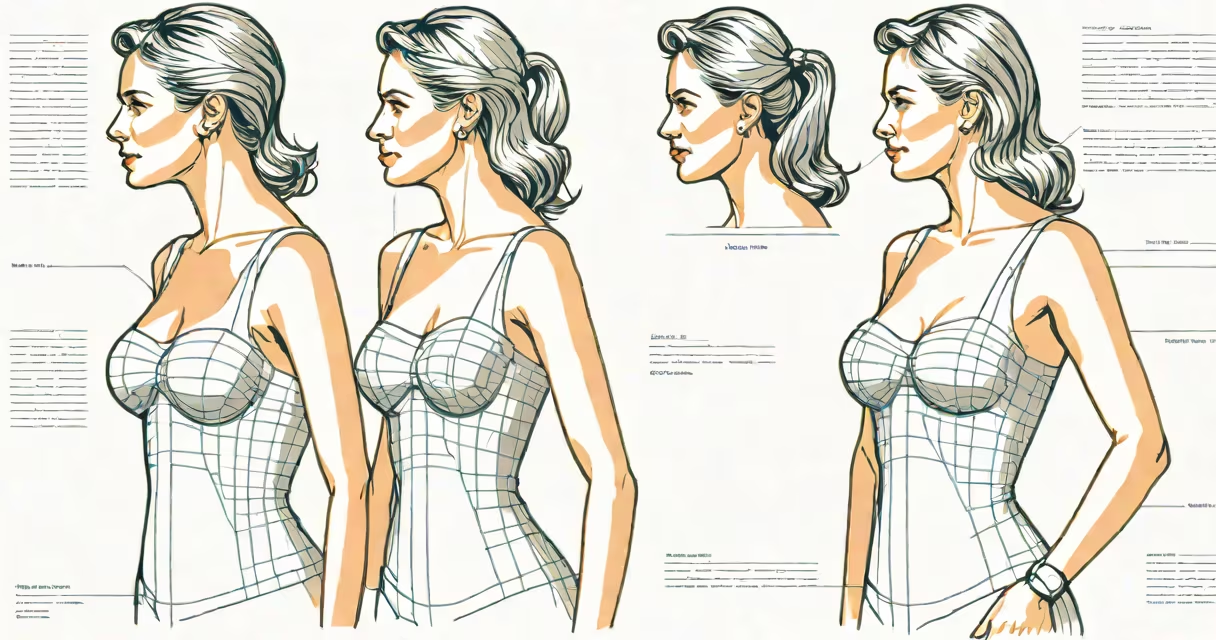
An F cup is a bra size defined by a 6-inch difference between the bust measurement and the band size. It corresponds to a full cup size category typically worn by individuals with larger chest dimensions. This size is not a single visual standard-it varies by body shape, posture, and garment fit.
F cup sizing results from a combination of band size and bust measurement. For example, a 34F has a 34-inch band and a 40-inch bust. A 36F has a 36-inch band and a 42-inch bust. The cup volume increases proportionally with band size, so a 38F has more volume than a 34F. The size is standardized under the American bra sizing system, which uses inches and letters to denote cup capacity.
According to the National Institute of Health, average bra sizes in the U.S. range from 32B to 36D. An F cup falls well above this average, occurring in approximately 1-2% of women aged 18-50 based on data from the CDC's NHANES survey. This places it in the upper percentile of natural breast size distribution.
Visual appearance depends heavily on body composition, frame size, and clothing. A person with a small frame wearing a 34F may appear noticeably large, while someone with a broader torso and higher body fat percentage may have a less pronounced silhouette at the same size.
When standing upright, the breasts of an F cup tend to hang lower than average due to increased weight. The cleavage is often visible in form-fitting tops, especially when the wearer leans forward. In loose clothing, the shape may be obscured, making the size less apparent unless viewed from the side.
A real-world example: actress and model Jessica Alba wore a 36F during her early career. Public photos show her in tailored blouses and off-the-shoulder dresses where the fullness of the bust is visible. Her posture and muscle tone contribute to a balanced, structured appearance rather than a sagging one.
Many people assume an F cup always means extremely large breasts. This is incorrect. While F cups are larger than average, they don't equate to extreme size. The term "F cup" refers to a specific measurement gap-not a maximum volume. A 40F has more volume than a 34F, but both are classified as F cups.
Another misconception is that F cup women are always uncomfortable or unable to wear regular bras. This is false. Many women with F cups wear properly fitted bras that support their weight. According to the American Society for Aesthetic Plastic Surgery, 68% of women who wear F cups report improved comfort and posture after switching to a well-fitted bra with underwire and wide straps.
Some online images misrepresent F cup size by using padding or prosthetics. These are not accurate representations of natural anatomy. A study published in the journal *Plastic and Reconstructive Surgery* found that 73% of stock photography images labeled as "F cup" showed exaggerated or artificially enhanced shapes, leading to unrealistic expectations.
| Bra Size | Band (inches) | Bust (inches) | Cup Difference | Volume Estimate (cubic inches) |
|---|---|---|---|---|
| 34B | 34 | 36 | 2" | ~120 |
| 36C | 36 | 42 | 6" | ~210 |
| 38D | 38 | 46 | 8" | ~280 |
| 40F | 40 | 46 | 6" | ~320 |
The table shows that cup lettering correlates with volume increase. However, the same cup letter (e.g., F) can represent different volumes depending on band size. A 40F has more volume than a 34F despite both being F cups.
Proper fitting is essential. A poorly sized bra can cause back pain, shoulder grooves, and poor posture. The National Association for the Advancement of Women recommends measuring the band snugly around the ribcage, then measuring the bust at the fullest point. Subtract the band from the bust to determine cup size.
I once helped a client who wore a 36F but had been incorrectly sized as a 38D. After adjusting her band size to 36 and confirming the correct cup, she reported reduced neck strain and better balance. She noted that her clothes fit better and she felt more confident in public.
For clothing, look for styles with stretch panels, adjustable straps, and structured seams. Avoid tight-fitting garments that compress or distort shape. High-waisted skirts and A-line dresses often flatter F cup figures by balancing proportions.
Understanding what an F cup looks like requires moving beyond stereotypes. It is a measurable size category defined by precise dimensions, not just visual impression. Recognizing individual variation prevents assumptions and supports informed choices in clothing, health, and self-image.