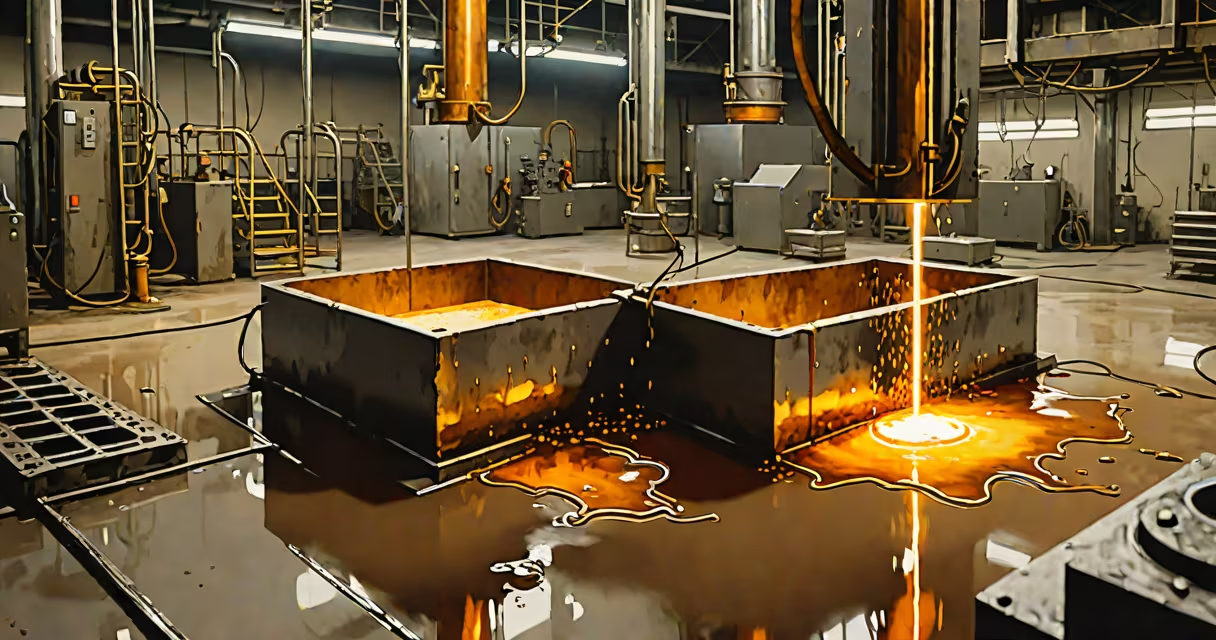
A foundry is a manufacturing facility where molten metal is cast into shapes using reusable or disposable molds. These facilities produce metal components ranging from engine blocks to turbine blades, relying on precise temperature control and material science.
Foundries operate across multiple industries, including automotive, aerospace, construction, and energy. They change raw metals-primarily iron, steel, aluminum, and bronze-into solid forms through controlled cooling. The process begins with melting scrap or virgin metal in a furnace, then pouring the liquid into a mold cavity shaped to match the desired final product.
The term "foundry" originates from the Old French *fonderie*, meaning "to pour," reflecting the core action of the process. Modern foundries use automation, computer modeling, and quality testing to ensure consistency and reduce defects. According to the American Foundry Society, over 60% of U.S. castings are produced in facilities certified under ISO 9001 standards, emphasizing precision and traceability.
Each casting cycle follows a sequence: pattern creation, mold making, melting, pouring, cooling, shakeout, cleaning, and inspection. A pattern-a full-scale model of the final part-is used to form a mold cavity. This pattern may be made from wood, plastic, or metal, depending on volume and complexity.
Mold materials vary. Sand casting uses silica sand mixed with binders; investment casting uses ceramic shells around wax patterns. Die casting employs reusable metal dies under high pressure. The choice depends on part geometry, required tolerances, and production volume.
For example, a diesel engine cylinder block requires high strength and thermal resistance. A gray iron casting in a green sand mold ensures dimensional stability and cost efficiency. The mold is packed tightly around the pattern, then the pattern is removed. Molten iron at ~1,400°C is poured into the cavity and cooled slowly to prevent cracking. After solidification, the mold is broken away, and the casting is cleaned and inspected for porosity or shrinkage.
Foundries are classified by the metal they process and the method used. The primary categories include:
| Type | Primary Metal | Process | Typical Use |
|---|---|---|---|
| Gray Iron Foundry | Iron | Sand casting | Engine blocks, brake rotors |
| Aluminum Die Casting | Aluminum | High-pressure die casting | Automotive housings, electronics enclosures |
| Investment Casting | Stainless steel, nickel alloys | Ceramic shell molds | Turbine blades, medical implants |
| Continuous Casting | Steel, aluminum | Direct solidification into billets | Raw material for rolling mills |
Not all foundries are large-scale. Small job shops may serve local markets with custom castings. For instance, a machine shop in Ohio produces brass valve bodies for plumbing systems using permanent mold casting. Each piece is hand-inspected for surface integrity and dimensional accuracy within ±0.1 mm tolerance.
A lesser-known fact: some foundries recycle up to 95% of scrap metal. The U.S. Environmental Protection Agency reports that recycling one ton of steel saves 2,500 kWh of electricity compared to primary production. This makes foundries critical nodes in circular manufacturing systems.
Foundries supply components for heavy machinery, power plants, and transportation equipment. An electric vehicle manufacturer uses aluminum die-cast battery trays, reducing weight by 40% compared to stamped steel. These parts undergo X-ray inspection to detect internal voids before assembly.
Many confuse foundries with metal fabrication shops. Fabrication involves shaping solid metal via cutting, bending, or welding. Foundries start with molten metal and rely on solidification physics. A fabricated steel beam differs structurally from a cast iron gear-each has distinct failure modes and performance characteristics.
Another misconception is that all castings are rough. Modern CNC machining centers often finish cast parts to tight tolerances. A turbine housing cast in a vacuum-assisted investment process may require only 0.5 mm of material removal to achieve aerodynamic smoothness.
I visited a medium-sized aluminum die casting plant in Michigan during a production run for a drone motor housing. The machines operated at 120 cycles per hour. Molds were preheated to 200°C to prevent thermal shock. After ejection, each part was automatically weighed and measured. Defective units triggered a rejection signal and were sent to re-melt.
One batch failed due to trapped air in the mold. The defect appeared as a small void near the mounting flange. The root cause was a faulty vent design. Engineers adjusted the mold's venting system and ran a test cycle. The second batch passed all quality checks. This incident highlighted how small design flaws in mold geometry can lead to costly rework.
Foundries are not relics of industrial history. They remain essential in advanced manufacturing. The U.S. Department of Energy estimates that 70% of U.S. industrial output relies on cast components. From wind turbines to MRI scanners, the invisible strength of cast metal supports modern infrastructure.
Understanding what a foundry means includes recognizing its role in both legacy and emerging technologies. Whether producing a 100-pound engine block or a 5-gram smartphone frame, the principles of controlled solidification remain central. For those exploring 10W30 what does it mean, consider how lubricant viscosity affects engine wear-just as metal purity affects casting integrity.
When evaluating industrial processes, clarify whether a component was forged, machined, or cast. The difference impacts durability, cost, and repairability. For deeper insight into financial transaction systems, learn more about ACH transfers and their role in business payments.