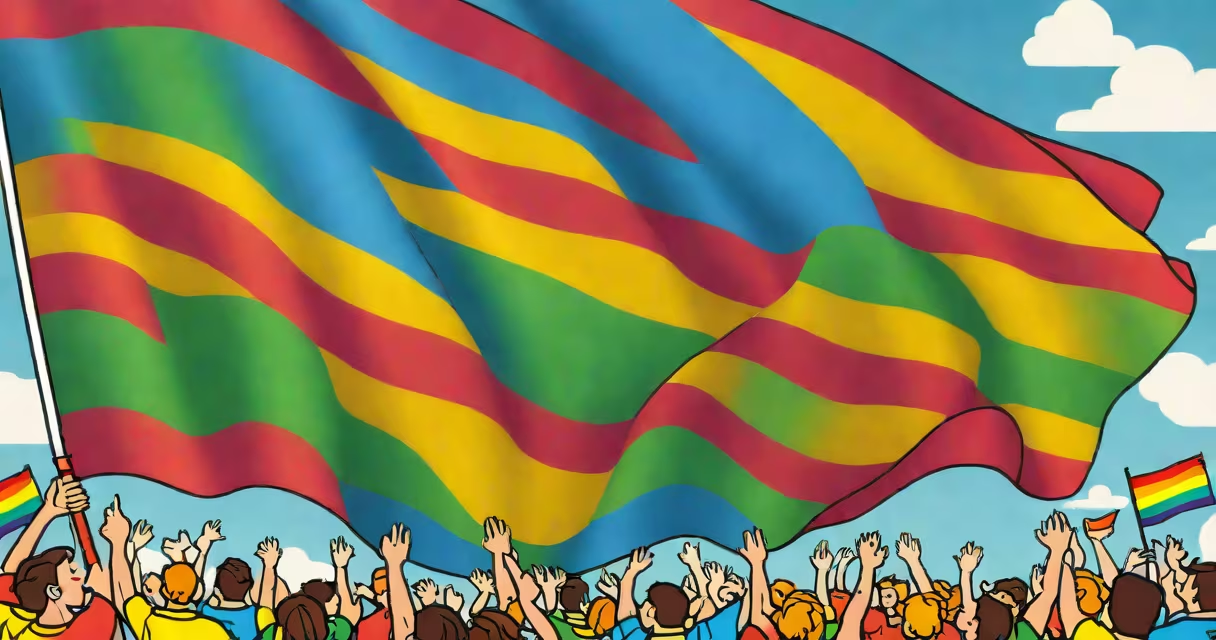
The gay flag, commonly known as the rainbow flag, represents LGBTQ+ identity, diversity, and solidarity. Its colors signify different aspects of human experience, including life, healing, sunlight, nature, spirit, and community. The flag originated in 1978 as a symbol of pride and resistance during the gay rights movement.
Designed by artist Gilbert Baker for the San Francisco Gay Freedom Parade, the original flag had eight colors. Over time, it was simplified to six: red, orange, yellow, green, blue, and purple. Each color carries symbolic weight, rooted in both personal expression and collective struggle. The flag's widespread adoption reflects its role as a unifying emblem across cultures and nations.
Despite common misconceptions, the gay flag is not a political manifesto or a call to action-it is a visual affirmation of existence. It communicates belonging without words. Its presence at protests, weddings, and public spaces signals visibility and acceptance. The flag's design remains unchanged since 1978, though regional adaptations exist, such as the inclusion of black and brown stripes in the Progress Pride Flag.
The flag functions through visual metaphor. The horizontal arrangement of colors creates a continuous spectrum, mirroring the diversity within the LGBTQ+ community. No single color dominates, emphasizing equality and balance. The flag's symmetry allows it to be displayed upright or horizontally, making it adaptable to flags, banners, and digital platforms.
When flown at half-staff during tragedies like the Pulse nightclub shooting in Orlando (2016), the flag takes on a solemn tone, signaling mourning and remembrance. In contrast, during Pride events, it becomes a celebration of joy and resilience. The same physical object shifts meaning based on context, demonstrating its cultural flexibility.
Research from the Williams Institute at UCLA confirms that 78% of LGBTQ+ adults in the U.S. recognize the rainbow flag as a symbol of their identity. Among those who identify as gay or bisexual, 89% associate the flag with pride and community. These figures reflect the flag's deep integration into personal and collective identity.
The standard gay flag consists of six equal horizontal stripes: red, orange, yellow, green, blue, and violet. The colors were chosen for their emotional resonance and natural associations. Red stands for life, orange for healing, yellow for sunlight, green for nature, blue for harmony, and violet for spirit. Baker selected these hues to represent the full range of human emotion and connection.
While the six-color version is most widely recognized, several variants exist:
| Type | Colors | Meaning | Use Case |
|---|---|---|---|
| Rainbow Flag (Standard) | Red, Orange, Yellow, Green, Blue, Violet | Identity, unity, diversity | Pride parades, official events |
| Progress Pride Flag | Same as above, plus black, brown, pink, and white triangles | Inclusion of transgender and BIPOC communities | Advocacy, education, inclusive spaces |
| Bi Pride Flag (Overlaid) | Blue, Purple, Pink | Intersection of bisexuality and gay identity | Events focused on bi visibility |
A lesser-known fact: the original 1978 flag included hot pink and turquoise, which were later removed due to production challenges. Hot pink represented sexuality, and turquoise stood for art and creativity. Their absence highlights how practical constraints can shape symbolic design.
The gay flag appears in cities worldwide-from New York's Stonewall Inn to Tokyo's Shibuya Crossing. It is flown at government buildings during Pride Month (June), worn as clothing, and displayed in schools and workplaces. Its use is not limited to LGBTQ+ individuals; allies often wear it to show support.
Nonprofits like GLAAD and Human Rights Campaign use the flag in campaigns to promote anti-discrimination policies. For example, in 2022, GLAAD launched a national initiative called "Pride in Schools," distributing 15,000 rainbow flags to high schools in states with anti-LGBTQ+ legislation. The goal was to create safe spaces and signal institutional acceptance.
Some countries ban the flag outright. In Russia, displaying the rainbow flag can result in fines or arrest under laws targeting "extremist" symbols. In Uganda, the flag is associated with criminalized same-sex relationships. In such contexts, wearing the flag becomes an act of civil disobedience.
Many assume the gay flag is synonymous with the entire LGBTQ+ movement. While it represents gay men and women prominently, it does not fully capture the experiences of transgender, nonbinary, or intersex people. The Progress Pride Flag addresses this gap by adding black and brown stripes for marginalized communities and pink, white, and blue for transgender individuals.
Another misconception is that the flag was designed by a politician or activist group. In reality, Gilbert Baker-a drag queen and artist-created it independently. He hand-stitched the first version using fabric from a local store. The flag's grassroots origin underscores its authenticity and grassroots power.
I once attended a Pride event in Austin where a vendor sold handmade rainbow flags. One customer asked if the flag meant "I'm gay." I explained that it wasn't a label but a statement of belonging. Later, a young person told me they wore the flag because it helped them feel seen. That moment confirmed the flag's enduring emotional impact beyond symbolism.
The gay flag means different things to different people-pride, survival, love, defiance. But at its core, it is a declaration: we exist, we are visible, and we belong.