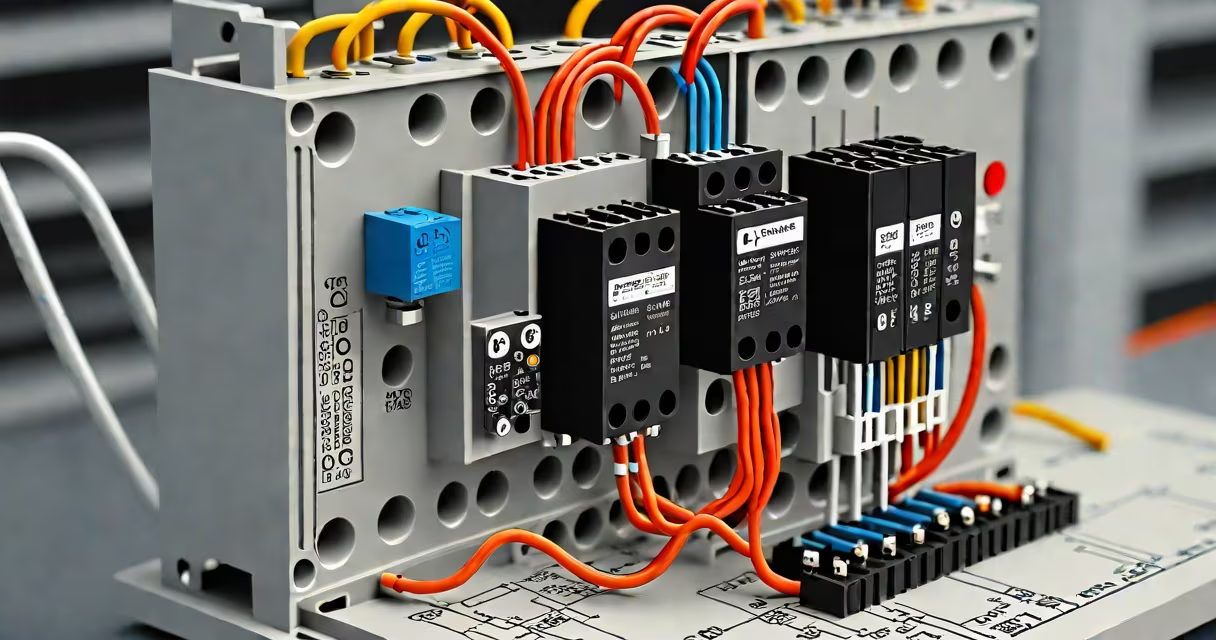
A contactor in HVAC is an electrically operated switch that controls power to large components like compressors and blower motors. It isolates low-voltage control signals from high-current loads, enabling safe and efficient operation of heating and cooling systems.
Contactor operation begins when a thermostat sends a 24-volt signal through a control circuit. This energizes the contactor's electromagnetic coil, pulling metal contacts together. Once closed, the contacts allow full line voltage (typically 208-240V AC) to flow to the connected motor or compressor. When the thermostat stops calling for cooling or heating, the coil de-energizes, and spring-loaded contacts open, cutting power.
Contactor design prioritizes durability under frequent switching cycles. Most HVAC contactors use silver alloy contacts to resist welding and erosion caused by arcing during switching. They're rated for specific current loads-commonly 30A or 60A-and must match the motor's full load amperage (FLA) and locked rotor amperage (LRA).
Contactor function is governed by magnetic actuation. When the control voltage reaches the coil, it generates a magnetic field that moves an armature. This armature connects the stationary and moving contacts, completing the high-power circuit.
The coil is isolated from the main circuit. A typical HVAC system uses a 24V AC transformer to step down line voltage. This low-voltage signal safely activates the contactor without requiring direct handling of dangerous line voltages. The control circuit includes safety interlocks such as pressure switches and limit switches that prevent the contactor from closing unless conditions are safe.
For example, a refrigerant pressure switch may block the contactor if pressure drops too low, preventing compressor startup. This protects against damage from oil starvation or excessive wear. Without these safeguards, a contactor could energize a motor with insufficient lubrication, leading to rapid failure.
Three primary types serve different HVAC applications based on load size and environmental conditions.
| Type | Use Case | Current Rating | Common Voltage |
|---|---|---|---|
| Single-Pole | Small blowers, auxiliary fans | 15-30A | 24V AC coil, 120/240V AC load |
| Double-Pole | Compressors, larger blowers | 30-60A | 24V AC coil, 240V AC load |
| Three-Pole | High-capacity compressors, industrial units | 60A+ | 24V AC coil, 240V AC load |
Double-pole contactors are most common in residential air conditioners and heat pumps. They interrupt both hot and neutral lines, improving safety. Single-pole units are used for fan motors where neutral interruption isn't required.
Environmental protection matters. Outdoor units often use contactors with NEMA 3R enclosures to resist moisture and dust. Indoor units may use NEMA 1 enclosures for basic protection. Using the wrong enclosure leads to premature failure due to corrosion or contamination.
Contactor placement follows a clear hierarchy. The control board sends a 24V signal to the contactor coil. The contactor then powers the main load-compressor, condenser fan, or indoor blower-directly from the line supply.
Consider a 3-ton split-system air conditioner. The outdoor unit contains a compressor and condenser fan. Both are controlled by separate contactors. When cooling is needed, the thermostat closes the contactor circuit for the condenser fan. After a delay, the compressor contactor closes. This sequence prevents simultaneous startup, which could trip the breaker.
Failure to coordinate startup causes inrush current spikes. A single 3-ton compressor can draw 150% of its FLA during startup. Without staged activation, the combined surge exceeds circuit capacity. Contactors manage this by enabling sequential power delivery.
Contactor failure is a leading cause of HVAC downtime. A stuck contactor can leave a compressor running continuously, causing overheating and burnout. A welded contactor cannot open, even when the thermostat calls for shutdown. This results in energy waste and potential fire risk.
Many assume contactors are interchangeable. They are not. A 30A contactor cannot replace a 60A unit in a high-load application. Overloading causes contact welding and insulation breakdown. The National Fire Protection Association (NFPA) 70E standard requires proper component sizing to prevent arc flash hazards.
Another error is assuming a contactor failure is always electrical. Physical wear on contacts leads to pitting and carbon buildup. These degrade conductivity and increase resistance. A contactor with 0.5 ohms of resistance instead of 0.05 ohms wastes energy and generates excess heat. Thermal imaging detects such issues before catastrophic failure.
One non-obvious fact: contactors don't regulate speed. They only turn circuits on or off. Speed control requires variable frequency drives (VFDs) or soft starters. A contactor cannot modulate power-it's binary. Confusing it with a VFD leads to incorrect troubleshooting.
In a 2022 service call, a homeowner reported their air conditioner ran for 10 minutes then shut off. The system reset after 15 minutes and repeated the cycle. Initial checks showed normal voltage and no error codes.
Upon inspection, the technician measured 24V at the contactor coil terminal. The coil was energized. But the compressor did not start. The technician disconnected the load side and tested continuity across the main contacts. No continuity indicated open contacts.
Further testing revealed the contactor had failed to close. The armature was physically stuck due to debris and corrosion. Replacing the contactor restored normal operation. The original unit had been installed in 2015 and showed no signs of maintenance.
This case illustrates that contactors require periodic inspection. Dust accumulation in humid environments accelerates degradation. Cleaning and lubrication of mechanical parts extend lifespan. Most manufacturers recommend checking contactors every 2-3 years during routine maintenance.
Replace a contactor if contacts show visible pitting, welding, or warping. A buzzing sound during operation indicates coil instability or loose mounting. Audible clicking without contact closure suggests internal mechanical failure.
Repair is limited to cleaning and tightening connections. Replacing worn contacts requires specialized tools and calibration. Field replacement is feasible for trained technicians. Attempting repair without proper training risks injury from live circuits.
Understanding contactor function improves system reliability. It's not just a switch-it's a critical interface between control logic and mechanical load. Proper selection, installation, and maintenance ensure long-term performance and safety.