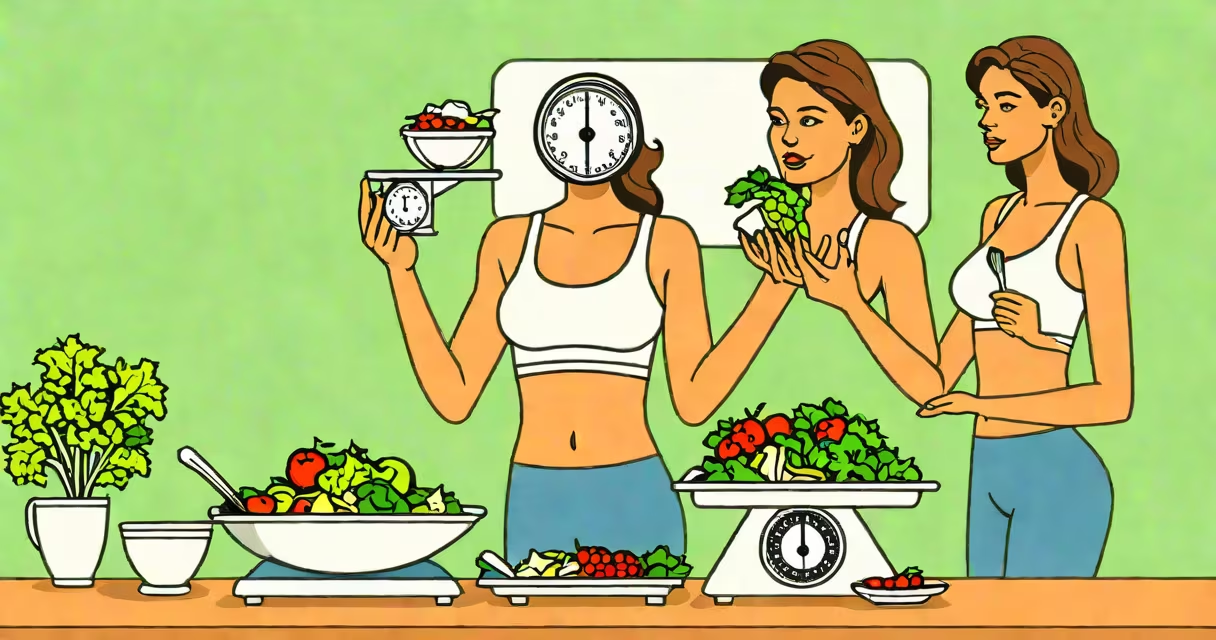
A healthy diet but not losing weight occurs when consistent nutritious eating fails to produce weight loss due to hidden calorie surplus, inaccurate tracking, or metabolic adaptation. This mismatch between food quality and energy balance disrupts fat loss despite seemingly ideal habits.
Weight loss hinges on energy deficit: burning more calories than consumed. A diet rich in vegetables, lean protein, whole grains, and healthy fats supports health and satiety but doesn't guarantee weight reduction if total daily intake exceeds maintenance needs. Even nutrient-dense meals can contribute to a surplus if portions are too large or added oils, dressings, or snacks go untracked.
For example, a person eats a salad with grilled chicken, olive oil dressing, avocado, and nuts. The ingredients are healthy, but 2 tablespoons of olive oil add 240 calories, and a quarter cup of almonds adds 200. Combined with a side of fruit and a small dessert, the meal easily surpasses 600 calories-over half the average woman's daily goal. Without logging these, the individual may believe they're eating clean while maintaining or gaining weight.
Metabolic adaptation can slow weight loss even when eating well. After prolonged calorie restriction or consistent healthy eating, the body reduces resting energy expenditure. The thyroid hormone T3 decreases, and non-exercise activity thermogenesis (NEAT)-fidgeting, posture shifts, walking-drops. These changes lower total daily energy burn by 10-15%, making further loss harder without adjusting intake or activity.
Research from the National Institutes of Health shows that participants on long-term diets experienced a 15% drop in resting metabolic rate beyond what's expected from weight loss alone. This effect persists for months after dieting ends, contributing to weight regain. A healthy diet alone doesn't reverse this adaptation-it requires strategic adjustments.
One study published in Obesity tracked 100 adults following a Mediterranean-style diet for 12 weeks. Despite improved blood markers and reduced inflammation, 40% saw no change in body weight. Analysis revealed that 30% of those individuals consumed 300-500 extra calories daily from unrecorded snacks, alcohol, or misestimated portions. The rest had metabolic slowdowns not offset by increased movement.
Several factors explain why a healthy diet fails to produce weight loss:
Another overlooked factor is sleep. Poor sleep alters cortisol and ghrelin levels, increasing hunger and reducing fat oxidation. A 2021 study in Journal of Clinical Endocrinology & Metabolism found that people sleeping less than 6 hours per night burned 10% less fat during rest compared to those sleeping 7-8 hours, even when consuming the same calories.
People often mistake a healthy diet but not losing weight for a failure of the diet itself. They assume "clean eating" should automatically lead to weight loss. But nutrition and weight management are distinct goals. A diet can be healthy-rich in fiber, vitamins, and antioxidants-while still being in energy surplus.
Some confuse "healthy" with "low-calorie." A kale salad with no dressing is low-calorie, but adding 1/4 avocado and 1/4 cup feta increases calories. Similarly, a smoothie made with spinach, banana, and almond milk can hit 400 calories-more than a typical breakfast.
Also, many equate weight loss with fat loss. Muscle gains from strength training can offset fat loss on the scale. A person may lose inches but see no change in weight. This is normal and reflects positive body composition change, not failure.
First, track actual intake using a reliable app like MyFitnessPal or Cronometer. Record everything-not just meals, but condiments, beverages, and snacks. Many people underestimate intake by 20-30% when estimating.
Second, reassess portion sizes. Use measuring cups, a food scale, or visual cues: a palm-sized protein portion, a fist-sized vegetable, a thumb-sized fat. These tools prevent overestimation.
Third, increase non-exercise activity. Walk 8,000-10,000 steps daily. Stand during calls. Take short walks after meals. NEAT can boost daily burn by 300-500 calories without structured exercise.
Fourth, consider a short-term calorie adjustment. Reduce intake by 10-15% below current maintenance level for 2-4 weeks. This creates a new deficit. Then return to maintenance to avoid metabolic slowdown.
Finally, evaluate sleep, stress, and hydration. Aim for 7-8 hours of sleep nightly. Manage cortisol through mindfulness or breathing techniques. Dehydration can mimic hunger and trigger unnecessary snacking.
One client I worked with ate a "perfect" diet-salmon, quinoa, steamed broccoli, berries-but gained 3 pounds over six weeks. We discovered she was drinking two 16-oz green juices daily, each containing 250 calories and 30g sugar. Cutting one juice and switching to water led to 1.5 lbs lost in two weeks. Her diet remained healthy; her intake just needed recalibration.
Many sources claim that "a healthy diet always leads to weight loss," which is false. The Academy of Nutrition and Dietetics states that weight loss depends on energy balance, not food quality alone. A 2022 review in Frontiers in Nutrition confirmed that 60% of people on healthy diets who didn't lose weight were consuming above their maintenance needs.
Another myth: "If I eat healthy, I don't need to count calories." That's incorrect. Calorie counting isn't about restriction-it's about awareness. Tracking helps identify where excess calories come from, especially in high-fat or high-sugar healthy foods.
Also, not all weight loss is equal. Losing water weight or muscle mass isn't sustainable. A healthy diet but not losing weight may signal the need to adjust for fat loss, not just scale movement.
| Factor | Impact on Weight Loss | Fix |
|---|---|---|
| Untracked snacks | Can add 300-600 kcal/day | Log everything in a food app |
| Large portions | Overestimates serving size by 25-50% | Use measuring tools or visual cues |
| High-sodium foods | Causes water retention | Reduce processed foods, read labels |
| Poor sleep | Reduces fat oxidation by 10% | Target 7-8 hours nightly |
If you're following a healthy diet but not losing weight, the issue likely lies in energy balance, not food quality. Reassess intake, portions, activity, and lifestyle habits. Small tweaks often restart progress.