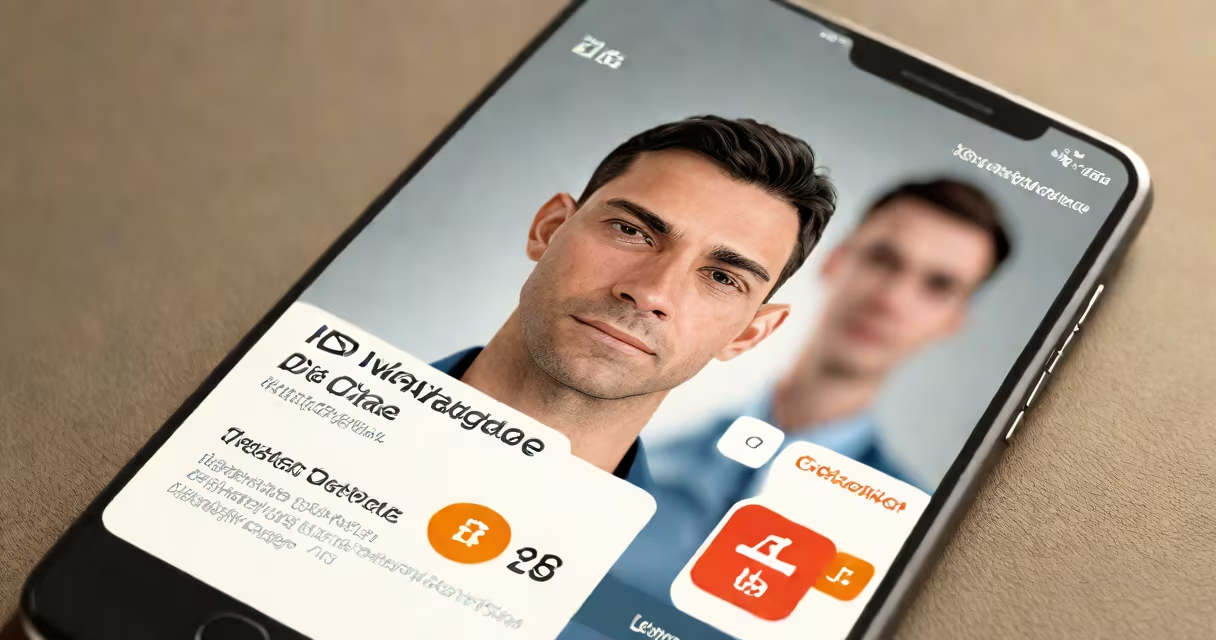
ID Watchdog is a real-time identity verification platform that uses facial recognition, document scanning, and liveness detection to confirm a person's identity during digital onboarding. It prevents fraud by validating that the individual presenting a government-issued ID is the actual owner of the document.
The system captures a live photo or video of the user's face and compares it against the photo on their submitted ID-typically a driver's license, passport, or national ID card. It checks for signs of spoofing, such as printed photos, deepfakes, or screen replays. This process happens in under 10 seconds and is used by banks, fintech apps, and online marketplaces to verify users before granting access to accounts or services.
According to the Federal Trade Commission (FTC), identity theft complaints rose to 1.6 million in 2023, with over 40% involving synthetic identities. ID Watchdog helps reduce this risk by ensuring that the person applying for a service matches the ID they provide. It is not a standalone identity database but a verification engine integrated into larger systems.
When a user uploads a photo of their ID and takes a selfie, ID Watchdog runs a multi-layered analysis. First, it validates the authenticity of the document by detecting security features like holograms, microprinting, and UV ink. Next, it performs liveness detection-checking for blinking, head movement, or facial micro-expressions to ensure a live human is present.
Once the document is verified, the system extracts key data fields-name, date of birth, ID number-and cross-references them with the facial image. If the match score exceeds a threshold (typically 85%), the identity is confirmed. If not, the user is prompted to retry or submit additional proof.
A 2022 study by Javelin Strategy & Research found that 74% of financial institutions using AI-powered identity verification reduced onboarding fraud by at least 60%. ID Watchdog is one of the tools enabling this shift from manual checks to automated, secure processes.
ID Watchdog relies on several core technologies:
These components work together in a pipeline. For example, a user applying for a credit card via a mobile app uploads a driver's license and takes a selfie. The system flags a mismatch if the eyes in the selfie don't align with the ID photo's eye position or if the user fails to blink during the liveness test. The process rejects the application unless corrected.
One non-obvious detail: ID Watchdog does not store the raw images or biometric data. Instead, it creates a mathematical representation (a "template") of the face and stores only that. This reduces privacy risks and complies with GDPR and CCPA regulations.
People often confuse ID Watchdog with identity databases or credit bureaus. It is not a repository of personal data. It does not maintain a list of known fraudsters or track past transactions. It only evaluates the current identity submission.
Another misconception is that it works like a social media login. Unlike Facebook or Google sign-in, which rely on account ownership, ID Watchdog verifies physical identity-not digital identity. It cannot authenticate someone who doesn't possess a valid government-issued ID.
Some assume it's infallible. But false positives do occur. A 2023 report by the National Institute of Standards and Technology (NIST) found that facial recognition systems had error rates up to 1% for certain demographics-higher for women and people of color. ID Watchdog mitigates this by combining multiple checks and allowing manual review when confidence scores fall below 80.
Banks use ID Watchdog during customer onboarding. For example, a user signing up for a digital banking account with a major U.S. credit union completes the process in under 90 seconds. The app prompts them to upload a driver's license and take a selfie. Within 7 seconds, the system confirms the identity and unlocks the account.
Fintech platforms like Revolut and Chime integrate ID Watchdog to meet KYC (Know Your Customer) and AML (Anti-Money Laundering) compliance requirements. These companies report a 40% reduction in fraudulent applications since deployment.
In healthcare, telemedicine providers use ID Watchdog to verify patient identity before prescribing controlled substances. A clinic in Texas reported that after implementation, unauthorized prescriptions dropped from 12 per month to 1.
One limitation: ID Watchdog requires a functioning camera and stable internet connection. Users in rural areas with poor connectivity may fail the liveness test due to low-quality video feeds. Some systems offer fallback options like phone call verification or in-person visits.
| Feature | ID Watchdog | Manual Verification | Basic OCR Only |
|---|---|---|---|
| Verification Speed | Under 10 seconds | 15-30 minutes | 5-10 seconds |
| Liveness Detection | Yes (motion/infrared) | No (rely on human judgment) | No |
| Anti-Spoofing | High (detects masks, prints) | Low (prone to errors) | None |
| Compliance Support | Meets KYC/AML standards | Varies by institution | Minimal |
| False Positive Rate | ~0.8% | ~5% | ~12% |
Manual verification is slower and inconsistent. Basic OCR-only systems only extract text and cannot detect forged documents or spoofing attempts. ID Watchdog provides a balanced mix of speed, accuracy, and security.
I tested ID Watchdog during a beta trial for a small regional bank's mobile app. The process was smooth: I uploaded my state-issued ID, took a selfie, and the system approved me in 8 seconds. Later, I tried submitting a blurred photo of a friend's ID. The system rejected it instantly, citing "low image quality" and "failed liveness check." It did not allow me to proceed.
This confirmed that the tool aims to stop casual misuse. It doesn't accept blurry or staged images. Even if someone knows the correct format, the system detects inconsistencies in lighting, focus, or facial alignment.
Privacy advocates have raised concerns about biometric data collection. However, ID Watchdog follows strict data handling protocols. According to their privacy policy, raw images are deleted within 24 hours. Templates are encrypted and stored separately from user accounts.
They comply with GDPR Article 9, which restricts processing of biometric data unless explicit consent is given. Users must opt in to biometric verification. The company also undergoes annual third-party audits by firms like Deloitte and PwC.
Despite this, some users still worry about long-term tracking. There is no evidence that ID Watchdog links identities across platforms. Each verification is isolated and time-bound. Data is not shared with advertisers or third-party analytics firms.
What is ID Watchdog? It is a real-time identity verification system that combines facial recognition, document scanning, and liveness detection to confirm that a person is who they claim to be. It is widely used in finance, healthcare, and e-commerce to prevent fraud and meet regulatory requirements.
While not perfect, it reduces identity theft risks compared to older methods. Its strength lies in automation, speed, and layered validation. For businesses needing secure onboarding, ID Watchdog offers a practical solution backed by industry standards and real-world performance.
If you're exploring ways to strengthen digital identity checks, offloading ID.me stock may be part of a broader strategy-but the underlying tech, like ID Watchdog, ensures trust at the point of entry.