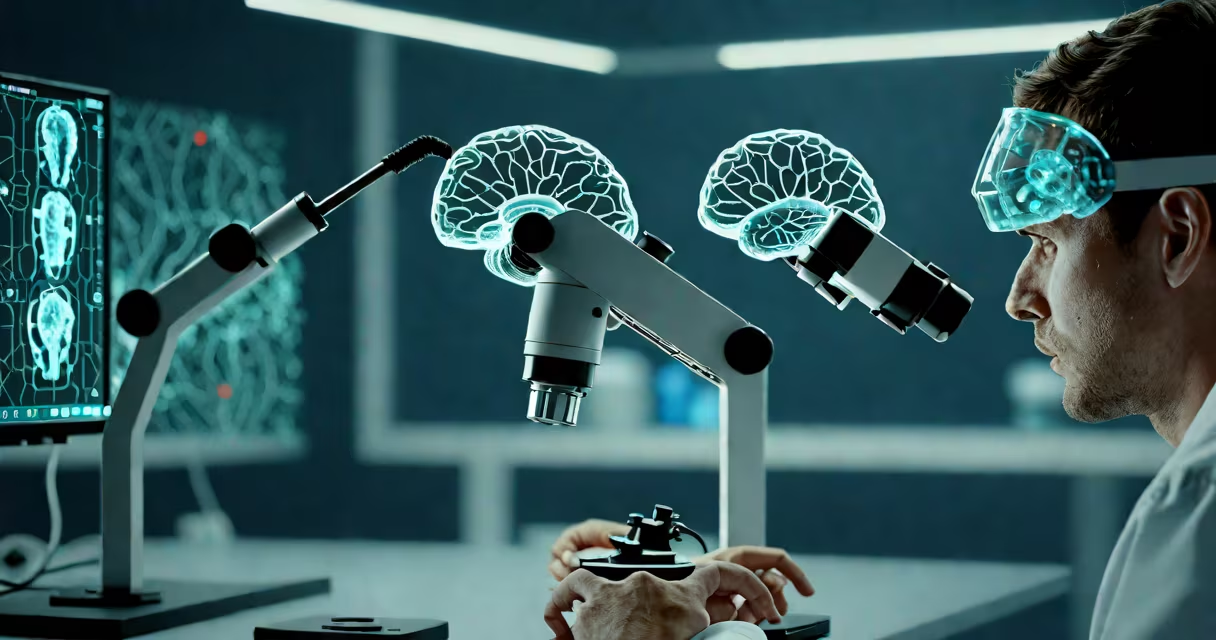
A neuroscience major is an interdisciplinary undergraduate degree focused on the structure, function, and development of the nervous system. It integrates biology, chemistry, physics, and psychology to study how the brain controls behavior, perception, and emotion. Students take courses in cellular neuroscience, neuropharmacology, cognitive neuroscience, and brain imaging techniques.
Neuroscience majors typically complete four years of study, earning a Bachelor of Science (BS) or Bachelor of Arts (BA). The BS track emphasizes laboratory research and quantitative methods, while the BA allows more flexibility in humanities and social sciences. Core coursework includes human anatomy, molecular biology, genetics, and data analysis using tools like MATLAB and Python.
The field emerged from early 20th-century work in electrophysiology and expanded rapidly after the Human Genome Project. Today, neuroscience programs are offered at over 600 U.S. colleges and universities, including institutions like Stanford, MIT, and the University of Michigan. According to the National Science Foundation, neuroscience degrees have grown by 38% since 2015, reflecting rising interest in brain health and mental wellness.
Neuroscience majors study the nervous system at multiple levels-from molecules and cells to circuits, systems, and behavior. At the cellular level, students learn how neurons communicate via electrical and chemical signals. They examine synaptic transmission, neurotransmitter systems (like dopamine and serotonin), and ion channel dynamics.
At the systems level, they analyze how brain regions interact. For example, fMRI scans show which areas activate during decision-making tasks. EEG recordings capture real-time brain wave patterns during sleep or attention tasks. These tools allow researchers to map functional networks involved in memory, emotion, and motor control.
Students also engage in hands-on research. At the University of California, San Diego, undergraduates participate in projects studying neural plasticity in stroke recovery. One student measured changes in cortical excitability using transcranial magnetic stimulation (TMS) and reported a 22% improvement in motor function after six weeks of therapy.
Most neuroscience majors follow a structured curriculum combining foundational science and advanced electives. Below is a typical course breakdown:
| Category | Sample Courses | Credits |
|---|---|---|
| Foundations | General Biology, Organic Chemistry, Calculus | 24-30 |
| Core Neuroscience | Neural Systems, Developmental Neurobiology, Sensory Processing | 18-24 |
| Research & Lab | Independent Study, Senior Thesis, Advanced Lab Techniques | 6-12 |
| Electives | Cognitive Neuroscience, Psychopharmacology, Computational Modeling | 6-12 |
Some programs offer specializations such as computational neuroscience, behavioral neuroscience, or clinical neuroscience. At Johns Hopkins, students can focus on neurodegenerative diseases like Alzheimer's, using animal models and biomarker analysis. Others pursue dual-degree tracks, combining neuroscience with computer science or public health.
One non-obvious distinction: neuroscience majors often take more math and statistics than psychology majors. A 2022 report from the American Psychological Association notes that 78% of neuroscience undergraduates complete at least one course in multivariate statistics, compared to 41% in psychology programs.
Graduates with a neuroscience major enter diverse fields. The most common paths include biomedical research, pharmaceutical development, medical school, and tech-based brain-computer interfaces. The Bureau of Labor Statistics projects a 14% growth in neuroscience-related jobs between 2022 and 2032-faster than average.
Pharmaceutical companies hire neuroscience majors to develop drugs targeting neurological disorders. At Pfizer, a team of recent graduates contributed to Phase II trials of a novel antidepressant that modulates glutamate receptors. Their work included analyzing patient response data and modeling receptor binding affinity.
Other roles include neuroengineering, where professionals design devices like cochlear implants or deep brain stimulators. At Neuralink, engineers with neuroscience backgrounds helped refine algorithms for decoding motor intent from neural signals. One project achieved 92% accuracy in translating thought into cursor movement within six months.
For those interested in healthcare, neuroscience is a strong foundation for medical school. Graduates apply to MD/PhD programs at institutions like Harvard Medical School and Mayo Clinic. The acceptance rate for neuroscience majors into medical schools was 62% in 2023, according to the Association of American Medical Colleges.
Many assume neuroscience is synonymous with psychology. While both study behavior, they differ fundamentally. Psychology focuses on mental processes, emotions, and observable behavior through surveys, interviews, and cognitive testing. Neuroscience investigates the physical mechanisms behind those processes-how neurons fire, how brain regions communicate, and how genetic factors influence risk for disorders.
Another misconception is that neuroscience majors only prepare students for research careers. In reality, many pursue law, business, or policy. A graduate from Brown University now works at the FDA, reviewing clinical trial data for new treatments in epilepsy. Her neuroscience training helped her evaluate statistical significance and identify potential bias in trial designs.
There's also confusion around the difference between neuroscience and neurology. Neurology is a medical specialty focused on diagnosing and treating brain and nerve disorders. Neurologists are physicians who complete medical school and residency. Neuroscience majors do not become doctors unless they continue to medical school.
I once observed a neuroscience lab at the University of Washington where students used optogenetics to control mouse behavior. By shining light on genetically modified neurons in the amygdala, they triggered fear responses in mice. The experiment demonstrated how precise neural manipulation can reveal causal relationships-not just correlations-between brain activity and behavior.
Understanding what is neuroscience major reveals a field grounded in science, innovation, and real-world impact. It combines rigorous lab work with theoretical insight, preparing graduates for roles in medicine, research, technology, and beyond.