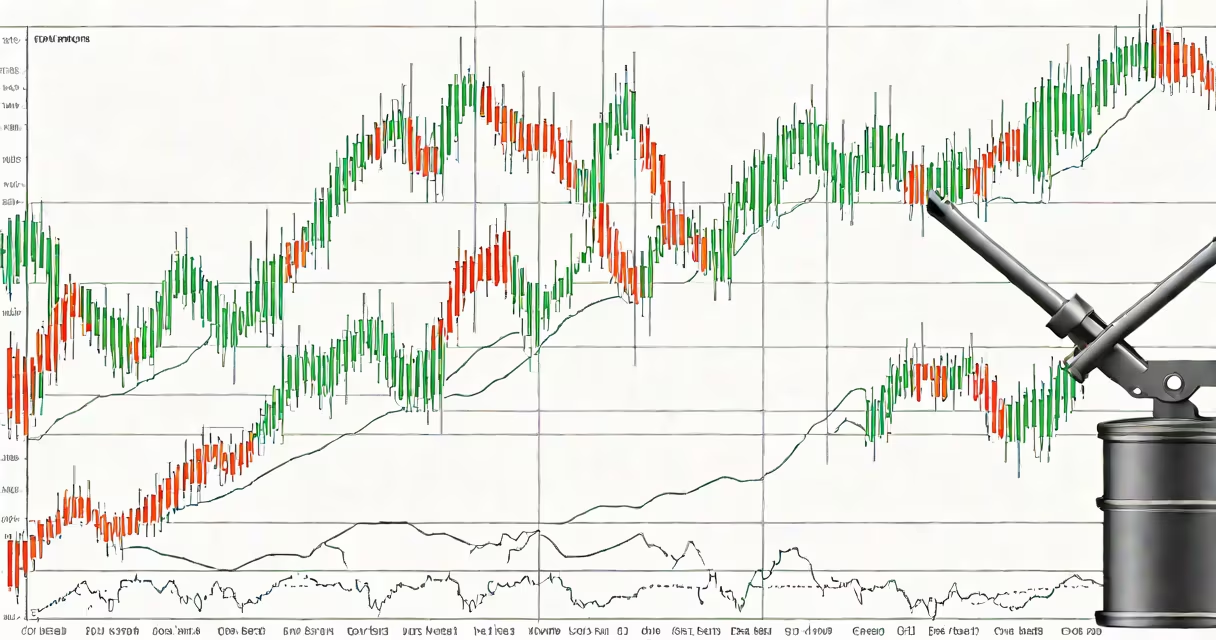
Oil trading at refers to the current market price of crude oil contracts, primarily measured in U.S. dollars per barrel for benchmark grades like Brent Crude and West Texas Intermediate (WTI). These prices reflect real-time supply-demand balances, geopolitical risks, and macroeconomic shifts affecting global energy markets.
Crude oil trades on regulated exchanges such as the New York Mercantile Exchange (NYMEX) and ICE Futures Europe. Traders buy and sell standardized futures contracts based on delivery dates, not physical barrels. Prices fluctuate continuously during trading hours, influenced by production reports, inventory data, and central bank policies.
For example, on April 5, 2024, WTI crude settled at $86.42 per barrel, while Brent Crude closed at $90.18. These values represent the average price at which traders agreed to buy or sell contracts during the session. The difference between the two benchmarks stems from regional supply dynamics and transportation costs.
Oil trading operates through futures contracts traded on regulated exchanges. A contract specifies the quantity (typically 1,000 barrels), delivery month, and settlement method. Most traders close positions before expiration to avoid physical delivery.
Market participants include producers, refiners, hedge funds, and retail investors using brokers. Prices are set via continuous double auctions: buyers bid, sellers offer, and trades execute when both sides agree. The NYMEX WTI contract uses a physical delivery mechanism, though nearly all trades are offset before expiry.
For instance, a trader who buys a May 2024 WTI futures contract at $85.00 expects to profit if the price rises above that level by the settlement date. If the contract settles at $87.50, the trader gains $2.50 per barrel, or $2,500 for one contract.
Two primary crude oil benchmarks define global pricing: Brent Crude and West Texas Intermediate (WTI). Brent is sourced from the North Sea and serves as the global benchmark for over 60% of international oil trade. WTI comes from U.S. shale fields and is the benchmark for domestic U.S. oil pricing.
| Benchmark | Source Region | Typical Price Spread (April 2024) | Primary Use |
|---|---|---|---|
| Brent Crude | North Sea (UK/Norway) | $90.18/barrel | Global pricing, European and Asian markets |
| WTI Crude | U.S. shale (Texas, Oklahoma) | $86.42/barrel | U.S. domestic pricing, North American markets |
Brent typically trades at a premium to WTI due to higher quality (lower sulfur content) and greater global demand. However, the gap narrows during U.S. export surges or disruptions in the Middle East. In March 2024, a conflict in the Red Sea caused a 4% spike in Brent prices as shipping routes were rerouted.
A common misconception is that oil trading at means the price at gas stations. That's incorrect. Retail fuel prices include taxes, refining margins, and distribution fees. For example, if WTI is $86 per barrel, the pump price may exceed $4.00 per gallon depending on location and state taxes.
Oil trading happens on major exchanges: NYMEX (WTI), ICE Futures Europe (Brent), and Singapore Exchange (Dubai Crude). These markets operate 24 hours during the week, with peak volatility during U.S. and European business hours.
Trading occurs for several reasons: hedging against price swings, speculation on future supply changes, and arbitrage between regions. Producers use futures to lock in revenue. Refineries buy contracts to secure raw material costs. Speculators bet on trends using technical analysis and macro indicators.
For example, in early 2023, OPEC+ announced voluntary production cuts of 2 million barrels per day. This reduced supply expectations, pushing Brent prices up 12% within two weeks. Traders who anticipated the move and bought contracts before the announcement saw significant gains.
Many assume oil trading at means the price they pay at the pump. That's false. The price of crude oil is only one component of retail fuel cost. According to the U.S. Energy Information Administration (EIA), crude accounts for about 50% of a gallon's price, with refining (15%), distribution (10%), and taxes (25%) making up the rest.
Another error is equating oil trading with cryptocurrency. While both involve volatile price movements, oil futures are backed by physical commodities and regulated under the Commodity Futures Trading Commission (CFTC). Crypto assets lack underlying value and are not subject to the same oversight.
Even experienced traders sometimes misread the significance of inventory reports. The EIA's weekly U.S. crude stock report influences short-term price action, but long-term trends depend on global demand forecasts. In 2022, a surprise drop in U.S. inventories led to a 3% rally in WTI, but prices reversed when China's lockdowns reduced demand.
On February 14, 2024, Brent crude opened at $89.20. By midday, news broke that a pipeline blast in Kazakhstan disrupted exports. Prices rose to $91.05. Traders reacted quickly: long positions increased, and volatility spikes triggered stop-loss orders.
By 3 PM EST, the market stabilized as Kazakhstan confirmed repairs would take 72 hours. Brent closed at $90.18. A trader who bought 10 contracts at $89.20 realized a $980 profit ($0.98 per barrel × 1,000 barrels × 10 contracts).
This event illustrates how fast-moving information impacts oil trading at. A single incident can shift prices by over $1 per barrel in under four hours, especially during high-volume sessions.
Oil trading at is not a static number-it's a changing reflection of global energy flows. It changes by the minute, shaped by decisions made thousands of miles away. Staying informed means monitoring official reports from the EIA, OPEC, and central banks, not just headlines.