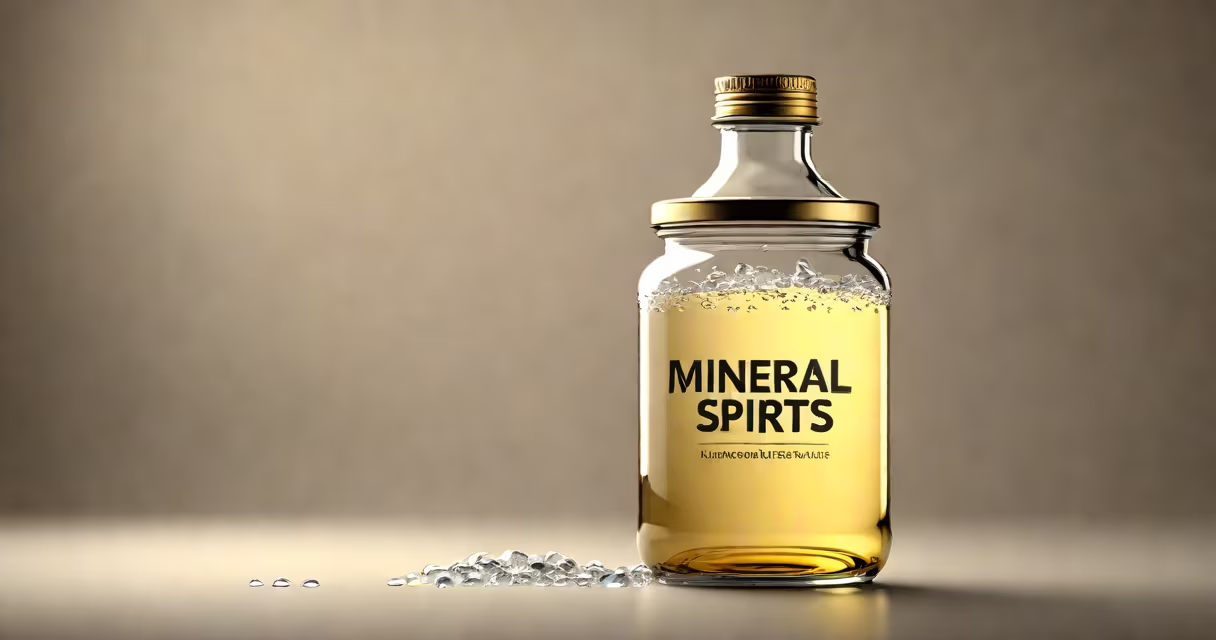
Mineral spirits are odorless, colorless liquids derived from petroleum distillation, used primarily as a solvent for thinning oil-based paints, cleaning tools, and removing grease. They evaporate quickly and are classified as volatile organic compounds (VOCs).
These solvents are not food-grade or safe for ingestion. They are industrial-grade cleaners and thinners, widely used in construction, automotive repair, and home improvement. Their chemical composition includes aliphatic hydrocarbons with carbon chains between C8 and C12.
According to the U.S. Environmental Protection Agency (EPA), mineral spirits fall under the category of "petroleum distillates" and are regulated due to their VOC emissions. The EPA notes that exposure to high concentrations can irritate the respiratory tract and cause dizziness or headaches.
Mineral spirits dissolve oils, resins, and greases through non-polar interactions. Because they lack strong polarity, they do not mix with water but readily dissolve non-polar substances like linseed oil or wax.
When applied to a surface, mineral spirits reduce surface tension, allowing trapped contaminants to lift off. This makes them effective for cleaning paintbrushes, degreasing metal parts, or preparing wood before staining.
For example, after using oil-based paint, a brush left in water will harden. But rinsing it with mineral spirits dissolves the dried paint residue, restoring bristles. This process works because the solvent breaks down the long-chain esters in the paint binder.
Mineral spirits are refined from crude oil through fractional distillation. The resulting product is filtered to remove sulfur and aromatic compounds, which reduces toxicity and odor.
There are two common grades:
| Type | Purity Level | Use Case | Regulatory Notes |
|---|---|---|---|
| Standard mineral spirits | Low purity | General cleaning, degreasing | Higher VOC content; restricted in some states |
| Odorless mineral spirits (OMS) | High purity | Paint thinning, fine finishing work | Lower aromatic content; preferred for indoor use |
Odorless mineral spirits are produced by additional refining steps that remove benzene and other aromatics. The American Society for Testing and Materials (ASTM) sets standards for OMS under ASTM D2699, requiring less than 0.1% aromatic content.
Despite the name, odorless mineral spirits still have a faint chemical smell. The term refers to reduced odor compared to traditional versions, not complete absence.
Mineral spirits are standard in painting, woodworking, and auto maintenance. They are used to:
For example, when refinishing a wooden table, sanding removes surface layers. Applying mineral spirits afterward lifts dust and old finish particles, revealing the grain. This step ensures better adhesion of stain or sealant.
They are also used in dry cleaning processes for delicate fabrics, though this requires professional handling due to flammability.
Mineral spirits are often mistaken for turpentine, but they are chemically distinct. Turpentine is a natural resin extracted from pine trees, while mineral spirits are synthetic and petroleum-based.
Both thin oil paints, but turpentine evaporates faster and leaves a stronger scent. It is also more aggressive on certain surfaces, such as unfinished wood, where it may raise the grain.
A key difference: mineral spirits are less likely to yellow over time. Turpentine can cause slight discoloration in aged finishes. For this reason, mineral spirits are preferred in restoration work.
Another misconception is that mineral spirits are safe for skin contact. They strip natural oils from the skin, leading to dryness or dermatitis. The Occupational Safety and Health Administration (OSHA) classifies them as skin irritants and recommends gloves during prolonged handling.
Mineral spirits are flammable. Flash points range from 38°C to 55°C (100°F to 131°F), depending on formulation. They must be stored away from heat sources and open flames.
Use in well-ventilated areas. The National Institute for Occupational Safety and Health (NIOSH) recommends limiting exposure to 100 ppm over an 8-hour period. Overexposure can lead to nausea, fatigue, or impaired coordination.
I once used mineral spirits to clean a set of brass fixtures. After wiping, I left the rags in a pile. Within minutes, they ignited spontaneously due to oxidation and heat buildup. That incident taught me to store rags in sealed metal containers.
Due to VOC emissions, mineral spirits are regulated under the Clean Air Act. California's Air Resources Board (CARB) restricts the sale of products with more than 10% VOCs. Many brands now market low-VOC alternatives.
Disposal requires caution. Pouring down drains can contaminate water systems. The EPA advises collecting used solvent in sealed containers and disposing at approved hazardous waste facilities.
Recycling is possible. Some commercial recyclers distill used mineral spirits and reclaim them for reuse. A study by the University of Michigan found that up to 70% of used solvent can be recovered through vacuum distillation.
Mineral spirits are petroleum-derived solvents used to thin paints, clean tools, and remove grime. They are not interchangeable with turpentine and require careful handling due to flammability and health risks. Always use in ventilated spaces and follow disposal guidelines. For safer alternatives in sensitive environments, consider spirits of steel.