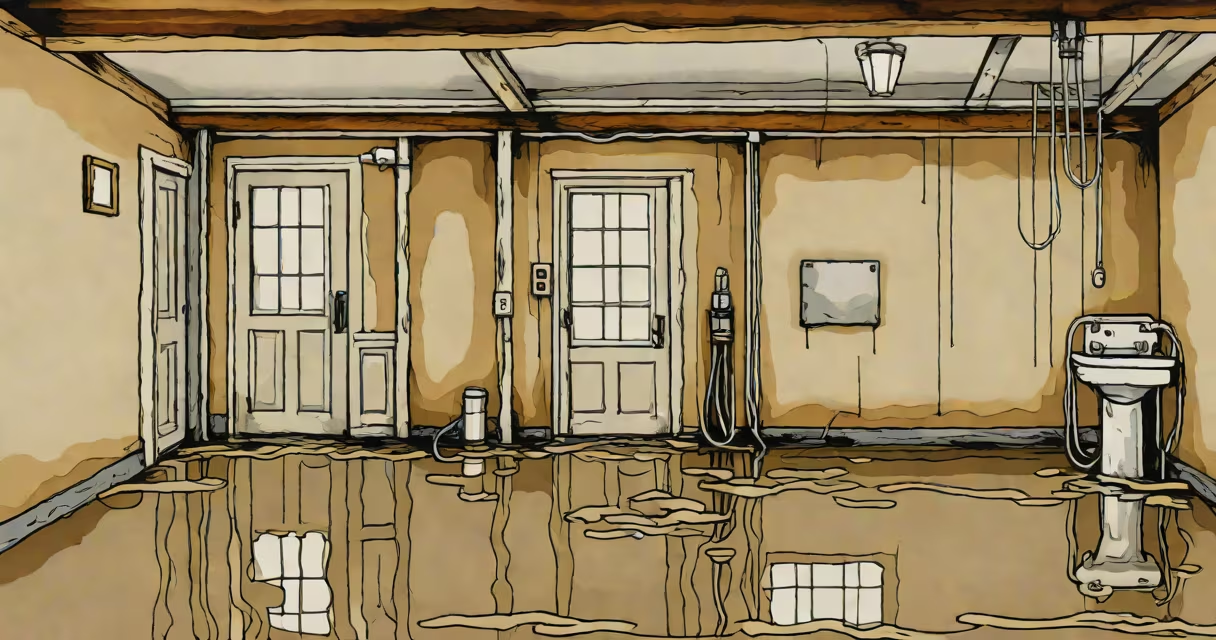
Basement flooding happens when water enters a basement through foundation walls, floors, or openings due to high groundwater levels, heavy rainfall, plumbing leaks, or system failures. It typically results from compromised waterproofing, inadequate drainage, or overwhelmed drainage systems.
Water seeks the lowest point. In homes with basements, that point is often below ground level. When soil around the foundation becomes saturated, hydrostatic pressure builds against basement walls and floors. If the structure lacks proper waterproofing or drainage, water breaches the barrier and floods the space.
According to the Federal Emergency Management Agency (FEMA), nearly 20% of flood insurance claims come from basements, even though they're below grade. The National Association of Home Builders (NAHB) reports that foundation cracks are responsible for 60% of basement water intrusion incidents. These figures show that flooding isn't rare-it's predictable when prevention fails.
Water enters a basement through three primary pathways: hydrostatic pressure, surface runoff, and internal plumbing issues. Hydrostatic pressure develops when groundwater accumulates around the foundation. As water fills the soil, it pushes against walls and floors. Even small cracks allow water to seep through under pressure.
Surface runoff from rain or snowmelt flows toward the house if gutters are clogged or grading slopes away from the foundation. A 1-inch drop in elevation over 10 feet can direct water toward the basement entrance. In one documented case in Chicago, a homeowner lost $18,000 in property damage after a storm caused 4 inches of rain in 90 minutes. The yard's slope had reversed over time, directing water into the basement.
Internal sources include burst pipes, leaking appliances, or sump pump failure. Sump pumps are designed to remove water collected in a sump pit. But if power fails during a storm, or the pump is undersized, water backs up and floods the basement. A 2022 study by the American Society of Civil Engineers found that 35% of sump pump failures occurred during storms due to power outages or clogged discharge lines.
Water entry types differ by origin and behavior. Understanding them helps identify the root cause and apply correct fixes.
| Type | Source | Entry Point | Prevention Method |
|---|---|---|---|
| Hydrostatic pressure | Groundwater saturation | Foundation cracks, floor joints | Exterior waterproofing, French drains |
| Surface runoff | Rain, snowmelt | Basement windows, door thresholds | Proper grading, gutter cleaning |
| Plumbing leak | Burst pipe, appliance overflow | Drain lines, floor drains | Regular inspections, shutoff valves |
| Sump pump failure | Power loss, mechanical breakdown | Sump pit overflow | Backup battery, dual pumps |
One overlooked factor is soil type. Clay soils expand when wet and contract when dry. This movement creates gaps in foundation seals. In a 2021 case in Minneapolis, a home with clay-rich soil experienced repeated flooding after each thaw cycle. The foundation shifted slightly, reopening old repair seams.
Another non-obvious issue: air pressure differentials. When a basement is sealed tightly and HVAC systems run, negative pressure pulls moisture from the ground through tiny pores in concrete. This phenomenon, known as vapor migration, accounts for 12% of basement moisture problems according to the Concrete Foundation Association.
People often mistake dampness from condensation for actual flooding. Condensation forms when warm, humid air contacts cold surfaces-like basement walls in winter. It leaves streaks and mildew but doesn't pool. True flooding involves standing water, often above 1 inch deep, and requires remediation.
Some assume that a sump pump eliminates all flood risk. That's false. A sump pump only handles water collected in a pit. It cannot stop water entering through cracks or windows. In 2020, a homeowner in Seattle reported a 6-inch water rise in their basement despite a functioning sump pump. The cause was a crack in the foundation wall that bypassed the pit entirely.
Also, people confuse basement flooding with sewer backups. Sewer backups happen when the municipal system overflows or a blockage occurs in the home's drain line. They bring sewage, not clean water. The smell, color, and presence of debris distinguish them. FEMA notes that sewer backups account for 15% of basement water events but are often mislabeled as flooding.
In 2019, a family in Cincinnati experienced a basement flood after a 3-day storm dropped 5.2 inches of rain. Their basement had a sump pump and a French drain installed in 2015. The system failed because the drain field was buried under 18 inches of compacted soil from landscaping work. The original design required 12 inches of gravel cover; the contractor used only 3 inches.
When the storm hit, water pooled around the foundation. The French drain couldn't absorb the volume. The sump pump ran continuously but couldn't keep up. After 12 hours, water breached the floor joint and rose to 18 inches. The family lost furniture, electronics, and stored documents.
Afterward, a structural engineer confirmed that the drain field was blocked. Repair costs totaled $12,700. The homeowner later discovered that the installer had skipped a step in the installation manual. This case shows that even properly designed systems fail if not installed correctly.
Preventing basement flooding starts with inspection. Check foundation walls for cracks annually. Seal visible cracks with epoxy injection or hydraulic cement. Use a moisture meter to detect early dampness before pooling occurs.
Ensure gutters are cleaned twice a year-once in spring, once in fall. Downspouts should extend at least 6 feet from the foundation. Grade the soil away from the house at a 1-inch-per-foot slope. A 10-foot distance means the ground should drop 10 inches from the foundation edge.
Install a backup sump pump with a battery-powered motor. These units activate during power outages. The NAHB recommends using a dual-pump system for homes in high-risk zones. Test both pumps monthly.
If you live in a flood-prone area, consider installing a sump pump alarm. These devices send alerts via phone or app when water reaches a certain level. In one case, a homeowner received a notification while at work. He called a plumber who arrived before the pump failed, preventing a flood.
I once inspected a basement in Atlanta where the owner had ignored a small stain for two years. By the time I arrived, the wall had spalled-cracked and flaked-revealing a 12-inch-long crack. Water had seeped in, eroded the concrete, and damaged electrical wiring. The repair cost $9,000. Early detection would have saved half that amount.
Understanding why basements flood isn't just about knowing the cause-it's about recognizing patterns and acting before damage spreads. Water doesn't wait. It moves fast, especially under pressure. Knowing the mechanics behind basement flooding helps homeowners take control.