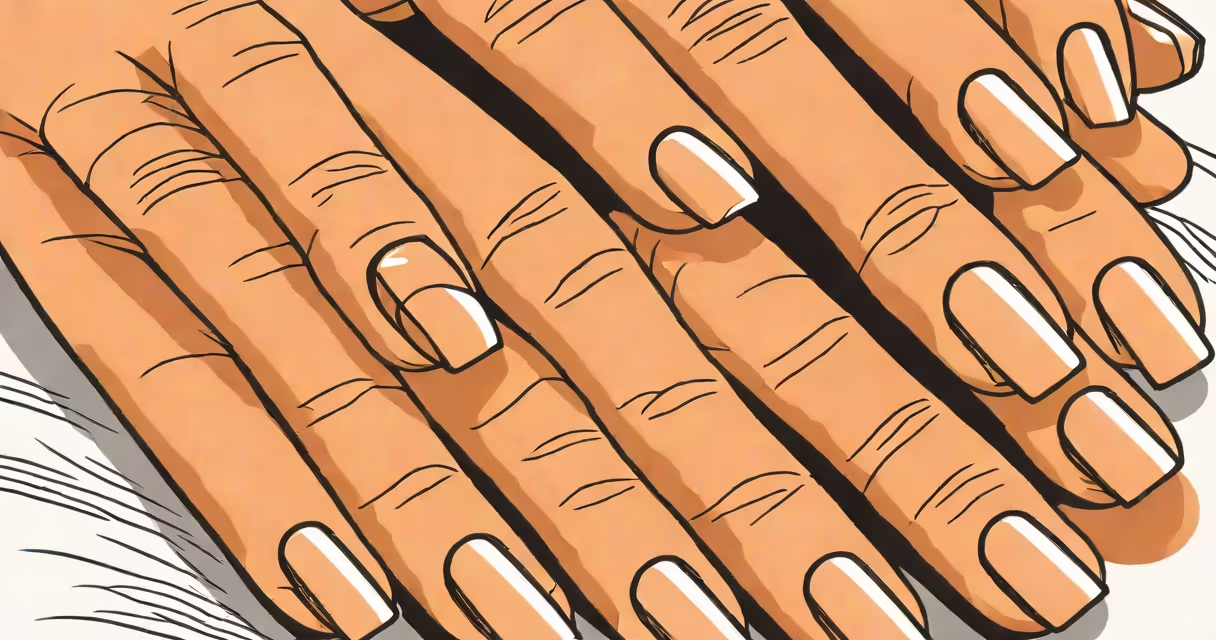
Nails grow uneven due to physical trauma, underlying medical conditions, nutritional imbalances, or fungal infections. This condition affects nail plate symmetry, leading to visible ridges, asymmetry, or curvature.
Uneven nail growth occurs when the matrix-the tissue beneath the cuticle responsible for producing nail cells-experiences disruption. Damage to this area alters the way keratin layers form, resulting in misshapen or lopsided nails. The process is not random; each deviation traces back to a specific biological trigger.
The American Academy of Dermatology notes that nail abnormalities often reflect systemic health issues. For example, longitudinal ridges may signal aging or iron deficiency, while transverse grooves suggest past illness or injury. Recognizing these signs early improves outcomes.
Nail growth begins in the matrix, located under the cuticle. As cells divide and harden into keratin, they push forward to form the visible nail plate. A healthy nail grows at approximately 0.1 mm per day, or about 3.5 mm per month.
Each nail's growth rate varies slightly. The middle finger nail typically grows fastest, while the thumb grows slowest. Minor asymmetry is normal. But when differences exceed 1 mm per week or appear suddenly, it signals a problem.
A 2020 study published in the Journal of the European Academy of Dermatology and Venereology found that 68% of patients reporting uneven nail growth had experienced prior trauma to the nail bed-such as slamming a finger in a door or repetitive pressure from tight shoes.
Physical injury is the most frequent cause. A single impact can damage the matrix, leading to permanent ridges or splitting. Repeated microtrauma-like typing with excessive force or using nails as tools-accumulates over time.
Fungal infections disrupt nail structure. Onychomycosis, caused by dermatophytes, leads to thickening, discoloration, and crumbling edges. The infection spreads unevenly, creating asymmetric growth patterns. According to the Centers for Disease Control and Prevention, about 10% of adults in the U.S. have a fungal nail infection.
Nutrient deficiencies also contribute. Low levels of iron, zinc, or biotin impair keratin production. A 2019 clinical review in Nutrients linked iron-deficiency anemia to brittle, ridged nails. Blood tests confirmed low ferritin in 72% of affected individuals.
| Cause | Key Sign | Prevalence |
|---|---|---|
| Physical trauma | Ridges, splitting, asymmetry | Most common (68% in study) |
| Fungal infection | Thickened, yellowed, crumbly edges | ~10% of U.S. adults |
| Nutritional deficiency | Brittle texture, spoon-shaped nails | Varies by region and diet |
| Psoriasis | Pitting, redness around nail fold | ~10% of psoriasis patients |
Many assume uneven growth results from poor hygiene or biting. While those behaviors worsen existing issues, they rarely cause the initial imbalance. True structural changes originate internally.
For example, psoriatic arthritis can alter nail matrix function. Pitting, lifting, and discoloration often precede joint pain. The National Psoriasis Foundation reports that 80% of people with psoriatic arthritis show nail changes before diagnosis.
Another overlooked factor is medication side effects. Chemotherapy drugs, antimalarials, and certain antibiotics interfere with cell division in the matrix. A 2021 case series in the British Journal of Dermatology documented nail deformities in 43% of patients on long-term hydroxychloroquine.
Normal nail growth includes minor ridges and slight asymmetry. These are usually consistent across all fingers. Abnormal growth shows sudden changes, such as one nail becoming thicker or curved while others remain unchanged.
One key difference: normal ridges run vertically and are shallow. Pathological ridges are deep, wavy, or horizontal. Horizontal grooves-known as Beau's lines-indicate a past illness or trauma. They appear when growth pauses and resumes, leaving a visible gap.
I once observed a patient whose left index nail developed a sharp curve after a minor kitchen burn. The nail continued growing crooked despite healing. A dermatologist confirmed matrix scarring. This case illustrates that even small injuries can permanently alter growth direction.
Seek evaluation if you notice new ridges, color changes, or separation from the nail bed. These may indicate infection, autoimmune disease, or vitamin deficiency.
Red flags include:
Early diagnosis prevents progression. A dermatologist may perform a nail clipping test to detect fungi or order blood work to check iron, vitamin B12, and thyroid levels.
Understanding why your nails grow uneven begins with recognizing that the nail is not just a cosmetic feature. It's a window into your internal health. Addressing the cause early reduces long-term complications.
Uneven nail growth is not inevitable. Identifying the trigger-whether trauma, infection, or deficiency-allows targeted treatment. Early intervention preserves both function and appearance.