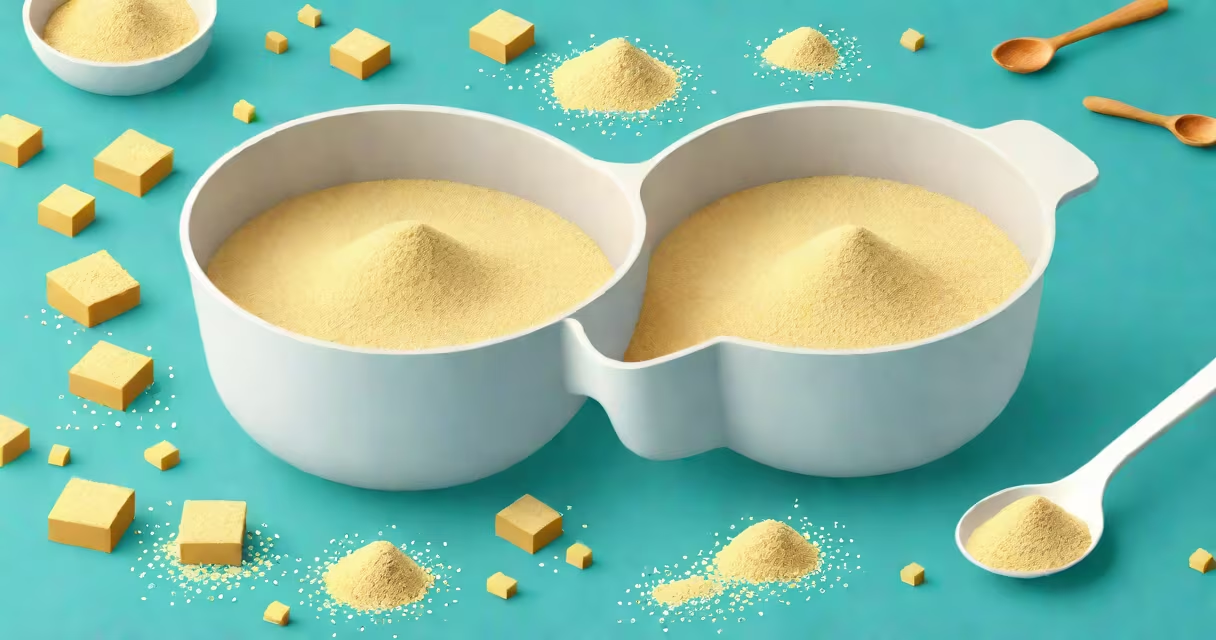
Two instances of 1/3 cup equal 2/3 cup, which is approximately 10.7 tablespoons or 32.7 milliliters. This sum appears frequently in recipes requiring precise volume measurements.
When working with fractional measurements in cooking, adding 1/3 cup to another 1/3 cup results in a total of 2/3 cup. This is a basic arithmetic operation involving fractions with the same denominator. The result, 2/3 cup, is a standard measurement in many recipes, especially those involving batters, doughs, or sauces.
Understanding this conversion ensures consistency in recipe execution. For example, if a recipe calls for two 1/3 cup portions of milk, combining them yields exactly 2/3 cup - no estimation needed. This precision prevents ingredient imbalances that affect texture and flavor.
Fraction addition follows mathematical rules. When denominators match, you add numerators directly. So 1/3 + 1/3 = 2/3. This rule applies universally, whether measuring dry ingredients like flour or liquids like oil.
For practical kitchen use, knowing that 1/3 cup equals 5.33 tablespoons allows you to verify the total by hand. Multiply 5.33 tbsp × 2 = 10.66 tbsp, which rounds to 10.7 tablespoons - matching the 2/3 cup value.
Using a standard measuring cup set, you can confirm this: fill a 1/3 cup measure twice and pour into a larger container. The level will align precisely with the 2/3 cup mark on most measuring cups.
Knowing equivalents helps when tools are missing or recipes use different units. Here's a breakdown of 2/3 cup in various forms:
| Unit | Value | Notes |
|---|---|---|
| Fractions | 2/3 cup | Standard form |
| Tablespoons | 10.7 tbsp | 1 tbsp = 0.5 fluid ounce |
| Teaspoons | 32 tsp | 3 tsp = 1 tbsp |
| Metric | 158 mL | Based on U.S. customary cup = 240 mL |
These conversions are consistent across U.S. culinary standards. The U.S. Department of Agriculture (USDA) defines a cup as 240 milliliters, which underpins all volume-based conversions in American recipes.
Some recipes may list 2/3 cup as "about 160 mL" for rounding purposes. However, for accuracy - especially in baking - using the exact 158 mL value prevents issues like dense or dry outcomes due to volume variance.
Many assume 1/3 cup doubled equals 1 cup. That's incorrect. Two 1/3 cups make 2/3 cup, not a full cup. A full cup requires three 1/3 cup portions.
Another frequent mix-up is confusing 1/3 cup with 1/4 cup. While both are small volumes, they differ: 1/3 cup is 8 tablespoons, while 1/4 cup is only 4 tablespoons. Using the wrong one can alter a recipe's balance.
A lesser-known fact: 2/3 cup is not exactly halfway between 1/2 cup and 1 cup. Halfway would be 3/4 cup. 2/3 cup is 0.666..., while 3/4 is 0.75 - a difference of 0.083, or about 1.3 tablespoons. This gap matters in sensitive applications like custards or meringues.
Consider a recipe calling for 1/3 cup of vegetable oil and 1/3 cup of milk. Adding them together gives 2/3 cup total liquid. If you're using a single measuring cup, fill it to the 2/3 mark - no need to measure twice.
If you don't have a 2/3 cup mark, use 10 tablespoons and 2 teaspoons. Since 1 tablespoon = 3 teaspoons, 10 tbsp = 30 tsp. Add 2 more tsp = 32 tsp total - the correct amount.
I once baked a lemon cake using only a 1/4 cup measure. To get 2/3 cup, I filled the 1/4 cup twice (total 1/2 cup), then added 1/6 cup more. I knew 1/6 cup was half of 1/3 cup, so I measured 1/3 cup and split it in half. The batter had perfect consistency - proof that fraction math works in real kitchens.
Always double-check your math when scaling recipes. A 1/3 cup error in a batch of cookies can lead to tough or flat results. Precision matters.