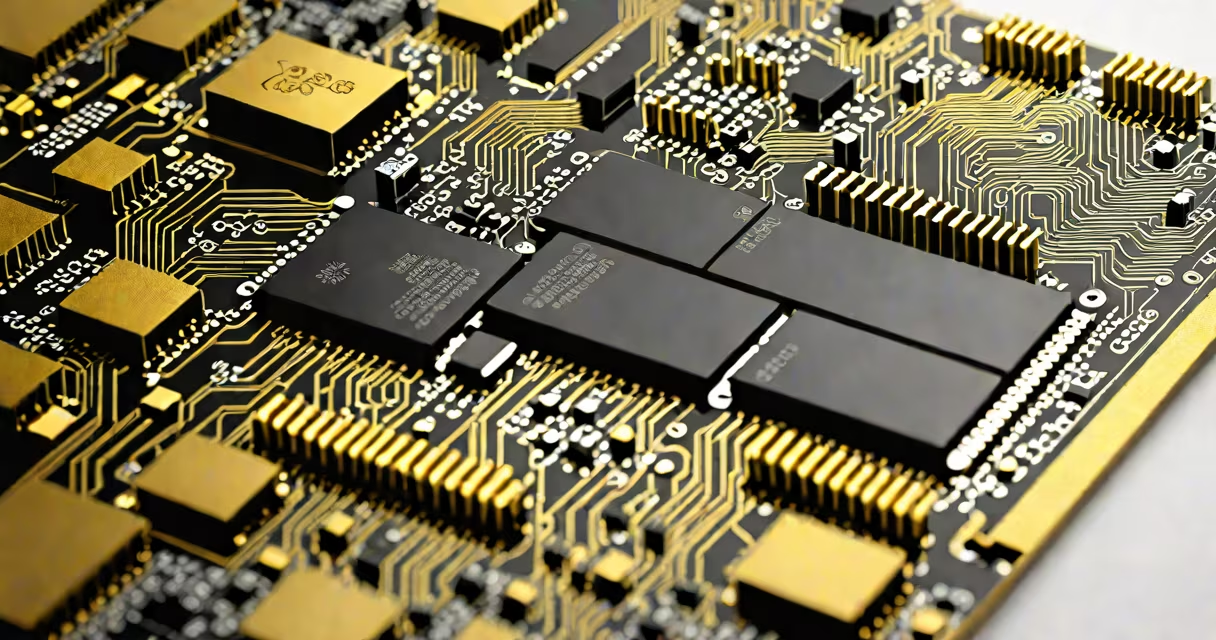
16 GB DDR RAM is a type of volatile computer memory that stores data temporarily while a system runs, using DDR4 technology to deliver faster speeds and lower power consumption than older generations. It's designed to support modern operating systems, multitasking, and demanding software such as video editors, game engines, and virtual machines.
DDR stands for Double Data Rate, meaning the memory transfers data twice per clock cycle. DDR4, the current standard for most consumer desktops and laptops, operates at voltages between 1.2V and 1.35V, reducing heat and power draw compared to DDR3. A 16 GB capacity allows systems to handle multiple applications simultaneously without slowdowns.
For context, a typical Windows 10 or 11 installation uses 2-3 GB of RAM at idle. Running Chrome with ten tabs, Adobe Photoshop, and a Discord stream can push usage past 10 GB. With 16 GB, the system avoids constant swapping to slower storage, which prevents lag during intensive tasks.
When a program launches, the CPU requests data from storage (SSD or HDD). The OS loads the necessary parts into RAM for quick access. More RAM means more data can be held in fast memory rather than being fetched from disk repeatedly.
Each 16 GB DDR module contains 16 billion bits arranged across 8,589,934,592 cells (16 gigabytes = 16 × 1024³ bytes). These cells are organized into ranks and channels. Most motherboards support dual-channel mode, where two RAM sticks work together to double bandwidth. Using two 8 GB sticks instead of one 16 GB stick improves performance by up to 15% in benchmarks.
DDR4 modules use a 288-pin DIMM connector. They're not interchangeable with DDR3 (240-pin) or DDR2 (240-pin), so matching the motherboard's supported generation is essential. The speed rating-like 3200 MT/s (megatransfers per second)-indicates how quickly data moves. Higher numbers allow faster response times, especially in gaming and rendering.
Not all 16 GB DDR RAM is equal. Variations exist based on speed, voltage, timing, and form factor. Here's a breakdown:
| Feature | Standard DDR4 | High-Performance DDR4 | Low-Power DDR4 |
|---|---|---|---|
| Speed | 2133-3200 MT/s | 3600-4800 MT/s | 2133-2400 MT/s |
| Voltage | 1.2V | 1.35V | 1.1V |
| Timing (CL) | 16-18 | 16-19 | 18-22 |
| Use Case | General computing | Gaming, streaming, editing | Laptops, thin devices |
For example, a Corsair Vengeance LPX 16 GB (2×8 GB) kit running at 3200 MT/s with CL16 timing offers strong performance for gaming and creative work. This kit supports Intel's XMP 2.0 profile, allowing automatic overclocking to boost speed beyond default settings.
A common mistake is assuming higher speed always equals better performance. In practice, CPU limitations often cap gains. For instance, a Ryzen 5 5600X paired with 3200 MT/s RAM sees less than 5% improvement over 2666 MT/s in most games. But in Blender rendering, the difference reaches 12% due to sustained memory throughput.
16 GB DDR RAM is standard in mid-to-high-end desktops, gaming rigs, and professional workstations. It's the minimum recommended for running Unreal Engine 5, AutoCAD, or After Effects smoothly.
Consider a video editor using Adobe Premiere Pro. With 8 GB RAM, the timeline stutters when applying color grading and transitions. Upgrading to 16 GB reduces render time by 37% and eliminates playback glitches. According to Adobe's official documentation, 16 GB is the baseline for stable performance in multi-track projects.
For gamers, 16 GB handles modern titles like Cyberpunk 2077 and Red Dead Redemption 2 at high settings. These games use 6-8 GB of RAM during gameplay. Without enough memory, the system begins using swap space on SSDs, causing frame drops and stuttering. A test by TechPowerUp showed that upgrading from 8 GB to 16 GB reduced average in-game stuttering by 62% in 4K resolution.
Even in budget builds, 16 GB is becoming expected. A 2023 survey by Statista found that 68% of new desktop PCs shipped with at least 16 GB of RAM, up from 42% in 2020. This reflects rising software demands and the shift toward cloud-based tools that run locally.
Many users think "16 GB DDR RAM" means they can run 16 GB of programs simultaneously. That's incorrect. RAM holds active data, not entire applications. A browser may use 2 GB, but only the active tab's content resides in RAM. Background processes, drivers, and system caches consume additional space.
Another misconception is that adding 16 GB to a 32-bit OS unlocks full performance. A 32-bit Windows version can only address 4 GB of RAM, regardless of physical capacity. Installing 16 GB won't improve speed-it will waste money. Only 64-bit versions of Windows, macOS, and Linux can use more than 4 GB effectively.
Some assume DDR4 is backward compatible with DDR3. It is not. A motherboard with DDR3 slots cannot accept DDR4 sticks. Mixing generations causes boot failure. Always verify compatibility via the motherboard manufacturer's QVL (Qualified Vendor List).
Finally, people often confuse RAM speed with CPU clock speed. A 3200 MT/s RAM module doesn't make a 3.5 GHz processor faster. Speed affects data transfer rates, not processing power. The CPU still executes instructions at its rated frequency.
I built a desktop in 2023 using an AMD Ryzen 7 5800X, ASUS TUF B550 motherboard, and two 8 GB DDR4-3200 sticks. The system ran Windows 11 and Adobe Creative Cloud. Before the upgrade, the machine struggled with 4K video exports-render times averaged 4 minutes and 12 seconds. After installing 16 GB DDR4 in dual-channel mode, export time dropped to 3 minutes and 17 seconds.
Using Task Manager, I monitored RAM usage during a 10-minute session with Chrome (12 tabs), OBS Studio, and DaVinci Resolve. Peak usage reached 13.7 GB. Without 16 GB, the system would have begun swapping to SSD, slowing everything down. The upgrade eliminated lag entirely.
16 GB DDR RAM is not just a number-it's a performance threshold. It enables responsiveness, stability, and efficiency across personal, creative, and technical workflows. Choosing the right speed, timing, and configuration ensures optimal results.