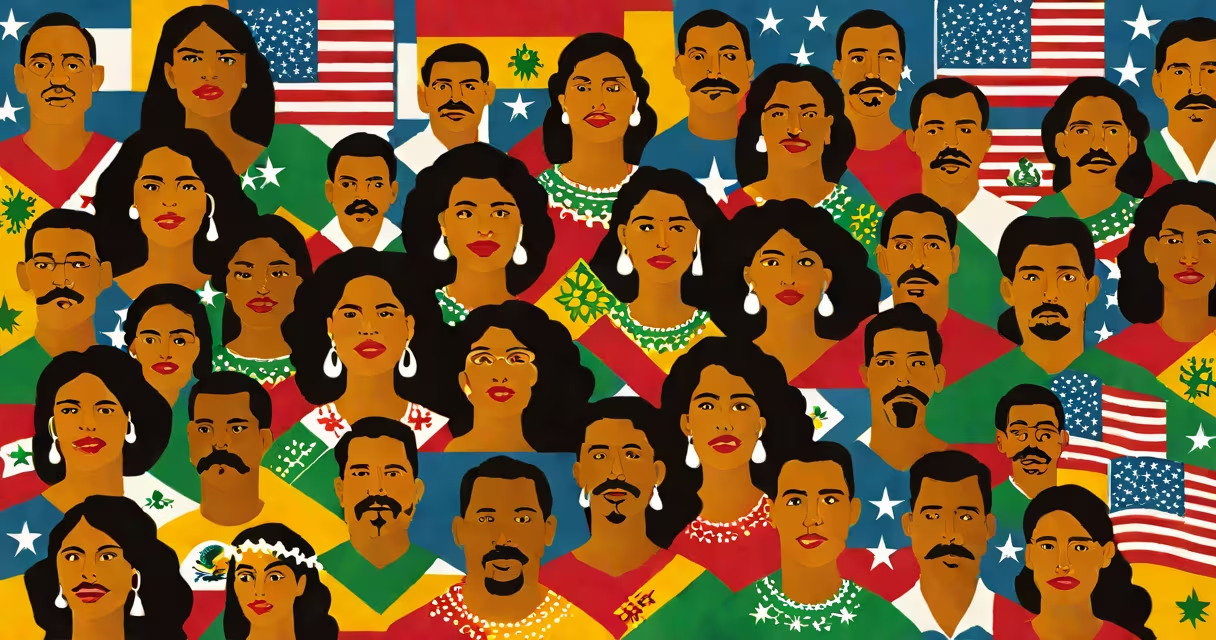
National Hispanic Heritage Month is a U.S. observance held annually from September 15 to October 15, celebrating the histories, cultures, and contributions of American citizens whose ancestors came from Spain, Mexico, the Caribbean, and Central and South America.
The month-long observance began in 1968 as Hispanic Heritage Week under President Lyndon B. Johnson and was expanded to a month by President Ronald Reagan in 1988. The dates were chosen to align with the independence anniversaries of several Latin American countries, including Costa Rica, El Salvador, Guatemala, Honduras, Nicaragua, and Mexico-all of which celebrate their independence on September 15.
Each year, federal agencies, schools, libraries, and community organizations host events such as music festivals, art exhibitions, lectures, and storytelling sessions. These activities show achievements in science, politics, arts, and sports by Hispanic and Latino individuals. For example, in 2023, the Smithsonian's National Museum of American History hosted a series of talks on the role of Mexican-American civil rights leaders during the 1960s and 70s.
National Hispanic Heritage Month operates through coordinated public and private efforts. Federal agencies issue official proclamations, and many schools incorporate themed lessons into curricula. Local governments often designate specific days within the month for events-such as "Puerto Rican Day" on October 12 or "Mexican Independence Day" on September 16.
Participation is not mandatory, but institutions that observe the month typically provide educational materials, host guest speakers, and display artwork. The Library of Congress offers free downloadable resources, including timelines of key milestones in Hispanic history and audio recordings of oral histories from Cuban-American veterans.
For example, in 2022, the U.S. Department of Education released a toolkit titled *Celebrating Hispanic Heritage: A Guide for Educators*, which included lesson plans on the impact of Hispanic scientists like Dr. Mario Molina, who won the Nobel Prize in Chemistry for his work on ozone depletion.
The foundation of National Hispanic Heritage Month rests on four pillars: historical recognition, cultural expression, civic engagement, and educational outreach.
Historical recognition centers on the timeline of Latin American nations gaining independence between 1810 and 1825. This period is critical because it marks the beginning of distinct national identities that later influenced migration patterns to the United States.
Cultural expression includes traditional foods, music genres like salsa and reggaeton, dance forms such as samba and bachata, and visual arts. Events often feature live performances, cooking demonstrations, and craft workshops. In 2021, the city of San Antonio launched a "Heritage Walk" along the River Walk, where visitors could view murals depicting key figures in Mexican-American history.
Below is a breakdown of common themes and their associated activities:
| Theme | Examples of Activities | Associated Countries |
|---|---|---|
| Independence Celebrations | Parades, flag ceremonies, speeches on national founding | Mexico, Costa Rica, El Salvador, Nicaragua, Honduras, Guatemala |
| Art & Literature | Book readings, poetry slams, gallery exhibits | Puerto Rico, Colombia, Venezuela |
| Science & Innovation | STEM fairs, interviews with Hispanic researchers | Spain, Dominican Republic, Ecuador |
| Music & Dance | Live concerts, dance classes, festival stages | Cuba, Panama, Peru |
National Hispanic Heritage Month is observed nationwide, with consistent participation across states, cities, and school districts. According to the U.S. Census Bureau, Hispanic or Latino people make up 19.1% of the U.S. population as of 2023, making it the largest racial or ethnic minority group in the country.
Public schools use the month to teach students about diversity and inclusion. A 2022 study by the National Association of Secondary School Principals found that 78% of surveyed schools implemented at least one Hispanic Heritage Month activity, ranging from classroom presentations to school-wide assemblies.
Businesses also participate. Major brands like Taco Bell and Netflix have run campaigns during the month. In 2023, Netflix released a documentary series titled *Latino Power: Voices That Shaped America*, spotlighting trailblazers such as Dolores Huerta and Sonia Sotomayor.
One non-obvious fact: the original 1968 proclamation by President Johnson did not include the term "Hispanic." The word was coined in 1977 by the U.S. Office of Management and Budget to standardize demographic reporting. The term gained widespread use after the 1980 census, when data collection began using the category "Hispanic or Latino."
Many assume National Hispanic Heritage Month applies only to people from Mexico or Spanish-speaking countries. This is incorrect. The designation includes people from all Latin American nations and the Caribbean, regardless of language. For example, Haitians, Dominicans, and Brazilians are all included-even though Haiti speaks French and Brazil speaks Portuguese.
Another misconception is that the month celebrates only "Spanish" culture. While Spanish is the dominant language among participants, the heritage spans Indigenous, African, and European influences. The Afro-Latinx community, for instance, contributes to music, religion, and cuisine. In 2021, the National Museum of African American History and Culture partnered with the Smithsonian to host an exhibition on Afro-Latinx identity titled *Roots and Rhythms*.
A third error is equating the month with "Latinx Pride" or LGBTQ+ celebrations. While some communities integrate these themes, they are distinct. National Hispanic Heritage Month focuses on historical and cultural achievement, not identity-based movements.
I once attended a community event in Houston where a local historian presented a timeline showing how Mexican-American families contributed to urban development in the Southwest during the 20th century. The exhibit included photographs of early 1900s laborers building rail lines and maps of neighborhoods that evolved into cultural hubs. It was a useful reminder that heritage is not just memory-it's lived experience.
National Hispanic Heritage Month is not a holiday but a designated period of recognition. It provides a structure for reflection, education, and connection. As the U.S. population becomes increasingly diverse, understanding this month's origins and scope supports inclusive narratives in public life.