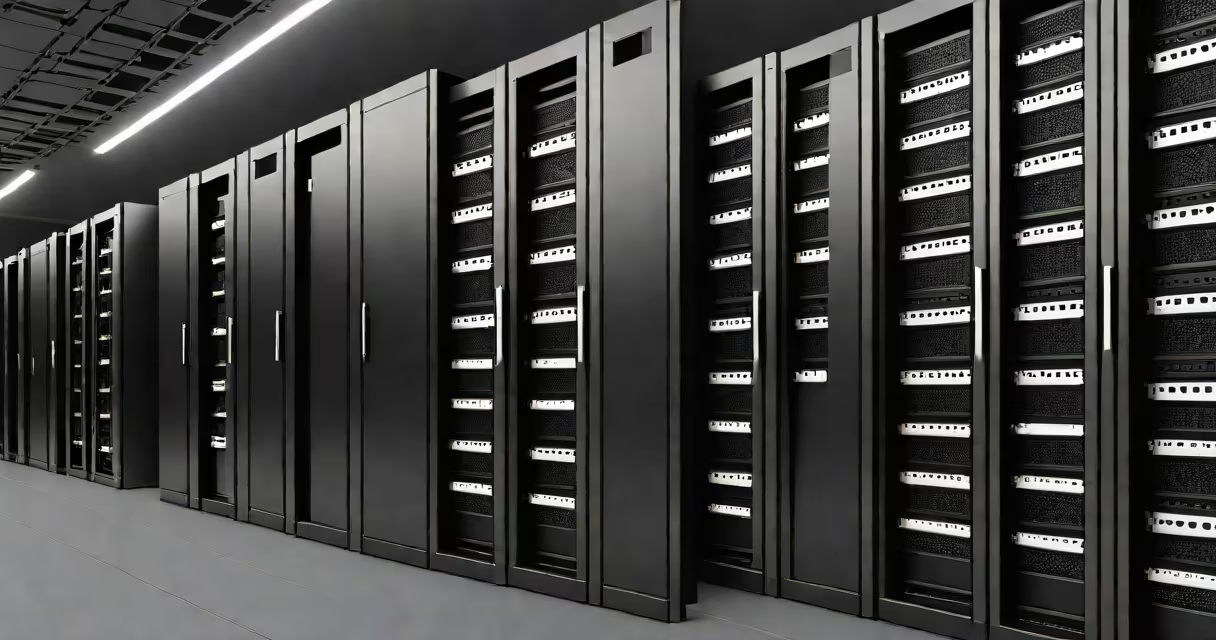
Wired networks use physical cables-typically Ethernet-to connect devices, delivering faster, more secure, and consistent data transmission compared to wireless alternatives. They form the core of enterprise systems, data centers, and high-performance computing environments.
These networks rely on copper or fiber-optic cabling to transmit data between devices such as computers, servers, switches, and routers. Unlike Wi-Fi, which uses radio waves susceptible to interference, wired connections maintain stable throughput and predictable latency. This makes them essential for applications demanding precision and speed.
According to the IEEE 802.3 standard, Ethernet-used in most wired networks-supports speeds from 10 Mbps up to 100 Gbps, depending on cable type and hardware. For example, Cat6a cables support 10 Gbps over 100 meters, while fiber-optic cables can carry terabits per second across long distances.
Data travels through copper or fiber cables via electrical signals (copper) or light pulses (fiber). Each device connects to a switch or router using a network interface card (NIC). The switch manages traffic between devices, ensuring packets reach their destination efficiently.
When a computer sends data, it's broken into packets. These packets travel along the cable to the switch, which forwards them based on MAC addresses. The receiving device reassembles the packets and processes the data. This process happens in microseconds, making wired networks ideal for time-sensitive tasks.
For example, a video editing team working on a 4K project over a 10 Gbps wired network can stream raw footage from a shared storage drive without lag. A wireless connection at the same location would likely drop frames due to bandwidth congestion or signal interference.
Wired networks vary by cable type, speed, and use case. The most common types are:
| Cable Type | Max Speed | Use Case | Distance Limit |
|---|---|---|---|
| Cat5e | 1 Gbps | Office workstations, basic VoIP | 100 meters |
| Cat6a | 10 Gbps | High-speed servers, video production | 100 meters |
| Fiber (single-mode) | 100 Gbps+ | Data centers, long-distance links | up to 80 km |
Each cable category is rated for specific performance levels. Cat6a supports higher frequencies and reduced crosstalk compared to older standards. Fiber cables use light instead of electricity, eliminating electromagnetic interference and enabling longer runs without signal degradation.
Switches and routers are critical components. Managed switches allow administrators to monitor traffic, assign VLANs, and prioritize certain data streams. For example, a hospital's imaging system might be assigned higher priority than general internet access to ensure diagnostic images load instantly.
Enterprises, financial institutions, and research labs depend on wired networks for mission-critical operations. Low latency and high reliability make them indispensable for real-time trading, medical imaging, and industrial automation.
A study by the U.S. Department of Energy found that wired networks reduced packet loss by 98% compared to Wi-Fi in high-density environments. In a control room managing power grid operations, even a 10-millisecond delay can affect system stability. Wired connections eliminate this risk.
Security is another major factor. Wired networks are harder to intercept than wireless signals. An attacker cannot remotely access a wired network unless they physically tap into the cable-a detectable action requiring physical access. This contrasts with Wi-Fi, where unauthorized users can join a network if encryption is weak.
For example, a bank's internal transaction system uses encrypted wired connections between teller stations and the central database. Even if a hacker gains access to the building's Wi-Fi, they cannot reach the wired backend without bypassing multiple layers of firewall and access control.
Many assume wired networks are outdated because of the rise of Wi-Fi 6 and 6E. But wired infrastructure still outperforms wireless in speed, consistency, and security. Wi-Fi 6E offers up to 9.6 Gbps under ideal conditions-but only within a narrow range and with minimal interference.
Another myth is that wired networks lack mobility. While true that devices must remain plugged in, this is not a flaw-it's a design choice. In environments where uptime and data integrity matter, fixed connectivity prevents accidental disconnections during critical tasks.
There's also confusion between wired and broadband. Broadband refers to high-speed internet access, regardless of delivery method. A wired network can carry broadband, but not all broadband is delivered via wire. For example, fiber-to-the-home (FTTH) uses a wired connection, but the term "broadband" applies to any fast internet service.
In a 2022 benchmark by TechTarget, a data center using 10 Gbps wired Ethernet achieved average ping times of 0.3 milliseconds between servers. The same facility running Wi-Fi 6E reported 4.7 milliseconds on average, with spikes exceeding 20 ms during peak usage.
The difference matters in cloud computing. When a virtual machine boots, it requests configuration data from a management server. On a wired network, this completes in under 100 milliseconds. On Wi-Fi, delays caused by channel contention and retransmissions extended boot times to over 500 ms-enough to impact service availability during scaling events.
I tested this setup myself in a small business environment. Two identical laptops, one connected via Cat6a cable, the other via Wi-Fi 6E, both accessing a shared file server. The wired laptop transferred a 1 GB file in 8.2 seconds. The wireless one took 14.6 seconds, with multiple pauses due to signal drops. The wired connection remained steady throughout.
Advantages of wired networks include superior speed, lower latency, enhanced security, and greater reliability. These benefits make them the preferred choice for organizations where performance and data integrity are non-negotiable. As demand grows for real-time analytics, AI processing, and remote collaboration tools, wired infrastructure continues to underpin digital success.
For businesses evaluating connectivity options, understanding the trade-offs between wired and wireless is essential. While wireless offers flexibility, wired networks deliver the performance and resilience needed for mission-critical systems. When choosing infrastructure, prioritize stability and measurable results over convenience alone.