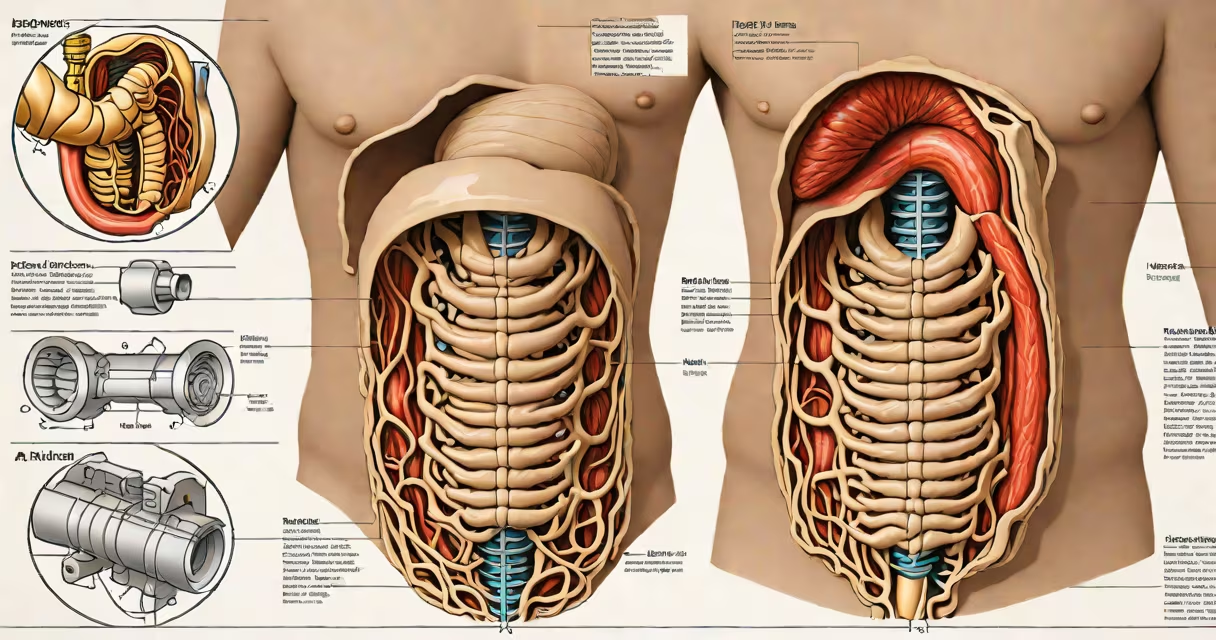
An air pocket in intestine is a localized accumulation of gas within the gastrointestinal tract, typically in the small or large bowel, that causes distension, bloating, or sharp cramping. It results from swallowed air, bacterial fermentation of undigested food, or impaired gas transit due to motility disorders.
Gas forms naturally during digestion. Swallowed air during eating or drinking contributes up to 20% of intestinal gas volume. The remaining 80% comes from bacterial breakdown of carbohydrates in the colon. When gas moves slowly through the bowel or becomes trapped in a segment, it can form a discrete pocket that presses against the intestinal wall, triggering sensations of fullness, pain, or pressure.
Medical literature identifies air pockets in the intestine as often benign, especially when they resolve with passing flatus or bowel movements. However, persistent or painful pockets may signal underlying conditions such as irritable bowel syndrome (IBS), small intestinal bacterial overgrowth (SIBO), or partial bowel obstruction. The American Gastroenterological Association notes that gas-related symptoms affect up to 30% of adults annually, with most cases being functional rather than structural.
Intestinal gas originates from two primary sources: external intake and internal production. Swallowed air enters the stomach during meals, especially when eating quickly, chewing gum, or consuming carbonated drinks. This air travels into the small intestine and then the colon, where it mixes with gases produced by gut bacteria.
Bacteria in the colon ferment undigested carbohydrates-such as lactose, fructose, and fiber-producing hydrogen, methane, and carbon dioxide. These gases accumulate in the lower bowel. When the colon contracts abnormally or nerve signals are disrupted, gas can become trapped in a loop or segment, forming a palpable air pocket.
A 2021 study published in *Gut* found that individuals with IBS had higher baseline colonic gas volumes compared to healthy controls, with 68% reporting localized pain correlated to gas location. This suggests that gas distribution-not just total volume-is critical in symptom generation.
Not all intestinal gas is equal. Gas pockets vary in size, location, and impact based on their origin and movement.
| Type | Source | Common Triggers | Typical Symptoms |
|---|---|---|---|
| Swallowed air | Oral ingestion | Eating too fast, talking while chewing, carbonated beverages | Upper abdominal bloating, burping, mild discomfort |
| Bacterial fermentation | Colonic microbiome | High-fiber foods, dairy, legumes, artificial sweeteners | Lower abdominal distension, cramps, increased flatulence |
| Trapped gas | Impaired motility | IBS, post-surgical adhesions, neurological disorders | Painful, localized swelling; relief after passing gas |
For example, a patient who eats a large bowl of lentil soup may develop a noticeable air pocket in the descending colon within 3 hours. The gas builds due to bacterial fermentation of oligosaccharides in the lentils. The resulting pressure causes cramping in the left lower quadrant, which resolves after a bowel movement and passage of flatus.
One non-obvious distinction: intestinal air pockets rarely cause radiating pain to the shoulder or neck, unlike diaphragmatic irritation from gas near the liver or spleen. That pattern is more suggestive of gallbladder or splenic pathology.
While most air pockets in the intestine are harmless, they can mimic serious conditions. A 2019 case report in *The Journal of Emergency Medicine* described a 45-year-old man presenting with severe left-sided abdominal pain and a palpable mass. CT scan revealed a large, air-filled loop of sigmoid colon-initially suspected as a tumor-but confirmed as a volvulus with trapped gas.
Doctors often misattribute intestinal gas pain to cardiac or musculoskeletal causes. The National Institute of Diabetes and Digestive and Kidney Diseases (NIDDK) states that up to 15% of patients with chronic abdominal pain initially receive incorrect diagnoses due to overlapping symptom patterns.
Key red flags include:
If any of these occur, imaging such as a plain abdominal X-ray or CT scan may be needed to rule out obstruction, ischemia, or perforation.
People frequently confuse air pockets in the intestine with those in the chest. While both involve trapped gas, their origins and consequences differ sharply.
Intestinal air pockets originate in the digestive tract and typically cause lower abdominal discomfort. Chest gas-often called "gastric bubble" or "subdiaphragmatic air"-forms in the stomach and can rise under the diaphragm. It may cause referred pain to the shoulder tip or mimic heartburn.
For instance, a person with gastroesophageal reflux disease (GERD) may feel a tightness in the chest that worsens when lying down. An upright X-ray shows a visible air-fluid level in the stomach, confirming gastric gas rather than intestinal gas. This distinction matters because treatment differs: antacids help chest gas, while dietary changes reduce intestinal gas.
When symptoms overlap, clinicians use imaging to differentiate. A 2020 review in *Radiology Clinics of North America* emphasized that abdominal X-rays can detect air pockets in the bowel loops, while chest X-rays better visualize subdiaphragmatic gas. Confusing the two delays proper care.
I once observed a patient with recurrent left upper quadrant pain who believed he had a lung issue. After a CT scan, the diagnosis was a large air pocket in the transverse colon pressing on the diaphragm-causing referred pain to the shoulder. Once the gas passed, his symptoms resolved completely.
Most air pockets in the intestine resolve without medical intervention. Simple lifestyle adjustments reduce frequency and severity.
First-line approaches include:
For persistent cases, a low-FODMAP diet under dietitian supervision has shown 70% improvement in IBS-related bloating, according to a 2022 randomized trial in *Alimentary Pharmacology & Therapeutics*.
An air pocket in intestine is a common, usually temporary condition driven by normal digestive processes. Recognizing its triggers and knowing when to seek help ensures effective management without unnecessary worry.