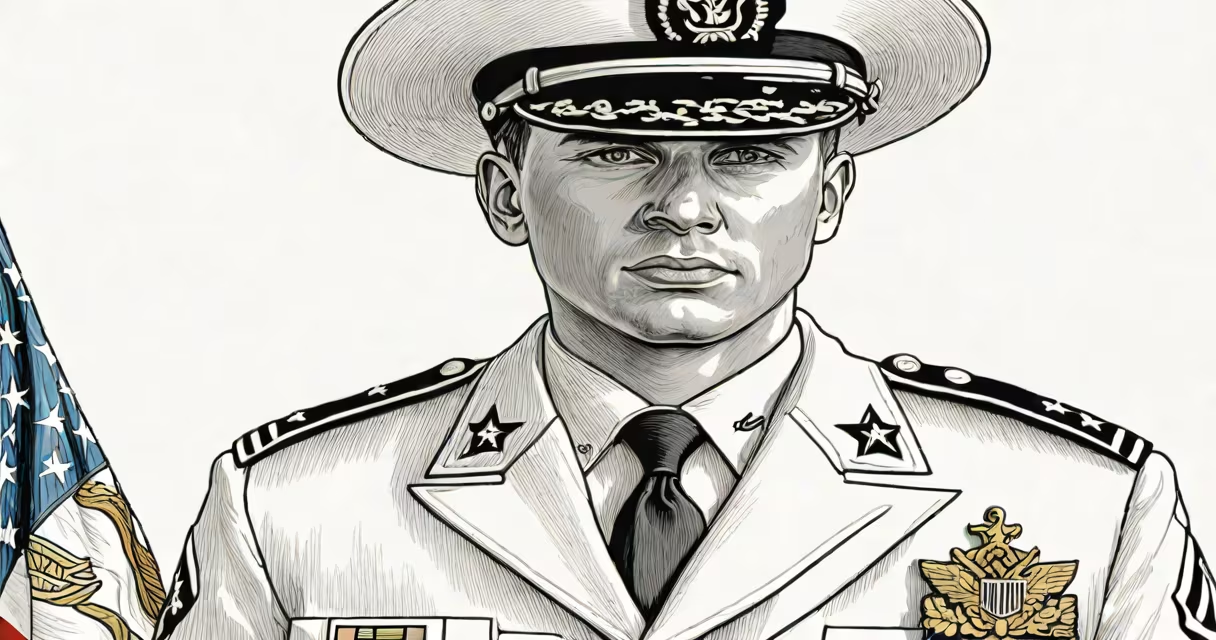
The navy core values-honor, courage, and commitment-are the foundational ethical standards that guide every member of the United States Navy in duty, decision-making, and daily conduct. These values are not abstract ideals but operational principles embedded in training, leadership, and mission execution.
Honor means acting with integrity, honesty, and accountability. It requires sailors to do what is right even when no one is watching. For example, a sailor who reports a safety violation despite peer pressure demonstrates honor. According to the Naval Leadership and Ethics Center, honor is the bedrock of trust within naval units and is assessed in every performance evaluation.
Courage involves moral and physical strength. Moral courage is standing up for what's right, even under pressure. Physical courage is facing danger without hesitation. A sailor who risks their life to save a fellow crew member during a shipboard fire exemplifies both forms. The Navy's official doctrine states that courage is not the absence of fear but action in spite of it.
Commitment reflects dedication to the mission, the team, and the nation. It means showing up consistently, completing tasks thoroughly, and supporting others through challenges. A sailor who stays on station during a storm to maintain communications systems shows commitment. This value ensures readiness and reliability across global operations.
Navy core values are not taught in isolation. They are integrated into every phase of a sailor's career-from boot camp to command. During recruit training at Great Lakes, Illinois, recruits undergo daily drills that reinforce these values. One exercise requires recruits to resolve simulated ethical dilemmas, such as reporting a comrade who falsified records.
Leadership development programs emphasize the application of these values in real-world scenarios. For example, during a joint maritime exercise in the South China Sea, a junior officer had to decide whether to report a senior officer's deviation from protocol. The decision was based on the principle of honor-prioritizing mission integrity over personal loyalty.
These values also influence career advancement. The Navy's Performance Evaluation System includes specific criteria tied to each core value. A sailor rated "exceeds expectations" in commitment must demonstrate sustained effort, initiative, and team support over multiple assignments.
While the three core values remain constant, their expression varies by role, rank, and situation. Below is a breakdown of how they manifest across different contexts:
| Value | Junior Sailor | Mid-Level Leader | Senior Officer |
|---|---|---|---|
| Honor | Reporting unsafe equipment | Admitting a tactical error in a war game | Disclosing a procurement conflict of interest |
| Courage | Speaking up during a safety briefing | Challenging a flawed deployment plan | Advocating for ethical policy changes in fleet operations |
| Commitment | Completing extra training hours to qualify for a special assignment | Leading a team through a prolonged deployment without incident | Overseeing a multi-year project with consistent results |
Each level demands increasing responsibility. Honor remains consistent-it's about doing the right thing-but the consequences grow with rank. A junior sailor's mistake may affect a watch team; a senior officer's decision can impact national security.
Many assume navy core values are ceremonial or symbolic. This is incorrect. They are enforceable standards. Violations result in administrative actions or court-martial proceedings. In 2021, a Navy commander was relieved of command after failing to uphold honor by covering up a shipboard accident. The investigation concluded that the breach undermined unit cohesion and mission effectiveness.
Another misconception is that courage equates to recklessness. The Navy defines courage as disciplined action under stress. A sailor who charges into a burning compartment without proper gear is not courageous-they're endangering themselves and others. True courage involves assessing risk, using available resources, and following procedures.
A lesser-known fact: these values are not unique to the Navy. The Marine Corps, Air Force, and Army share similar frameworks. But the Navy's version emphasizes stewardship of ships, equipment, and the sea environment. For example, a sailor who prevents oil contamination during refueling demonstrates commitment to environmental protection-a component of naval mission success.
In 2011, following the Tōhoku earthquake and tsunami in Japan, the U.S. Navy deployed the USS Ronald Reagan and other assets to provide humanitarian aid. The operation lasted over six weeks and involved thousands of personnel.
During this mission, a sailor noticed a discrepancy in the distribution of medical supplies. Despite being off-duty and under heavy workload, they reported the issue. This act of honor ensured equitable access to care. Later, the sailor was recognized in a formal commendation for maintaining integrity under pressure.
Another instance involved a petty officer who stayed on deck during a typhoon to secure cargo. The weather conditions were extreme-winds exceeded 60 knots. Their physical courage prevented a major loss of supplies. The incident was documented in the Navy's Operational Lessons Learned database as a case study in leadership under duress.
These events show that navy core values are not theoretical. They are lived daily in high-stakes environments. They are measured not by speeches, but by actions taken when the outcome matters most.
While the Navy's core values are distinct, they align with broader institutional ethics. The Department of Defense's Directive 5500.7-R outlines ethical standards for all military branches. The Navy's values are a subset of those, tailored to maritime operations and naval culture.
Even within the military, differences exist. The Air Force emphasizes precision and discipline; the Army focuses on close combat and resilience. The Navy's values reflect its unique environment: long deployments at sea, complex logistics, and multinational coordination. Honor, courage, and commitment are adapted to this reality.
When I served aboard a destroyer in the Pacific, I witnessed a sailor refuse to accept a bribe from a foreign port official. The offer was for false documentation to bypass inspections. The sailor reported it immediately. The incident led to a formal inquiry and reinforced the Navy's stance: no compromise on honor, even in remote locations.
Navy core values are not optional. They are the standard by which every sailor is judged-not just in war, but in peace, in training, and in everyday decisions. They are not slogans. They are the operating system of naval professionalism.