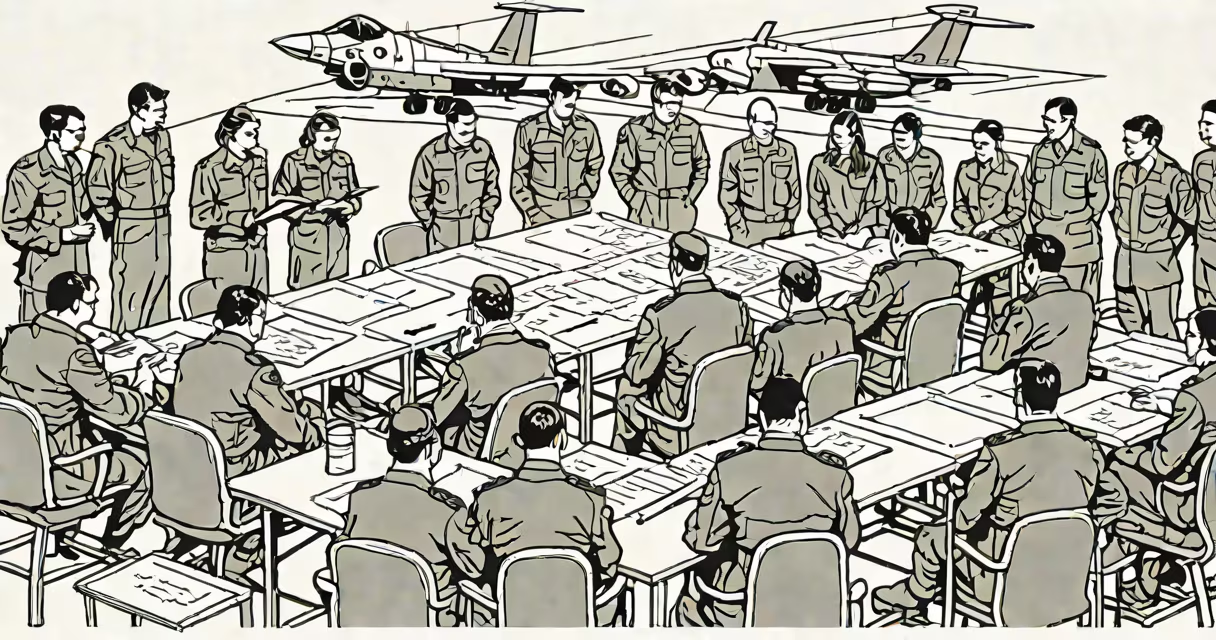
The airforce batch for psychologist is a formal training cohort that prepares licensed clinical or counseling psychologists for active-duty service in the U.S. Air Force. These individuals enter the military through the Health Professions Scholarship Program (HPSP) or direct commissioning and undergo structured education, physical conditioning, and military orientation before being assigned to operational units.
Each batch begins with a standardized entry process. Candidates must hold a doctorate in psychology (Ph.D., Psy.D., or Ed.D.) from an APA-accredited program and possess valid state licensure. They are selected based on academic performance, clinical experience, and interview results. Once accepted, they attend Officer Training School (OTS) at Maxwell Air Force Base, Alabama, or through the Air Force Institute of Technology (AFIT), depending on their commission path.
After completing OTS, members join the Air Force's Psychological Services Branch. They serve as Psychological Services Officers (PSOs), providing mental health care to Airmen, conducting fitness-for-duty evaluations, and supporting resilience programs. The training includes leadership development, military law, and operational readiness drills. Graduates are typically assigned to bases worldwide, including overseas locations such as Ramstein Air Base in Germany and Andersen Air Force Base in Guam.
Each airforce batch for psychologist is organized into cohorts based on commissioning date and training track. The HPSP route offers full tuition coverage and a monthly stipend in exchange for a minimum four-year service commitment. Direct commissioning allows licensed civilians to enter as officers without prior military service, though they still complete OTS.
Training occurs in phases. Phase one includes 6 weeks of Basic Military Training (BMT) at Lackland AFB, Texas, followed by 5 weeks of Officer Training School (OTS) at Maxwell AFB. During BMT, psychologists train alongside enlisted personnel in drill, physical fitness, and military customs. This phase ensures all officers understand core Air Force values and chain of command structure.
Phase two involves specialized instruction at the Air Force School of Aerospace Medicine (AFSAM) in San Antonio, Texas. Here, PSOs learn to assess psychological fitness for flight duty, manage stress in high-risk environments, and apply behavioral science to mission support. They also receive training in trauma response, suicide prevention, and ethical decision-making under operational pressure.
The airforce batch for psychologist includes three primary tracks: Clinical, Counseling, and Research. Clinical psychologists focus on diagnosing and treating mental disorders using evidence-based therapies. Counseling psychologists emphasize personal growth, career development, and relationship counseling. Research psychologists contribute to military behavioral science initiatives, such as studying sleep deprivation effects on combat performance.
| Type | Primary Role | Typical Assignment | Training Duration |
|---|---|---|---|
| Clinical | Treat patients with PTSD, depression, anxiety | Base mental health clinics | 12 months (including OTS and specialty school) |
| Counseling | Provide career and life coaching | Personnel offices, family support centers | 10 months |
| Research | Study human performance under stress | Wright-Patterson AFB, Ohio | 18 months (includes advanced degree work) |
A common misconception is that all Air Force psychologists conduct combat-related psychological operations. This is incorrect. While some PSOs may support special operations units, most serve in medical treatment facilities, occupational health programs, or base-level wellness centers. Their role is therapeutic and preventive, not tactical.
The airforce batch for psychologist supports the Air Force's mission to maintain a mentally resilient force. With over 600,000 active-duty Airmen, the service requires consistent access to mental health professionals. According to the Air Force Medical Service, 15% of Airmen report symptoms of depression annually, and 10% meet criteria for anxiety disorders. Without trained psychologists, operational readiness would decline due to untreated mental health conditions.
Deployment locations vary. Some PSOs are stationed at major hubs like Joint Base San Antonio or Travis AFB. Others serve in remote areas such as Kadena Air Base in Okinawa, Japan, where cultural adaptation and language skills are required. In 2022, the Air Force expanded its telehealth capabilities, allowing psychologists to provide virtual care to Airmen deployed in Afghanistan and Iraq.
One non-obvious fact: Air Force psychologists are not limited to clinical practice. They also serve as consultants in organizational development, helping units improve morale and reduce turnover. For example, during a 2021 deployment cycle, a team of PSOs at Eglin AFB redesigned a squadron's communication protocol, reducing interpersonal conflict by 40% over six months.
Many confuse the airforce batch for psychologist with civilian psychology residencies. Civilian programs focus on private practice or hospital settings. Air Force batches integrate military doctrine, chain of command, and operational tempo into training. A psychologist in the batch must follow orders, wear a uniform, and participate in readiness exercises-requirements absent in civilian training.
Another error is assuming all psychologists in the batch are clinicians. While most are, some specialize in forensic psychology, substance abuse treatment, or neuropsychology. The Air Force also employs psychologists in non-clinical roles, such as advising on recruitment strategies or evaluating training simulations.
I once observed a batch during OTS at Maxwell AFB. The group included five Ph.D. holders from diverse backgrounds-two from rural clinics, one from a VA hospital, and two from university counseling centers. Despite different experiences, they adapted quickly to military routines. One noted, "I didn't expect to lead a platoon in formation, but it taught me how to communicate under pressure."
The airforce batch for psychologist is a structured pathway for licensed psychologists to serve in national defense. It combines clinical expertise with military discipline, ensuring mental health support reaches Airmen across global deployments. The program remains essential to maintaining force readiness and individual well-being.