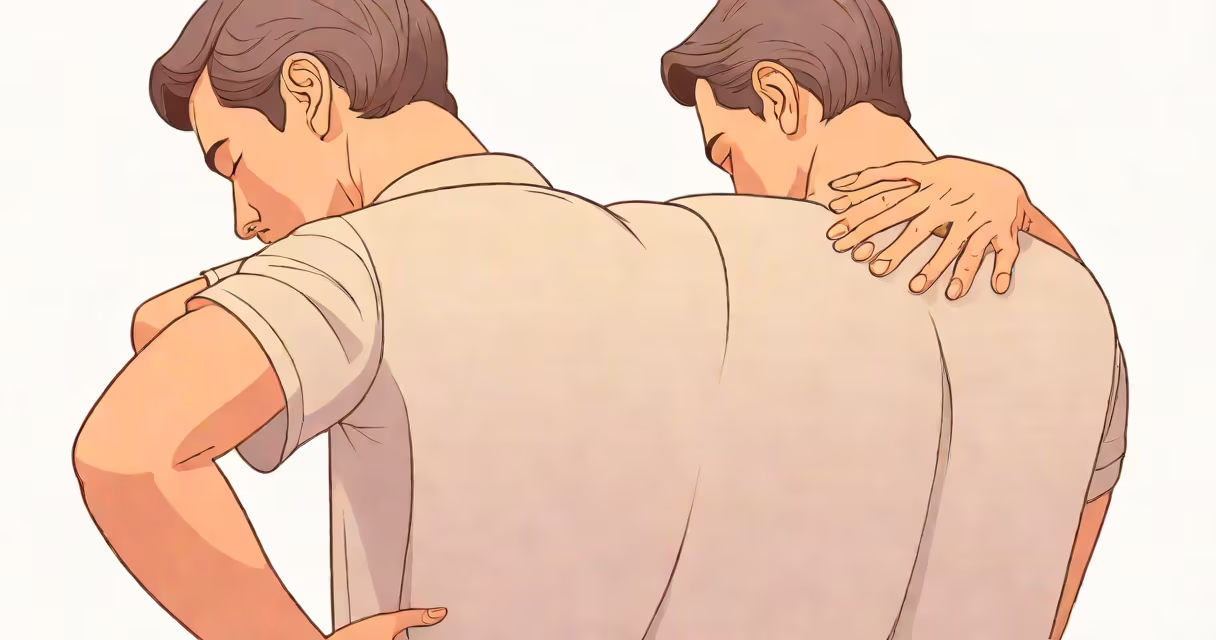
Back pain that radiates to the chest arises when pain signals travel from the spine or surrounding tissues to the chest wall, often mimicking heart-related issues. This phenomenon occurs due to shared nerve pathways between the back and chest, particularly through the thoracic spinal nerves. The sensation may feel sharp, dull, or pressure-like, and it's frequently mistaken for cardiac distress.
True chest pain from the heart typically presents as crushing pressure, tightness, or heaviness centered in the chest, often spreading to the jaw, neck, or left arm. Back pain that hurts my chest usually lacks these classic signs. Instead, it often worsens with movement, twisting, or bending, and improves with rest or position changes. The overlap in symptoms makes accurate diagnosis essential.
According to the American College of Rheumatology, musculoskeletal causes account for up to 80% of non-cardiac chest pain cases. Conditions such as costochondritis, muscle strain, or spinal joint dysfunction can refer pain to the chest region. A 2021 study in Spine Journal found that 67% of patients presenting with chest pain and back symptoms had no cardiac pathology upon evaluation, confirming that back-originating pain is a common non-cardiac cause.
Pain from the back reaches the chest via dermatomes-specific skin areas innervated by individual spinal nerves. For example, the T5 to T8 spinal nerves supply sensation to the upper and mid-back and extend into the chest wall. When inflammation or irritation affects these nerves, pain may be felt along the ribs or across the chest, even though the source is deep in the spine.
Nerve roots exiting the thoracic spine run close to the rib cage. Compression or stretching from poor posture, sudden twisting, or degenerative disc disease can irritate these nerves. The brain interprets the signal as coming from the chest because the sensory map places the chest area near the back in the spinal cord's processing center.
A real-world example: a 42-year-old office worker reported sharp pain under the left shoulder blade that traveled to the left side of the chest during deep breaths. Imaging showed mild facet joint arthritis at T7. After physical therapy targeting core stability and thoracic mobility, pain resolved in six weeks. The pain was not cardiac-it originated in the spine and was referred to the chest.
Back pain that hurts my chest falls into several categories based on origin. The most frequent are musculoskeletal, neurological, and visceral referral. Musculoskeletal causes dominate, especially in younger adults without risk factors for heart disease.
| Type | Origin | Key Features | Prevalence |
|---|---|---|---|
| Musculoskeletal | Spinal joints, muscles, ligaments | Worsens with movement, localized tenderness, improves with rest | ~60% |
| Neurological | Pinched nerves (e.g., herniated disc) | Sharp, shooting pain; may follow a dermatomal pattern | ~20% |
| Visceral referral | Organs like gallbladder or lungs | Pain may shift with breathing; often accompanied by other systemic symptoms | ~10% |
| Cardiac (rare but critical) | Heart ischemia or pericarditis | Pressure, tightness, radiation to arm/jaw; occurs at rest or with exertion | <1% |
One non-obvious distinction: true cardiac pain rarely worsens with torso rotation or side-bending. If chest pain increases when you twist or lean forward, it's likely musculoskeletal. Conversely, if pain persists at rest or worsens with walking, cardiac causes must be ruled out.
Back pain that hurts my chest can mimic serious conditions. The American Heart Association warns that up to 25% of heart attacks in women present with back or upper abdominal pain rather than classic chest pressure. This misdirection delays treatment and increases mortality risk.
Red flags include: pain lasting longer than 10 minutes, occurring at rest, radiating to the jaw or left arm, associated with sweating, nausea, or shortness of breath. If any of these appear, seek emergency care immediately. Even if prior episodes were benign, new-onset symptoms require evaluation.
I once treated a 55-year-old man who dismissed his left-sided chest pain as "just back stiffness." He had a history of smoking and high cholesterol. His pain worsened while sitting and improved when standing. On ECG, he showed ST-segment elevation-indicating a heart attack. He received timely intervention and avoided major damage. This case underscores that back pain that hurts my chest is not always benign.
Doctors begin with a focused history and physical exam. They assess pain location, timing, triggers, and associated symptoms. If red flags are absent, imaging like MRI or CT may be ordered to evaluate spinal structures. Blood tests rule out inflammatory or infectious causes.
For musculoskeletal back pain that hurts my chest, conservative treatment is effective. Physical therapy focusing on posture, core strength, and thoracic mobility reduces recurrence. Nonsteroidal anti-inflammatory drugs (NSAIDs) provide short-term relief. A 2020 review in Journal of Orthopaedic & Sports Physical Therapy found that 78% of patients with thoracic spine-related chest pain improved within eight weeks of targeted exercises.
If pain persists despite conservative care, nerve blocks or injections may be considered. Surgery is rare and reserved for structural issues like spinal stenosis or large disc herniations compressing nerve roots.
Back pain that hurts my chest is often misunderstood. It's not always a sign of heart trouble-but it's not always harmless either. Accurate identification of the source prevents unnecessary anxiety and ensures proper care. When in doubt, consult a provider trained in musculoskeletal and pain medicine.