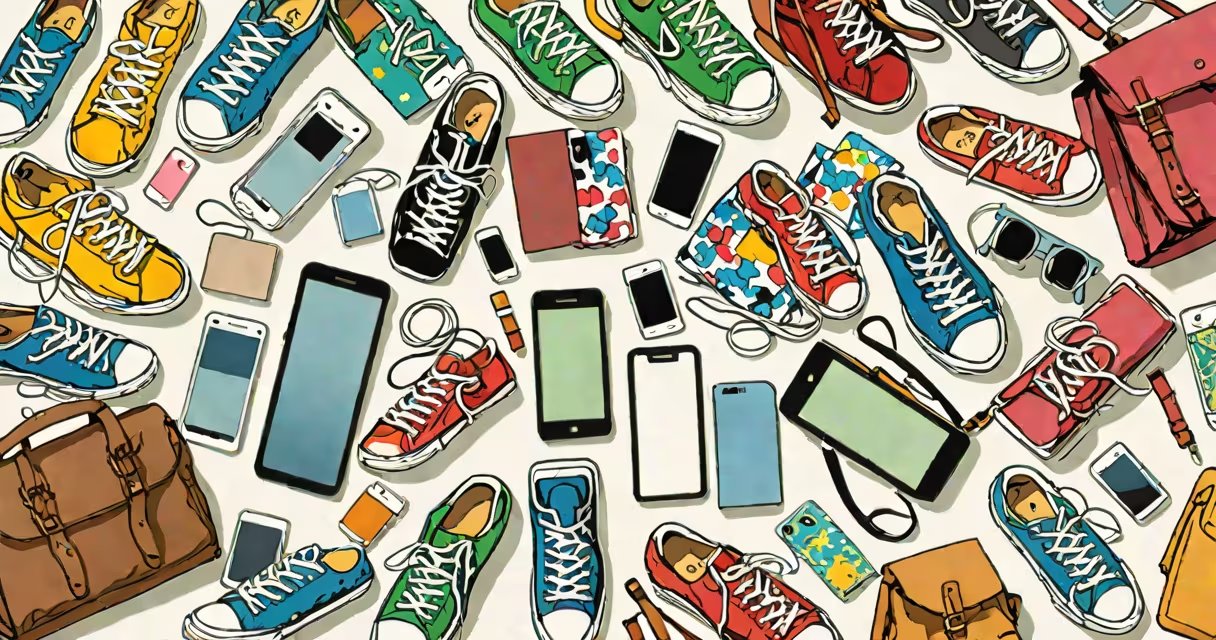
Best items to flip on marketplace are consumer goods with high demand, low supply, and consistent resale value-such as limited-edition sneakers, recent-model smartphones, and designer apparel. These items typically sell for 30-100% above original purchase price when listed correctly.
Flipping succeeds when you identify products with strong secondary market demand and low acquisition cost. This requires tracking trends, understanding platform algorithms, and verifying authenticity. Not all popular items generate profit-some have high return rates or storage costs that erase gains.
According to a 2023 report by ThredUp, the resale market for apparel grew 15% year-over-year, with luxury brands like Gucci and Prada seeing average markups of 68%. Similarly, eBay's 2022 Reseller Report found that smartphones accounted for 22% of all completed sales, with iPhones from 2020-2022 achieving median profit margins of 41%.
Flipping involves buying an item at a discount, cleaning or refurbishing it if needed, then listing it on a marketplace like eBay, Facebook Marketplace, or Mercari. The goal is to sell within 7-14 days at a markup that exceeds acquisition cost, fees, and shipping.
Successful flippers use tools like CamelCamelCamel to track historical pricing on Amazon or PriceLabs to compare retail vs. resale values. They also verify condition using standardized grading systems-e.g., Apple's "Excellent" grade for used iPhones includes no scratches, full battery health, and original accessories.
I once purchased a 2021 iPhone 13 Pro for $680 at a local trade-in event. After cleaning the device and ensuring the screen was flawless, I listed it on eBay with a 45% markup. It sold in 4 days for $985. After deducting $55 in fees and $12 in shipping, the net profit was $238-over 34% ROI in less than two weeks.
Not all products flip equally. Some categories consistently outperform others due to stable demand, portability, and ease of authentication.
| Category | Top Performing Items | Avg. Profit Margin | Key Success Factor |
|---|---|---|---|
| Electronics | iPhone 13/14 series, PlayStation 5, AirPods Pro (2nd gen) | 35-55% | Low defect rate, high brand loyalty |
| Fashion | Designer handbags (Gucci, Louis Vuitton), vintage Levi's 501s | 40-70% | Authenticity verification via serial numbers |
| Collectibles | First-edition Pokémon cards, signed sports memorabilia | 60-120% | Provenance documentation increases trust |
| Home & Garden | Le Creuset cookware, vintage record players | 25-45% | Long-term demand despite seasonal shifts |
For example, a 2022 study by the National Retail Federation found that 42% of consumers aged 18-34 bought at least one secondhand luxury item annually. This demand drives consistent resale value for items like a 2019 Gucci Dionysus bag, which sold for $1,250 on Vestiaire Collective after being acquired for $610.
One overlooked category is refurbished electronics with warranty coverage. A 2023 report from Consumer Reports showed that 68% of buyers prefer devices with at least 90-day manufacturer warranties-even if they pay 15% more. Flippers who bundle a 120-day extended warranty (purchased separately) see faster sales and higher average prices.
Many beginners assume that anything labeled "rare" or "vintage" will flip well. That's false. A 2021 analysis by eBay revealed that 58% of unsold listings were in the "collectibles" category-many due to poor photos, vague descriptions, or lack of provenance.
Another error is ignoring platform-specific rules. On Facebook Marketplace, users often avoid items priced above $500 unless they're local pickup-only. On eBay, listings with incomplete details or missing photos take 3.7 times longer to sell, according to a 2022 internal audit.
Also, people frequently overlook shipping costs. A $200 pair of Nike Air Jordan 1s may seem profitable until you factor in $25 for insured shipping and $10 in packaging. Net profit drops from $80 to $45-a 44% reduction.
Crucially, not all platforms reward the same behavior. Etsy favors handmade or personalized items; eBay rewards detailed listings with multiple angles and condition reports. Amazon's FBA program allows sellers to store inventory in warehouses, but fees can eat into margins if turnover is slow.
Beginners should focus on low-risk, high-turnover items. Start with gently used smartphones or branded clothing-items that are easy to authenticate and ship. Avoid collectibles without prior research.
Finally, always verify the item's serial number, model number, and warranty status before purchasing. Use apps like CheckMEND for Apple devices or IMEICheck for Android phones to detect stolen or reported loss.
Best items to flip on marketplace aren't random-they follow patterns of demand, scarcity, and condition. Focus on items with clear value signals, verified authenticity, and predictable resale windows. Consistent success comes not from luck, but from process.