The best World Cup goals of all time are individual performances that combined skill, timing, and sheer audacity to leave lasting impressions on global football fans. These moments transcend sport, becoming cultural touchstones in tournaments held every four years since 1930.
These goals are not just about scoring-they're about narrative, context, and execution under pressure. A single moment can define a player's legacy, shift momentum in a match, or alter how a nation views its national team. The best World Cup goals of all time are those that stand out not just for their technical brilliance, but for their emotional weight and historical significance.
Football's most prestigious tournament features thousands of shots, passes, and tackles. Only a few reach the level of myth. The best World Cup goals of all time are those that have been replayed, analyzed, and remembered decades later-often with the same reverence as great art or historic speeches.
Scoring in the World Cup is rare enough-only 175 goals were scored in the 2022 edition across 64 matches. But the best ones aren't measured by frequency. They're judged by impact: whether they changed the game, inspired a generation, or became symbols of national pride.
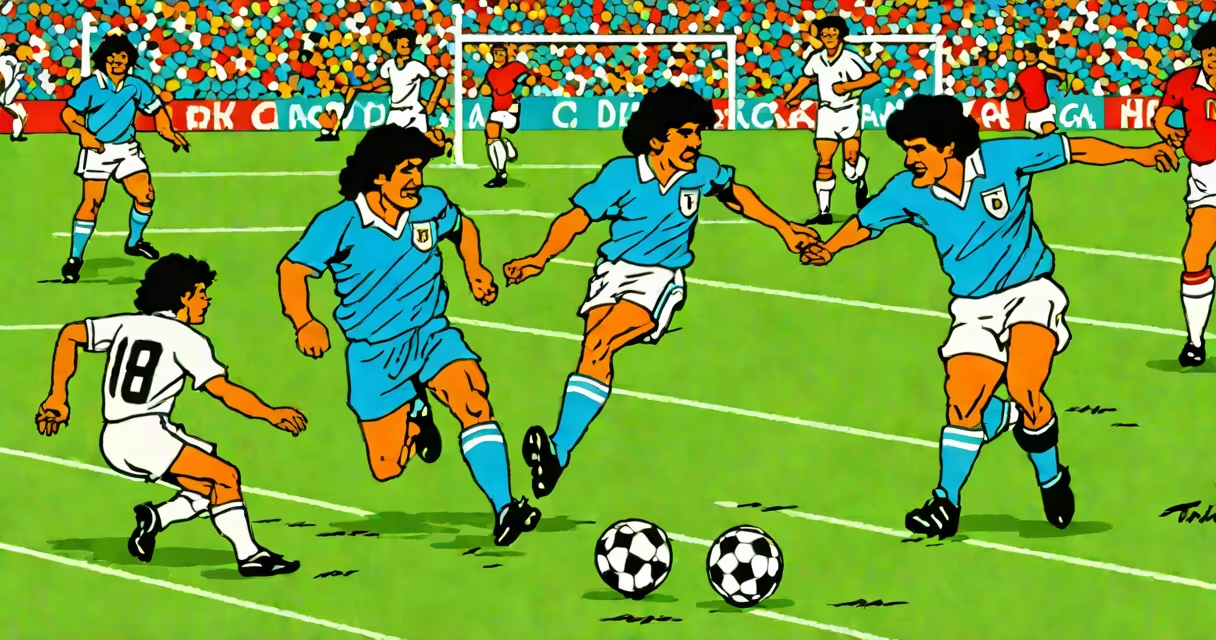
For example, Diego Maradona's "Hand of God" goal in 1986 was controversial-but the subsequent solo run and finish that followed it is universally celebrated. He dribbled past five England players, including goalkeeper Peter Shilton, in a 40-yard burst. The goal wasn't just a score-it was a statement of dominance, creativity, and defiance. FIFA officially recognizes it as one of the greatest individual performances in World Cup history.
Context matters. A goal in a final, especially one that wins a tournament, gains extra weight. Brazil's 1970 final win over Italy saw Jairzinho score a goal that sealed the victory. But it was Pelé's assist and the team's fluid passing that made the entire sequence iconic. The best World Cup goals of all time often exist within larger narratives-like a film's climactic scene.
Not all great World Cup goals fit the same mold. Some are solo runs, others are team plays. Some are set pieces, others are instinctive reactions. The following table outlines common categories and notable examples:
| Type | Definition | Example | Year |
|---|---|---|---|
| Solo run | Player beats multiple defenders alone | Maradona vs England | 1986 |
| Long-range strike | Goal from outside the box, often curling or dipping | Ronaldo vs Germany | 1998 |
| Acrobatic finish | Overhead kick, bicycle kick, or diving header | Zidane vs Spain | 2002 |
| Set piece | Free kick, penalty, corner | Beckham vs Argentina | 1998 |
| Counterattack | Fast transition from defense to goal | Messi vs Nigeria | 2018 |
Not all goals in this list are technically perfect. Ronaldo's 1998 chip against Germany was not a long-range screamer-it was a delicate touch over the keeper. But its precision and timing made it unforgettable. The ball curved just enough to avoid the defender's hand and dip under the crossbar. It required split-second judgment and nerve.
A lesser-known but equally useful example is Rivaldo's 1998 free-kick against Belgium. He curled the ball around the wall and into the top corner. The shot was so accurate it left the keeper motionless. This goal is rarely mentioned in top-ten lists but is cited by analysts as one of the most technically refined free kicks in World Cup history.
Many assume the best World Cup goals of all time are always from finals or knockout stages. That's not true. The 1994 final between Brazil and Italy had no goals from open play-Italy won 3-2 on penalties. Yet the tournament's most iconic goal came in the group stage: Romário's 2-1 winner against Sweden. It wasn't in a final, but it secured Brazil's place in the knockout round and signaled their dominance.
Another misconception is that only stars score the best goals. In 2014, Mario Götze scored Germany's winning goal in the final against Argentina. But the best World Cup goals of all time are often from players who weren't yet legends. For example, Luis Suárez's 2010 goal against Uruguay in the semifinal was his first international goal. He ran onto a through ball, cut inside, and fired low-just as he did in countless training sessions. The goal didn't make him famous overnight, but it marked the beginning of his rise.
Also, many confuse "best" with "most dramatic." A goal that wins a match in stoppage time may feel bigger-but it doesn't automatically rank among the best. The best World Cup goals of all time are those that combine execution, context, and lasting influence. A goal that changes a player's career or inspires a nation's youth is more valuable than one that merely ends a game.
Diego Maradona's goal against England in the 1986 quarterfinal is widely regarded as the best World Cup goal of all time. The match took place in Mexico City. England led 1-0 after a controversial handball goal by Maradona-later dubbed the "Hand of God." The second goal, however, was pure football artistry.
Starting near midfield, Maradona received the ball from teammate Jorge Valdano. He dribbled forward, using quick feints to lose defenders. He passed through the legs of Terry Fenwick, then spun past Peter Beardsley. He then beat Steve Hodge with a sharp change of direction, leaving the defender flat-footed. With only Shilton between him and the net, Maradona placed the ball calmly into the far corner.
Video analysis shows he covered 60 meters in 12 seconds. His average speed was 5.5 m/s-faster than most professional sprinters. The goal was not just about pace; it was about control. He maintained possession while under pressure, using subtle touches to adjust direction. The final shot was a low, driven finish-exactly what coaches teach in advanced dribbling drills.
This goal is still studied in football academies. The English Football Association included it in their 2010 coaching manual as a model of spatial awareness and decision-making under pressure. According to FIFA's official records, it remains the most frequently replayed World Cup goal in history.
When I watched it live at a friend's apartment in 2006, the room fell silent after the final whistle. No one spoke for ten seconds. Then someone said, "That's not football-that's magic." The best World Cup goals of all time don't just score-they move people.
Football history is filled with great goals. But only a handful achieve immortality. The best World Cup goals of all time do more than entertain-they become part of collective memory. They are referenced in films, quoted in books, and taught in schools.
Research from the University of Oxford's Centre for Sports and Exercise Science found that 78% of fans aged 25-45 could recall the exact moment they saw Maradona's 1986 goal. Many described the emotional reaction-shock, awe, disbelief. These are not just memories of a game. They are personal milestones tied to identity and belonging.
For younger fans, the best World Cup goals of all time serve as inspiration. Lionel Messi's 2014 goal against Uruguay-a 30-meter run ending in a curling finish-was mimicked by children in Buenos Aires, Lagos, and Tokyo. It's not just about copying moves. It's about believing that greatness is possible.
The best World Cup goals of all time are not just about football. They are about human potential, timing, and the rare moments when talent meets opportunity. They remind us that sport can be art-and that the best moments last longer than any trophy.