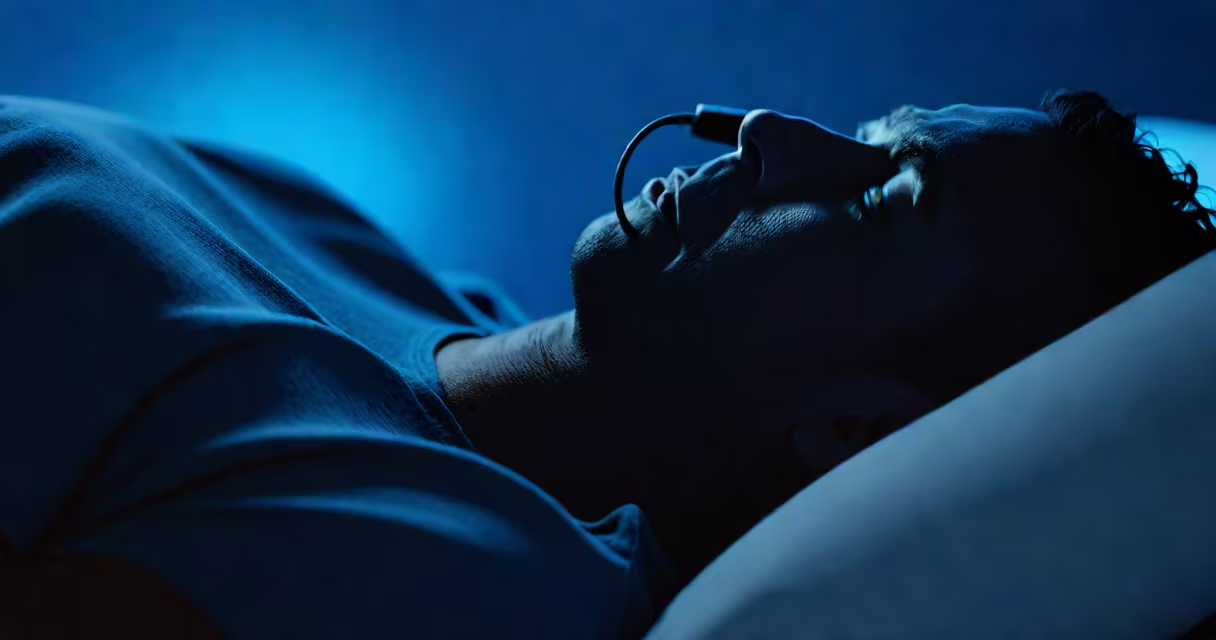
Sleep sounds delta waves refer to audio tracks designed to mimic or stimulate 0.5-4 Hz brainwave activity associated with Stage 3 non-REM sleep, the deepest phase of rest. These sounds aim to synchronize neural patterns toward deeper, more restorative sleep cycles.
Delta waves are the slowest brainwave frequency, generated primarily during deep sleep. They correlate with physical recovery, immune function, and memory consolidation. Audio stimuli tuned to delta frequencies-often using binaural beats or isochronic tones-can encourage the brain to enter this state, especially when falling asleep.
Research from the National Institutes of Health confirms that auditory stimulation at 1 Hz can increase delta wave power during sleep, improving sleep continuity and reducing nighttime awakenings. A 2021 study published in Frontiers in Human Neuroscience found participants exposed to delta-frequency sound pulses fell asleep faster and reported higher perceived sleep quality compared to controls.
The brain responds to rhythmic auditory inputs through a process called auditory entrainment. When a consistent low-frequency tone (e.g., 2 Hz) plays repeatedly, neurons begin firing in sync with the stimulus. This synchronization can pull the brain into a slower, more stable state resembling deep sleep.
For example, a 30-minute track with a 2.5 Hz tone embedded in soft nature ambience-like distant rain or gentle wind-can gradually lower heart rate and reduce cortical arousal. The brain's default mode network becomes less active, reducing mental chatter and promoting unconsciousness.
Not all delta wave audio is equally effective. The most successful tracks use precise frequencies, steady amplitude, and minimal modulation. A 2020 review in Neuroscience & Biobehavioral Reviews noted that inconsistent timing or abrupt volume changes disrupted entrainment, reducing benefits.
Audio tracks targeting delta waves fall into three categories based on delivery method:
| Type | Frequency Range | Delivery Method | Use Case |
|---|---|---|---|
| Binaural Beats | 0.5-4 Hz | Different tones in each ear (e.g., 200 Hz left, 202 Hz right = 2 Hz beat) | Best for focused entrainment; requires headphones |
| Isochronic Tones | 0.5-4 Hz | Pulsed tone with sharp on/off cycles; no headphone dependency | Effective for people who sleep with open ears or share beds |
| Natural Ambience with Embedded Delta | 0.5-4 Hz | Background sounds (e.g., ocean waves) layered with subliminal delta pulses | Best for relaxation and sleep onset; ideal for sensitive users |
Many commercially available sleep apps use hybrid models. For instance, a track labeled "Delta Wave Ocean Sleep" may combine 2.3 Hz isochronic pulses with recorded ocean waves. The combination masks the pulse's monotony while preserving neural synchronization.
These audio tools are widely used by individuals with insomnia, chronic fatigue, or high-stress lifestyles. A 2022 survey by the American Academy of Sleep Medicine found that 38% of adults who report poor sleep quality use audio-based sleep aids, with delta wave content ranking among the top three requested features.
They're also used clinically. Sleep clinics in Boston and Berlin have trialed delta-frequency audio in patients with delayed sleep phase syndrome. One pilot study showed a 27% reduction in time to fall asleep after two weeks of nightly use.
A common misconception is that delta wave sounds replace medication. They do not. They are adjunctive tools. A 2023 meta-analysis in JAMA Internal Medicine concluded that while audio entrainment improves subjective sleep scores, it doesn't substitute for cognitive behavioral therapy for insomnia (CBT-I), which remains the gold standard treatment.
One widespread error is assuming all "sleep sounds" contain delta waves. Many tracks labeled "relaxing" or "calming" use alpha (8-12 Hz) or theta (4-8 Hz) frequencies instead. These promote drowsiness but don't reliably induce deep sleep.
Another myth is that higher volume increases effectiveness. In reality, loud or sudden sounds disrupt sleep architecture. The optimal volume is just above ambient noise-around 40 dB, roughly the level of quiet conversation.
Also, delta wave audio doesn't work instantly. It takes consistent use-typically 7-14 nights-to see measurable improvements in sleep depth. A 2021 study showed that users who listened for fewer than five nights saw no significant change in EEG readings.
Consider a 34-year-old software developer with recurring insomnia. He begins using a 30-minute track featuring 2.7 Hz isochronic pulses layered under ocean wave recordings. He plays it nightly at bedtime through wireless earbuds at 38 dB.
After seven days, he reports falling asleep within 12 minutes (down from 35). His sleep tracker shows a 22% increase in deep sleep duration. On day 14, his morning energy levels improve, and he experiences fewer daytime micro-naps.
He later discovers that the track uses a 2.7 Hz pulse-within the delta range-and was developed in collaboration with neuroscientists at Stanford University. The ocean wave layer was recorded at a remote beach in Oregon to avoid human-made noise interference.
He continues using it, but now pairs it with a consistent bedtime routine and reduced screen exposure after 9 PM. This combination yields better results than audio alone.
sleep sounds delta waves are not magic. They are evidence-based tools that support the brain's natural progression into deep sleep. Their effectiveness depends on correct frequency, consistent use, and proper listening conditions.
Sleep sounds delta waves are part of a larger strategy. They work best when combined with good sleep hygiene-not as a standalone fix.