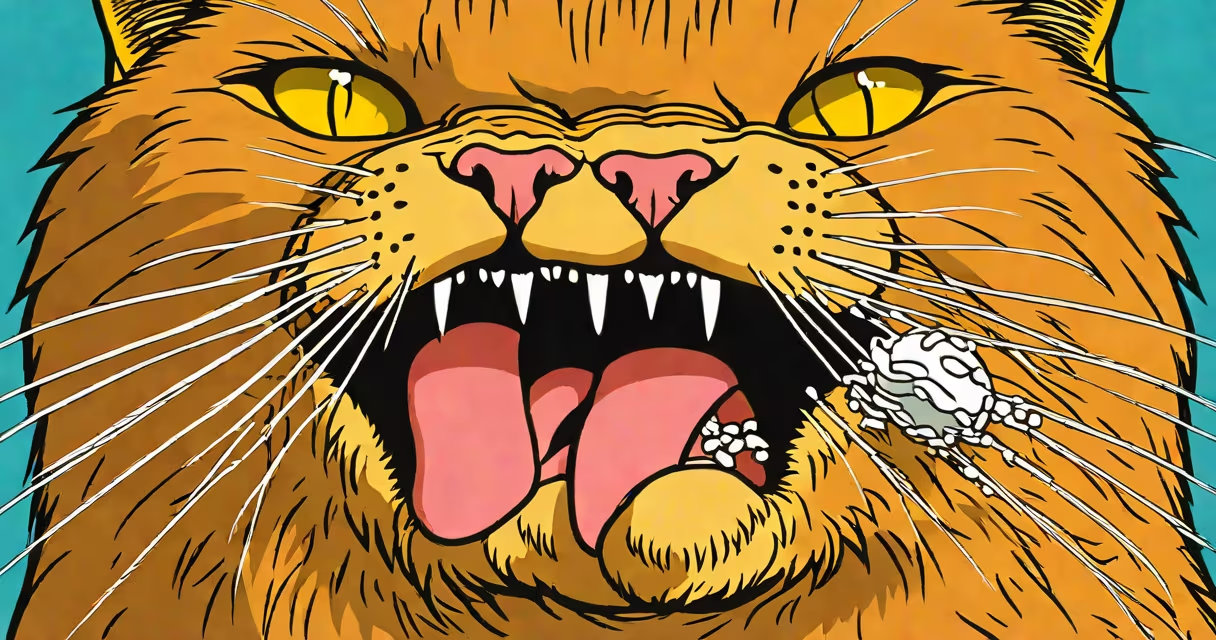
A cat choking on a hairball occurs when a mass of ingested fur blocks the esophagus or airway, causing distress, gagging, retching, and potential respiratory compromise. This condition requires prompt recognition and intervention to prevent aspiration or suffocation.
Hairballs form when cats groom themselves and swallow loose fur. Most pass through the digestive tract uneventfully, but when they accumulate in the stomach or esophagus, they can cause obstruction. A hairball lodged in the upper airway may trigger violent coughing, open-mouth breathing, or inability to swallow. If the blockage is complete, the cat cannot breathe or eat and may collapse.
According to the American Veterinary Medical Association (AVMA), hairballs are common in long-haired breeds and cats that groom excessively due to stress or skin conditions. While occasional hairball vomiting is normal, persistent attempts to vomit without producing anything indicate a blockage. The ASPCA Animal Poison Control Center notes that hairballs are among the top reasons pet owners seek urgent veterinary care for cats.
Cats spend 30-50% of their waking hours grooming. During this process, saliva binds loose fur into clumps. These clumps travel down the esophagus into the stomach. Normally, gastric acids and motility break down the fur, and the remnants pass through the intestines and exit in feces.
When fur accumulates faster than the digestive system can process it, a hairball forms. The stomach's muscular contractions push the mass toward the small intestine. If the hairball is large enough or too dense, it may fail to move forward and instead reverse into the esophagus, triggering retching.
Once a hairball reaches the pharynx, the cat may display signs of choking: open-mouth breathing, pawing at the mouth, drooling, or collapsing. The hairball may appear as a cylindrical, matted mass resembling a sausage. If the cat cannot expel it, the risk of aspiration increases.
Many owners assume that frequent hairball vomiting is normal. However, the AVMA states that healthy cats should produce hairballs no more than once every 1-2 months. More frequent episodes suggest underlying issues such as food allergies, inflammatory bowel disease, or hyperthyroidism.
Another misconception is that hairballs can be safely removed at home using a finger or spoon. This is dangerous. Attempting to dislodge a hairball with fingers risks pushing it deeper or injuring the esophagus. The American Society for the Prevention of Cruelty to Animals (ASPCA) warns against home remedies like olive oil or laxatives unless prescribed by a vet.
Red flags include: prolonged retching without expulsion, lethargy, loss of appetite, or visible distress lasting more than 15 minutes. If the cat stops breathing or turns blue, call emergency services immediately. Delaying treatment increases the risk of aspiration pneumonia or intestinal perforation.
Obstructions fall into two categories: esophageal and intestinal. Esophageal blockages typically present with acute gagging, neck stretching, and visible effort to swallow. Intestinal blockages show slower onset: vomiting, abdominal pain, bloating, and eventual constipation.
| Type | Location | Onset | Key Signs |
|---|---|---|---|
| Esophageal | Upper digestive tract | Acute (minutes to hours) | Gagging, open-mouth breathing, drooling |
| Intestinal | Small or large intestine | Subacute (hours to days) | Vomiting, abdominal distension, refusal to eat |
One case study published in the Journal of Feline Medicine and Surgery documented a 5-year-old domestic shorthair that developed a complete esophageal obstruction after swallowing a 2.5 cm hairball. The cat exhibited continuous retching for 12 hours before presentation. Endoscopy revealed a tightly packed fur mass blocking the esophagus. After removal under anesthesia, the cat recovered within 48 hours.
If your cat is choking on a hairball, do not attempt to remove it manually. Instead, assess the situation quickly:
Veterinarians use endoscopy to visualize and retrieve hairballs from the esophagus or stomach. If the blockage is in the intestines, surgical removal may be necessary. Sedation is required for both procedures. Post-procedure care includes a bland diet and monitoring for recurrence.
I once observed a cat brought in after multiple failed attempts to pass a hairball. The owner had tried giving butter and honey, which worsened the situation. The vet used a flexible endoscope to extract a 3 cm hairball from the esophagus. The cat recovered fully after 24 hours of observation.
Regular brushing reduces fur ingestion. Long-haired cats benefit from daily grooming. High-fiber diets and hairball control treats can aid passage. Omega-3 supplements reduce shedding and improve coat health.
For cats with recurrent hairballs, a vet may recommend a diagnostic workup: blood tests, abdominal ultrasound, or endoscopy. Chronic cases may require medication to improve gut motility or treat underlying skin conditions.
Understanding the difference between normal hairball expulsion and obstruction is critical. Normal hairballs are usually expelled during vomiting and resemble a compact, tubular mass. Obstructed hairballs remain in the body and cause behavioral changes.