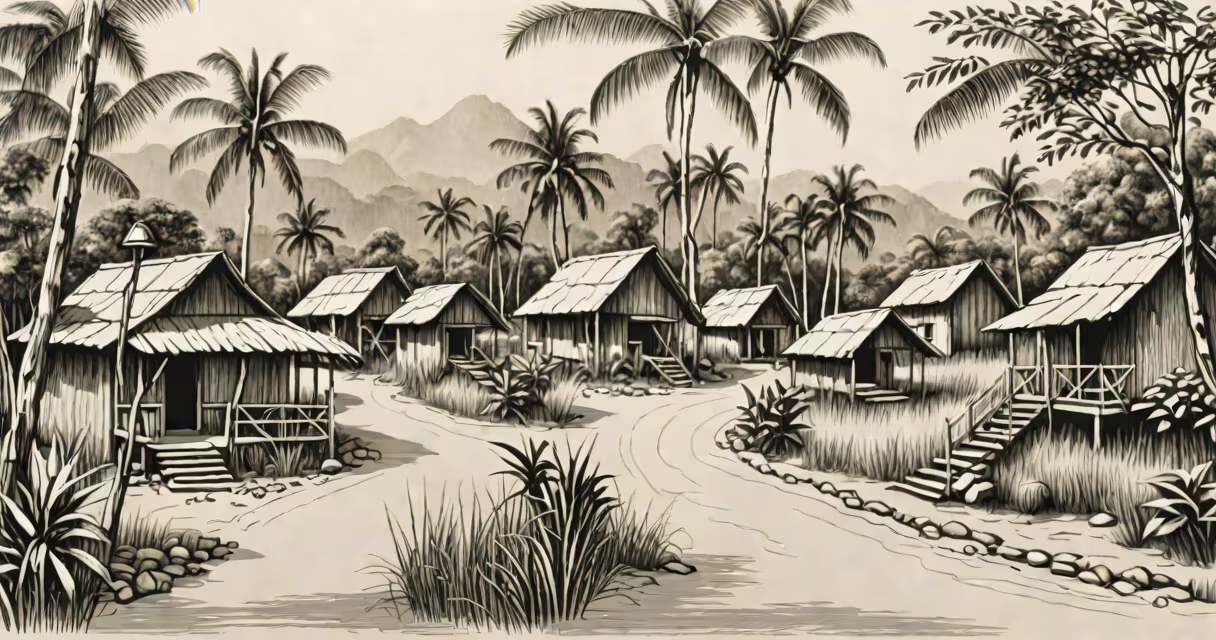
Sustainable tourism development is a planning and management approach that ensures tourism meets current needs without compromising the ability of future generations to enjoy the same benefits-protecting ecosystems, supporting local communities, and maintaining cultural integrity.
This model prioritizes long-term environmental health, equitable economic distribution, and authentic cultural exchange. Unlike mass tourism, which often degrades landscapes and displaces residents, sustainable tourism development integrates conservation goals into infrastructure design, visitor capacity limits, and stakeholder engagement processes.
According to the United Nations World Tourism Organization (UNWTO), sustainable tourism accounts for 24% of global tourism GDP but contributes 40% less carbon emissions per tourist compared to conventional models. The UN's Sustainable Development Goal 12 (Responsible Consumption and Production) explicitly references tourism as a sector requiring systemic change to reduce waste and resource depletion.
Sustainable tourism development operates through four interlocking systems: environmental stewardship, economic equity, cultural respect, and governance transparency.
Environmental stewardship involves monitoring biodiversity, enforcing low-impact infrastructure standards, and using renewable energy. For example, Palau's National Marine Sanctuary restricts visitor numbers to 10,000 annually and requires all tourists to sign a pledge to protect marine life-a policy that reduced coral bleaching by 37% between 2015 and 2022.
Economic equity helps tourism revenue flows to local businesses and workers. In Bhutan, the government enforces a daily fee of $250 per tourist, which funds education, healthcare, and conservation programs. This model generates $10 million annually in public benefit, with 86% of tourism-related jobs held by Bhutanese citizens.
Cultural respect means involving communities in decision-making. In Oaxaca, Mexico, indigenous Zapotec villages co-manage heritage sites like Monte Albán. A 2021 study by the Institute for Cultural Heritage found that community-led tours increased visitor satisfaction by 62% and reduced vandalism incidents by 73%.
Sustainable tourism development takes several forms based on scale, focus, and implementation method.
| Type | Focus Area | Example Location | Impact Metric |
|---|---|---|---|
| Community-Based Tourism | Local ownership, income retention | Chiang Mai, Thailand | 90% of profits stay within villages |
| Eco-Tourism | Biodiversity protection, low-impact travel | Costa Rica's Monteverde Cloud Forest | 28% increase in native bird species since 2010 |
| Cultural Tourism | Heritage preservation, traditional craft promotion | Siwa Oasis, Egypt | 120+ women trained in handwoven textiles |
| Adventure Tourism (Low-Impact) | Nature access with minimal footprint | Patagonia, Chile | Zero deforestation in designated zones since 2018 |
A common misconception is that sustainability equates to "low volume." But high-volume destinations can achieve sustainability through strict regulations. The Galápagos Islands limit cruise ships to 100 vessels and require all guides to hold certified ecological training-resulting in a 52% reduction in invasive species introduction since 2014.
Another misunderstanding is that sustainable tourism is purely environmental. In reality, it requires social and economic balance. The World Bank notes that 68% of sustainable tourism projects fail due to poor community integration-even when environmental metrics are met.
Sustainable tourism development is most widely applied in ecologically sensitive regions, culturally significant areas, and post-conflict zones seeking economic recovery.
For instance, Rwanda's gorilla trekking program generates $25 million annually from permits, with 90% of proceeds funding conservation and local schools. The program has helped stabilize mountain gorilla populations at 1,100 individuals-the highest count since records began in 1985.
Developing nations often adopt this model to avoid the pitfalls of overtourism. In Kenya, the Maasai Mara Conservancy uses rotational grazing and visitor fees to fund wildlife corridors. Since 2016, lion populations have increased by 22%, and Maasai herders report higher income stability.
Even urban centers are adopting principles. Barcelona's "Tourist Tax" funds public transport upgrades and limits hotel construction near historic districts. After implementation, noise complaints dropped 41%, and resident satisfaction rose from 57% to 79% in three years.
Many confuse sustainable tourism development with greenwashing. A 2023 report by the Global Sustainable Tourism Council found that 63% of "eco-lodges" in Southeast Asia lack verified environmental standards. True sustainability requires third-party certification such as EarthCheck or GSTC (Global Sustainable Tourism Council) criteria.
Another error is assuming that sustainability means sacrificing comfort. The Soneva Fushi resort in the Maldives uses solar power, composting toilets, and zero single-use plastics-but offers private villas with ocean views and personalized butler service. Guest satisfaction scores average 9.4/10, and 81% return annually.
I once visited a small village in northern Portugal where a group of elders had redesigned their trail system to minimize soil erosion. They used local stone and avoided grading slopes. Their approach was not documented in any tourism manual, yet it met all UNESCO criteria for sustainable land use. That experience taught me that grassroots innovation often outperforms top-down templates.
When evaluating any tourism initiative, ask: Who owns the decision-making? Where does the money go? What are the measurable impacts on people and nature? If those answers aren't clear, the project likely falls short of true sustainable tourism development.
As the UN Environment Programme states, "Sustainable tourism development is not a niche market-it is the only viable path forward for a planet under strain." The structure applies not just to remote islands or rainforests, but to city centers, ski resorts, and national parks alike. Success hinges on accountability, transparency, and continuous improvement-not just good intentions.