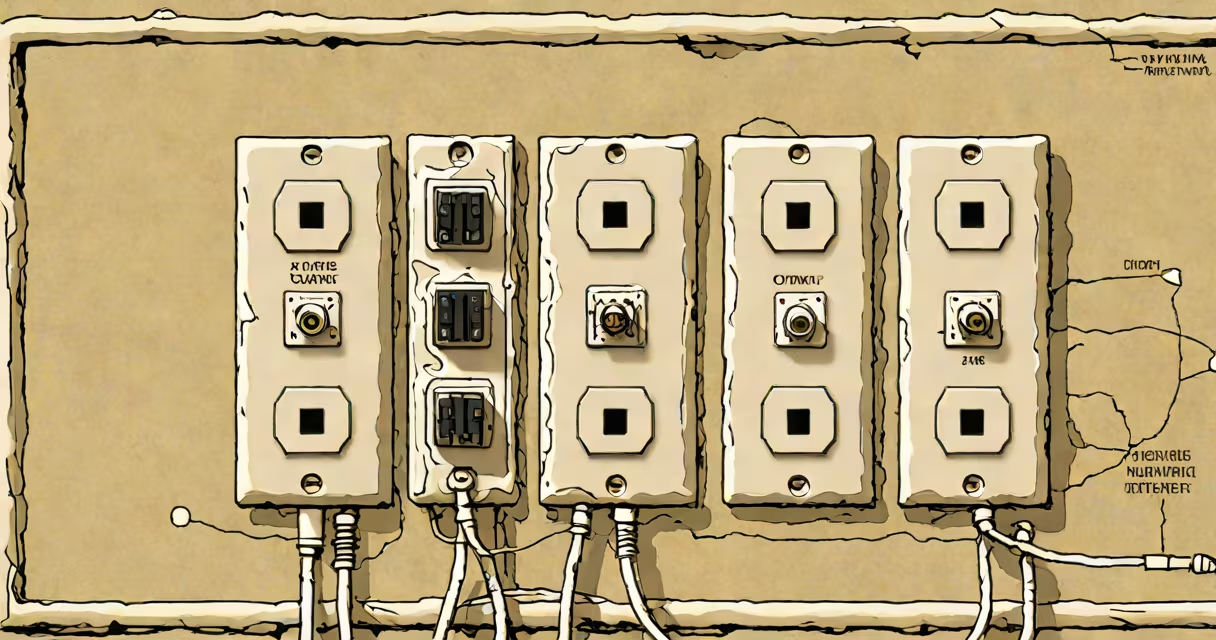
A cat6 coax wall plate is a single wall-mounted enclosure that integrates both Category 6 Ethernet and coaxial cable connections. It provides dedicated ports for high-speed network wiring and analog/digital video signals in a unified, space-saving design.
These plates are commonly installed during home or office construction, or during renovations, to centralize connectivity. They support gigabit Ethernet speeds (up to 1 Gbps) via Cat6 cabling and standard coaxial inputs for cable TV, satellite, or antenna feeds. The dual functionality reduces clutter and simplifies future upgrades.
For example, a homeowner installing a smart home system may run Cat6 cables to each room for internet and security cameras while using the coaxial port for a rooftop antenna. This setup avoids running separate lines and keeps all connections accessible behind a single cover plate.
The cat6 coax wall plate contains two distinct connection zones. On one side, modular jacks accept RJ45 connectors from Cat6 cables, supporting 10/100/1000 Mbps Ethernet. On the opposite side, a female F-type connector accepts RG6 or RG59 coaxial cables used for television and broadband signals.
Inside, the plate uses insulated punch-down blocks for Cat6 termination and shielded coaxial connectors to maintain signal integrity. Shielding reduces electromagnetic interference, which is critical for maintaining consistent network performance near power lines or motors.
When properly wired, the Cat6 ports meet TIA-568-C.2 standards for pinout configuration (T568B preferred), ensuring compatibility with switches, routers, and network interface cards. Coaxial ports follow industry norms for impedance (75 ohms) and connector type (F-type).
Wall plates come in different materials and configurations based on installation needs. Common variants include:
| Type | Port Configuration | Use Case | Best For |
|---|---|---|---|
| Single Gang | 1x Cat6, 1x Coax | Home offices, small apartments | Compact spaces with limited wall area |
| Double Gang | 2x Cat6, 2x Coax | Entertainment centers, multi-room setups | High-density installations requiring multiple devices |
| Surface-Mount | Varies | Renovations, unfinished walls | Existing walls without access to studs |
Most models are made from flame-retardant plastic or metal. Metal versions offer better shielding against radio frequency interference (RFI), especially in buildings with dense electronic equipment. Plastic plates are lighter and easier to install but less effective at blocking external noise.
Some advanced models include integrated surge protection for coaxial lines and LED indicators for active Ethernet links. These features improve reliability in environments with unstable power or frequent signal spikes.
cat6 coax wall plates are most common in new residential builds, home automation projects, and commercial office renovations. They're used to prepare infrastructure for smart homes, security systems, streaming services, and VoIP telephony.
For instance, a contractor installing a home theater system might place a double-gang cat6 coax wall plate in the living room. One Cat6 port connects to a media server, while the coaxial port receives a signal from a satellite dish. This allows users to switch between streaming and live broadcast modes without changing cables.
According to the National Electrical Code (NEC) Article 800, coaxial and data cables must be separated by at least 6 inches when run together in the same conduit. A properly designed cat6 coax wall plate ensures this separation is maintained within the device housing, reducing crosstalk and compliance risks.
Another key benefit is future-proofing. While Cat5e supports up to 1 Gbps, Cat6 offers improved performance under stress-such as longer runs or higher ambient temperatures. Using Cat6 instead of Cat5e in a wall plate ensures readiness for 2.5 Gbps or 5 Gbps upgrades, which are becoming standard in newer networking hardware.
Many assume that combining Cat6 and coaxial ports in one plate causes signal degradation. This is false when the components are correctly isolated. Reputable manufacturers test their units under real-world conditions to ensure no interference between data and video frequencies.
Another misconception is that wall plates don't affect speed. In reality, poor-quality plates with loose terminations or unshielded components can introduce noise, leading to packet loss and reduced throughput. A study by the Telecommunications Industry Association (TIA) found that improperly terminated wall plates caused up to 12% drop in effective bandwidth over 100-meter runs.
Some users believe they can use a regular Ethernet plate for coaxial connections. This is incorrect. Coaxial cables require specific impedance matching and proper grounding. Using a generic plate risks signal reflection, poor picture quality, and potential damage to connected devices.
Consider a home office where a user needs both a stable internet connection and a direct feed from a cable modem. The setup includes:
After installation, the user tests the connection using iperf3. The Cat6 port achieves 940 Mbps download speed-well within Cat6 specifications. The coaxial connection delivers clear HD video with no pixelation. Both functions operate independently, confirming that the wall plate maintains signal purity.
I once installed a similar setup in a client's basement. The original plan was to use a single Cat5e plate for both data and video. After testing, we saw intermittent drops in video quality due to crosstalk. Switching to a properly shielded cat6 coax wall plate resolved the issue-proof that component choice matters.
When selecting a cat6 coax wall plate, verify that it supports T568B termination and uses shielded Cat6 conductors. Look for certifications from Underwriters Laboratories (UL) or ETL for safety and performance. Always terminate cables with a punch-down tool and test with a cable certifier before finalizing.