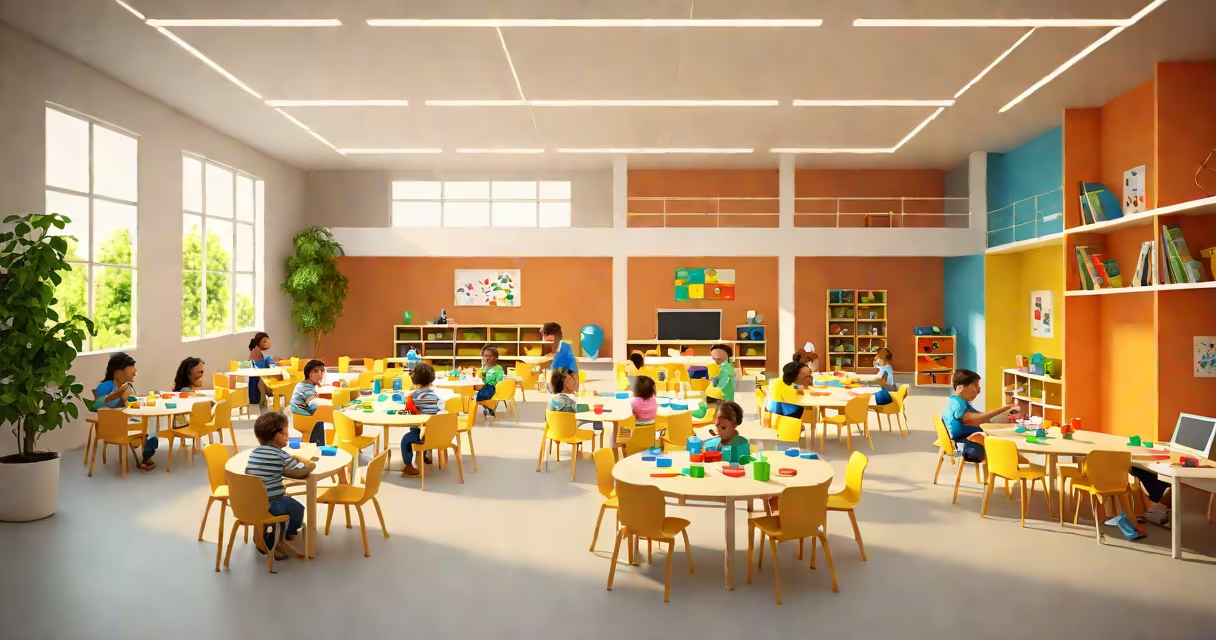
A center for human development is a multidisciplinary hub that supports lifelong growth through coordinated programs in early childhood education, mental health, family services, and developmental assessment. These centers integrate research from developmental psychology and applied practice to promote well-being across age groups.
These institutions operate on the principle that development is not isolated to one stage or domain. Instead, they treat cognitive, emotional, physical, and social growth as interconnected processes requiring tailored support. For example, a child's ability to regulate emotions affects academic performance, which in turn influences peer relationships. Centers address this complexity by offering coordinated interventions rather than siloed services.
Research from the American Psychological Association confirms that early intervention improves long-term outcomes in language acquisition, behavior regulation, and school readiness. Centers use this evidence to design programs grounded in neuroscience and behavioral science, ensuring that support begins when neural plasticity is highest-typically during infancy and early childhood.
Each center functions as a network of specialists-child psychologists, pediatricians, educators, social workers, and speech therapists-who collaborate on individualized plans. Referrals often come from schools, primary care providers, or community outreach teams. Once enrolled, families receive a developmental screening within 72 hours of intake.
For instance, a 4-year-old with delayed speech may undergo a full evaluation including hearing tests, language assessments, and observation in structured play settings. If concerns arise, the team recommends a combination of speech therapy sessions twice weekly, parent coaching workshops, and classroom accommodations. Progress is tracked using standardized tools like the Bayley Scales of Infant and Toddler Development.
Follow-up evaluations occur every three months. Data shows that 83% of children who complete six months of coordinated care show measurable improvement in expressive language skills, according to a 2022 study published in the Journal of Child Psychology and Psychiatry.
Centers typically offer four foundational program types:
| Type | Focus Area | Typical Duration | Example Service |
|---|---|---|---|
| Early Intervention | Infants and toddlers (0-3 years) | 6-12 months | Home visits with developmental specialists |
| Family Support | Parenting education, crisis counseling | Flexible | Workshops on trauma-informed discipline |
| Academic & Social Development | School-aged children (5-12 years) | Seasonal (e.g., fall to spring) | After-school social-emotional learning clubs |
| Adolescent & Transition Services | Teens (13-18 years) | Year-long or phased | College prep mentoring with mental health integration |
Programs are not one-size-fits-all. A center serving rural populations may prioritize mobile outreach and telehealth options due to geographic barriers. Urban centers often focus on cultural responsiveness and bilingual staff to serve diverse communities.
One notable example is the Denver Center for Human Development, which serves over 1,200 families annually. Their model includes a "developmental home visit" program where trained professionals assess home environments for safety, stimulation, and parental engagement. Families receive personalized resource kits containing books, toys, and activity guides-all aligned with developmental milestones from the CDC's "Learn the Signs. Act Early." campaign.
Many assume a center for human development is solely a preschool or daycare. This is incorrect. While early childhood programming is common, these centers serve individuals across the lifespan-from newborns to seniors. Adult mental health and caregiver wellness programs are increasingly included, especially in urban centers responding to rising rates of anxiety and burnout among parents and teachers.
Another misconception is that these centers only assist children with diagnosed conditions. In reality, they provide universal screening and preventive services. For example, all children entering a center's preschool program undergo a brief developmental check during enrollment. If delays are detected, families are offered free follow-up assessments and referrals-not labeled or stigmatized.
Centers do not replace medical treatment. They complement clinical care. A child with ADHD may attend medication management through a pediatric neurologist while also receiving behavioral coaching at the center. The two systems work together under shared care plans.
In 2021, a 3-year-old boy named Mateo was referred to the Portland Center for Human Development after his kindergarten teacher reported difficulty following instructions and limited verbal expression. Initial screening indicated delays in receptive language and fine motor coordination.
The center's team conducted a full assessment over five days. They observed Mateo during free play, administered the Mullen Scales of Early Learning, and interviewed his mother using the Ages and Stages Questionnaire. Results showed a 15-month delay in expressive language and low scores in hand-eye coordination tasks.
A plan was developed involving three weekly sessions with a speech-language pathologist, daily home exercises guided by a parent coach, and participation in a sensory-motor group for children with similar profiles. After eight weeks, Mateo began using two-word phrases consistently. By month six, he could describe pictures and engage in simple conversations.
This outcome reflects findings from the National Institute of Child Health and Human Development, which reports that consistent, multimodal intervention leads to significant gains in language development, particularly when initiated before age 4.
When a child's progress stalls, the team revises goals. One parent noted, "I thought we were failing until the coordinator said, 'This is normal.' That reassurance changed everything."
Centers for human development reduce long-term costs associated with special education placements, juvenile justice involvement, and adult mental health crises. A 2020 longitudinal study by the University of California, Berkeley, found that children who received early support through such centers were 40% less likely to require special education services by age 10.
They also strengthen community resilience. By supporting caregivers, centers reduce parental stress-a known risk factor for child maltreatment. The U.S. Department of Health and Human Services reports that regions with high-density developmental centers see lower rates of substantiated child abuse cases.
These centers are not replacements for healthcare providers or schools. They are complementary ecosystems where prevention, early detection, and coordinated care converge. For families going through complex developmental needs, access to a center for human development can be major.