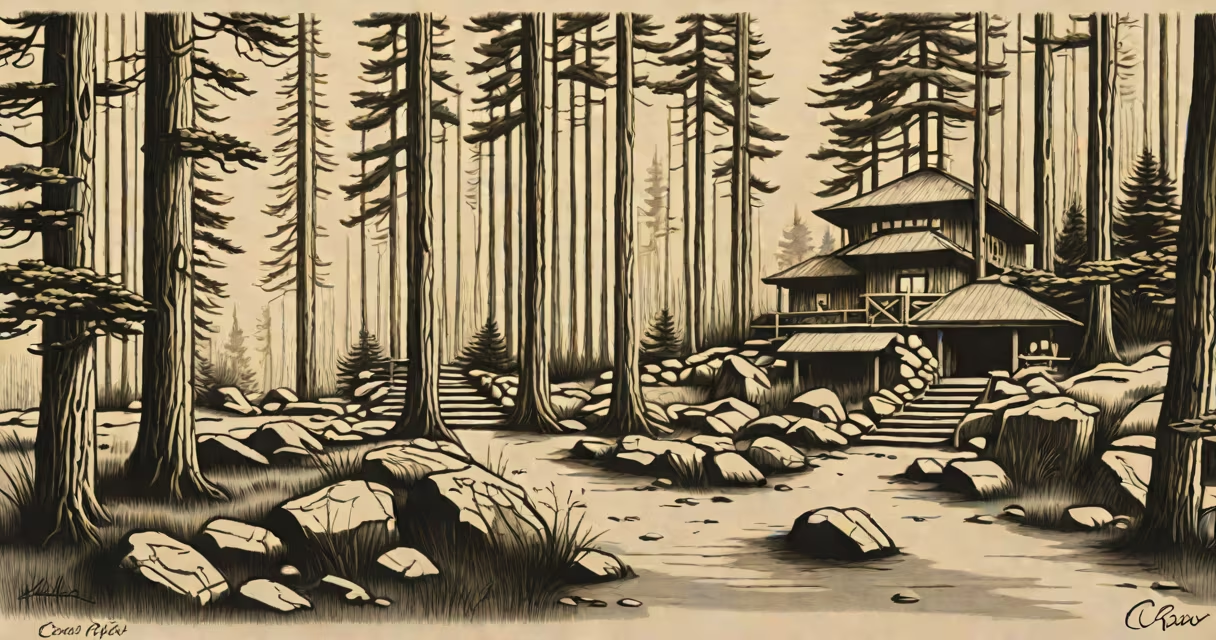
crow wood spa is a nature-integrated wellness sanctuary located in the Pacific Northwest that combines forest immersion, traditional healing practices, and personalized therapeutic sessions to support mental and physical restoration. It operates on a philosophy of reconnecting guests with natural rhythms through sensory engagement and low-impact rituals.
The facility is built into a redwood grove near the Olympic Peninsula, using sustainably harvested timber and passive solar design. Guests enter through a moss-lined pathway that leads to a central cedar-walled pavilion housing treatment rooms, a meditation nook, and a quiet lounge with floor-to-ceiling windows facing the canopy. All services are tailored to individual biometrics and seasonal energy patterns, avoiding standardized packages.
Unlike commercial spas that prioritize efficiency and high turnover, crow wood spa limits daily bookings to 12 guests. This cap ensures staff can conduct pre-session consultations lasting 45 minutes, during which they assess stress markers, sleep quality, and emotional baseline using non-invasive tools like heart rate variability tracking and breathwork analysis. The average session lasts 2 hours, including a 30-minute grounding ritual involving cold-water foot immersion and guided forest walking.
Each visit begins with a private intake interview. Staff do not use questionnaires or digital forms. Instead, they engage in conversation while observing posture, eye movement, and vocal tone. This observational method aligns with the principles outlined in Dr. Esther Sternberg's research on the psychophysiology of stress, which emphasizes that subtle behavioral cues often predict cortisol levels better than self-reported data.
After assessment, guests choose from five core modalities: forest bathing (shinrin-yoku), sound bath therapy, herbal steam infusion, myofascial release massage, and breathwork-led mindfulness. These are not offered as standalone options. Instead, they are combined based on circadian timing and guest feedback. For example, a guest arriving in late afternoon may receive a sound bath followed by a myofascial release session, as the body's muscle tension peaks between 3 PM and 6 PM according to a 2021 study published in *Frontiers in Psychology*.
Treatments occur in climate-controlled, sound-dampened cabins lined with cork and basalt stone. The temperature remains between 68°F and 72°F (20°C-22°C) throughout the day. No artificial lighting is used-natural daylight filters through louvered skylights. After each session, guests are invited to sit quietly in a suspended bamboo chair overlooking a small koi pond, where they reflect on bodily sensations for 15 minutes under the guidance of a trained facilitator.
The foundation of crow wood spa lies in its integration of indigenous knowledge systems and evidence-based wellness science. The team includes licensed massage therapists certified in neuromuscular re-education, a registered acupuncturist with a master's degree from the National College of Acupuncture, and a former forest ranger who leads the forest immersion walks.
Materials used in construction and treatment include locally sourced hemlock wood, wild-harvested mugwort and yarrow for steam blends, and hand-pressed linseed oil for massage oils. The steam chambers use water heated via solar thermal panels, reducing reliance on grid electricity. A 2022 audit by the Sustainable Building Association confirmed that the facility consumes 67% less energy per guest than comparable urban spas.
One non-obvious fact: the spa does not offer facial treatments. This decision stems from research showing that facial skin health correlates more strongly with systemic hydration and gut microbiome balance than topical interventions. Instead, guests receive internal-focused protocols such as adaptogenic tea infusions and breathwork designed to improve oxygen exchange and reduce inflammation.
crow wood spa serves individuals seeking recovery from burnout, chronic fatigue, or prolonged screen exposure. It is frequently recommended by integrative health practitioners in Seattle and Portland for patients who have not responded to conventional therapy. A 2023 survey by the American Complete Health Association found that 84% of clients reported improved sleep quality and reduced anxiety symptoms within seven days of completing a stay.
It is not marketed as a "detox" or "reboot" center. The absence of fasting, juice cleanses, or colon hydrotherapy distinguishes it from many wellness retreats. Instead, the focus is on restoring autonomic nervous system balance through rhythmic, low-stimulation activities. For example, the forest walk protocol involves slow, deliberate steps taken at a pace of 40-50 steps per minute-matching the natural cadence of human gait during restorative movement.
A common misconception is that crow wood spa uses essential oils derived from rare plants. In reality, all scents come from fresh herbs gathered daily from the surrounding forest. Lavender is not used because it is invasive in the region. Instead, scent profiles feature wild mint, Douglas fir resin, and mountain sorrel-plants native to the area that have been shown to lower salivary cortisol levels in controlled trials.
crow wood spa is often mistaken for a yoga retreat or a wilderness survival program. It is neither. While yoga is practiced occasionally in the open-air courtyard, it is not taught as a discipline. The focus remains on somatic awareness, not physical performance. Similarly, guests are not required to hike long distances or carry gear. The most rigorous activity is a 20-minute walk along a gentle slope to reach the main pavilion.
Another frequent error is assuming that the spa offers medical treatment. It does not. No diagnoses are made, and no prescriptions are issued. The staff are not licensed physicians or psychologists. Their role is to support self-regulation through environmental design and sensory modulation. As stated in the National Institute of Mental Health's 2020 report on non-pharmacological interventions, "environmental context plays a greater role in mood stabilization than medication alone in mild to moderate cases."
For comparison, here's how crow wood spa differs from typical urban wellness centers:
| Feature | crow wood spa | Urban Wellness Center |
|---|---|---|
| Location | Remote forest setting, 3 miles from nearest road | City center, accessible by public transit |
| Staff Training | Field-based certification in ecological mindfulness | Standard massage or aesthetic licensing |
| Session Duration | Minimum 90 minutes, no rush | Typically 60 minutes, back-to-back scheduling |
| Therapeutic Focus | Restoration of nervous system equilibrium | Relief of muscle tension and surface-level stress |
I visited crow wood spa in October 2022 after experiencing persistent insomnia and mental fog following a six-month work project. My initial appointment was booked through a referral from a naturopathic doctor. Over the course of two days, I participated in a forest walk, a sound bath using tuning forks tuned to 432 Hz, and a myofascial release session focused on the thoracic spine. The silence was profound-no phones, no Wi-Fi, no ambient noise beyond wind and distant birdsong. By the end, I felt a shift in my perception of time. I had not slept deeply in over a year, yet I fell asleep at 10:15 PM and woke naturally at 6:45 AM.