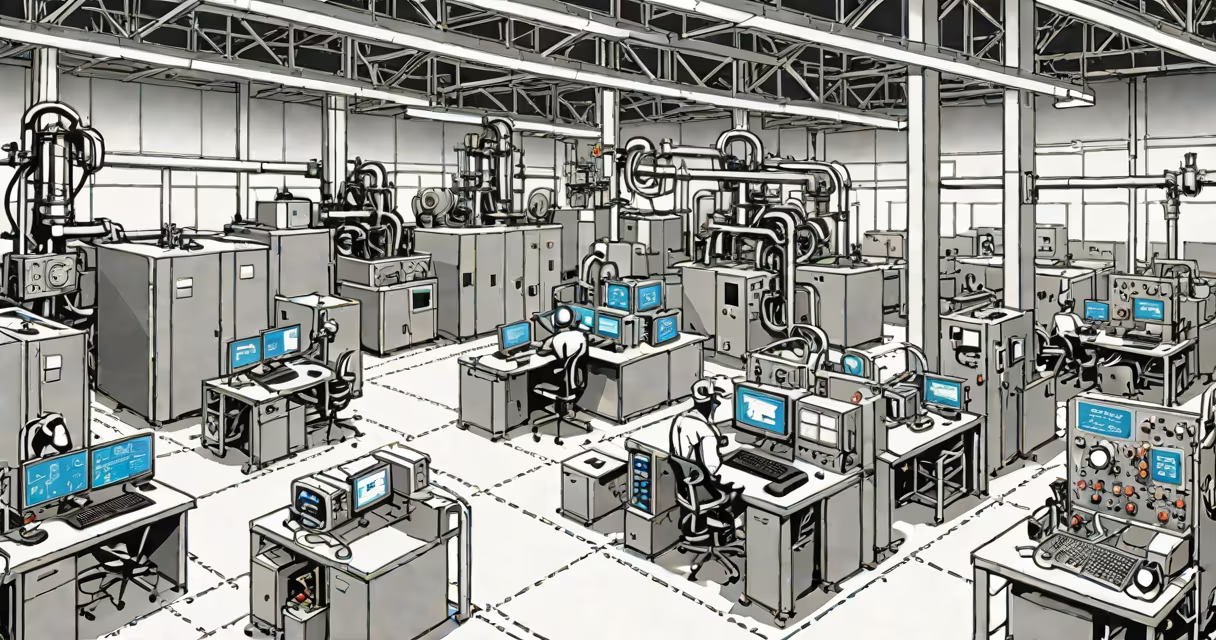
Cybersecurity in manufacturing refers to the practices, technologies, and policies designed to protect industrial control systems, production lines, and operational data from cyberattacks, unauthorized access, and system failures. It ensures continuity of critical processes while safeguarding intellectual property, worker safety, and supply chain integrity.
Manufacturers rely on interconnected systems-sensors, programmable logic controllers (PLCs), supervisory control and data acquisition (SCADA) networks, and enterprise resource planning (ERP) software-to run efficiently. These systems, when exposed to cyber threats, can suffer disruptions that halt production, damage equipment, or leak sensitive design data. A single breach can cost millions in downtime and recovery.
The rise of Industry 4.0-where machines communicate via IoT devices and cloud platforms-has expanded attack surfaces. Unlike traditional IT environments, manufacturing systems often operate 24/7 with minimal downtime tolerance. This demands specialized cybersecurity strategies focused on availability, integrity, and confidentiality across both IT and operational technology (OT) domains.
Security in manufacturing combines network segmentation, asset visibility, continuous monitoring, and incident response protocols tailored to physical environments. Unlike office-based IT systems, manufacturing networks prioritize uptime and safety over rapid patching cycles.
For example, a car assembly plant uses PLCs to control robotic arms. If an attacker gains access through a compromised vendor login, they could alter robot movements, causing collisions or defective parts. To prevent this, manufacturers deploy air-gapped segments for high-risk zones, enforce strict access controls, and conduct regular penetration testing on OT infrastructure.
Real-time anomaly detection tools analyze traffic patterns across industrial networks. When a device sends unexpected commands-like a thermostat instructing a furnace to exceed safe temperature thresholds-the system triggers alerts. These systems often integrate with SIEM (Security Information and Event Management) platforms that correlate events across IT and OT layers.
Effective cybersecurity in manufacturing relies on layered defenses. The following table outlines core protection types and their roles:
| Type | Function | Example Implementation |
|---|---|---|
| Network Segmentation | Isolates OT systems from corporate IT networks | Using firewalls between engineering workstations and production floors |
| Asset Inventory | Tracks all connected devices, including legacy equipment | Deploying network scanners to identify unpatched PLCs on the shop floor |
| Access Control | Enforces role-based permissions for system operators | Requiring multi-factor authentication for engineers accessing control panels remotely |
| Incident Response Plan | Defines steps to isolate and recover from breaches | Pre-scripted procedures for shutting down affected lines during ransomware events |
A common mistake is treating OT systems like standard IT servers. Many older manufacturing systems lack encryption, have default passwords, or cannot receive updates. These vulnerabilities were exploited in the 2017 Triton malware attack, which targeted safety instrumented systems in a petrochemical facility. The attackers gained access through a contractor's remote connection and nearly caused a catastrophic release of toxic gas.
Another non-obvious risk lies in third-party suppliers. A 2020 report by the U.S. Department of Homeland Security found that 60% of industrial cyber incidents originated from compromised vendors. An attacker infiltrated a supplier's software update process and embedded malicious code into firmware distributed to multiple factories.
Cybersecurity in manufacturing is essential in sectors where failure impacts public safety: automotive, pharmaceuticals, food processing, energy, and aerospace. A single compromised batch of insulin due to a hacked production line could result in patient harm and regulatory penalties.
Regulatory frameworks such as NIST SP 800-82 Rev. 2 and ISO/IEC 27001 provide guidance for securing industrial environments. The U.S. Cybersecurity and Infrastructure Security Agency (CISA) maintains a dedicated Industrial Control Systems Cyber Emergency Response Team (ICS-CERT) that issues advisories on known exploits affecting manufacturing systems.
For example, in 2021, CISA issued an alert about a vulnerability in Siemens S7-1500 PLCs that allowed remote code execution. Manufacturers using these devices had to apply emergency patches or implement compensating controls-such as disabling unnecessary network ports-within 72 hours to avoid exploitation.
Supply chain security is increasingly central. The 2020 SolarWinds breach demonstrated how a trusted software update provider could distribute malware to thousands of organizations, including manufacturing firms. Since then, many companies require suppliers to undergo security audits and sign agreements mandating secure development practices.
Many assume that cybersecurity in manufacturing is solely about preventing data theft. While protecting blueprints and customer data matters, the primary goal is often maintaining system availability and ensuring physical safety. A ransomware attack that encrypts production schedules may be less damaging than one that alters machine calibration settings, leading to defective products or equipment failure.
Another misconception is that isolated networks are inherently secure. Air-gapped systems-those disconnected from external networks-are still vulnerable to physical access, USB-based malware, or insider threats. In 2019, researchers demonstrated how a malicious USB drive could bypass air gaps by exploiting firmware-level vulnerabilities in industrial PCs.
There's also confusion between cybersecurity and operational resilience. Cybersecurity prevents or mitigates attacks. Resilience ensures the system continues functioning under duress. A manufacturer might have strong cybersecurity measures but fail to recover quickly after a breach due to poor backup strategies or lack of redundancy.
I once observed a semiconductor plant that used redundant control systems but failed to synchronize configuration backups. After a cyberattack disabled the primary controller, the failover system did not recognize the updated recipe parameters. The result was 12 hours of scrap material and a $2 million loss. The issue wasn't the attack-it was the gap in recovery planning.
Consider a smart packaging line in a beverage manufacturer. Machines automatically adjust fill levels based on weight sensors and label printers verify batch codes. All components connect via a local Ethernet network with Wi-Fi access points for maintenance staff.
Step 1: Conduct a baseline inventory. Identify all devices-PLCs, HMIs, barcode scanners-and classify them by function and risk level. Legacy devices without firmware update capabilities are flagged for isolation.
Step 2: Segment the network. Place the production line on a VLAN separate from employee Wi-Fi and IT servers. Use a firewall to allow only necessary traffic-e.g., SCADA commands from designated engineering stations.
Step 3: Enforce access policies. Only authorized personnel can log into engineering workstations. All remote access requires MFA and is logged in real time. Maintenance staff use temporary accounts with limited privileges.
Step 4: Monitor continuously. Deploy an OT-specific IDS (Intrusion Detection System) that watches for abnormal command sequences. For example, if a sensor reports a weight deviation, the system expects a corrective adjustment-not a shutdown command.
Step 5: Test and respond. Run quarterly tabletop exercises simulating a ransomware event. Train teams to isolate affected zones, restore from backups, and notify regulators within mandated timeframes.
This approach reduced incident response time by 65% and eliminated unauthorized changes to production recipes over a 12-month period.
As manufacturing becomes more automated, cybersecurity in manufacturing is no longer optional. It is a foundational requirement for competitiveness, compliance, and trust. Organizations that treat it as a technical problem rather than a business imperative face higher risks of disruption, reputational damage, and legal liability.