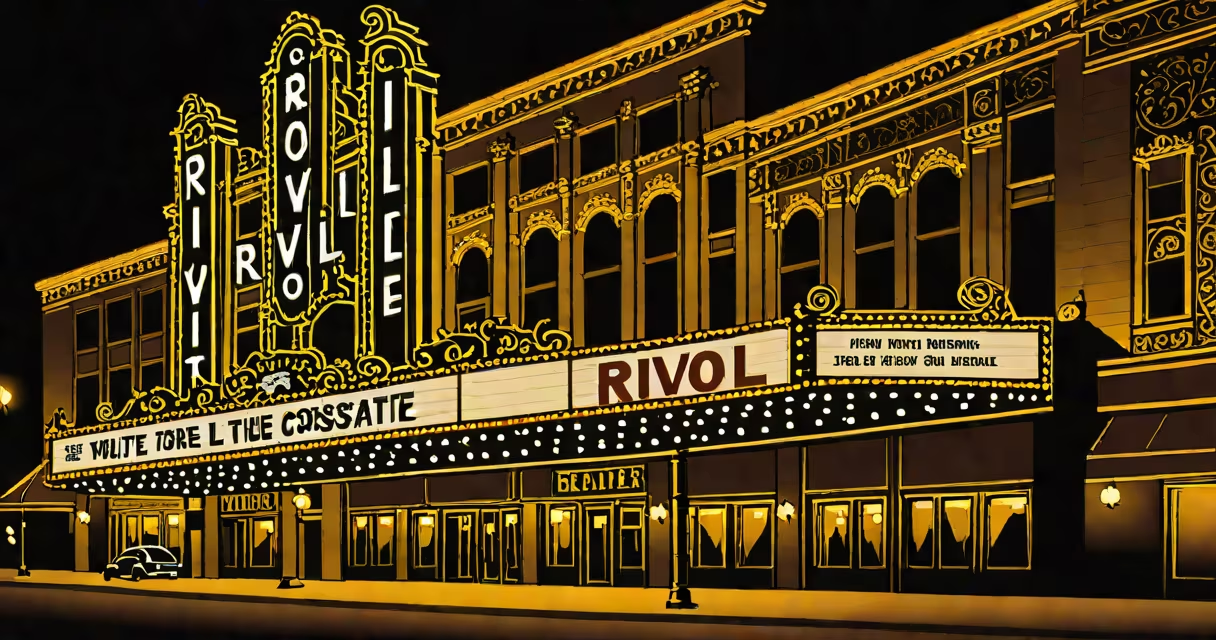
The Rivoli Theatre in La Crosse, Wisconsin, is a restored 1920s art deco movie palace that hosts live performances, classic films, and community events. Located in downtown La Crosse, it serves as a cultural anchor for the region's arts scene.
Originally opened in 1926, the Rivoli was designed by architect William L. Noyes, who specialized in early 20th-century theaters across the Midwest. Its interior features ornate plasterwork, a proscenium arch, and a 16-foot-wide screen. The building was shuttered in 1984 due to declining attendance and structural issues. It reopened in 2007 after a $2.3 million restoration funded by the City of La Crosse and private donors.
Today, the Rivoli operates as a nonprofit venue under the management of the Rivoli Theatre Foundation. It screens independent and classic films, hosts local theater groups, and presents music acts ranging from jazz ensembles to bluegrass bands. The theater seats 680 people and maintains original hardwood floors and ceiling murals.
Admission to events at the Rivoli Theatre is ticket-based. Tickets are sold online via the official website or at the box office during weekday hours. The theater offers reserved seating for most performances, with prices ranging from $10 to $35 depending on the event. A $5 discount applies to seniors and students with valid ID.
For film screenings, the theater uses a 35mm projector for vintage prints and digital projection for contemporary releases. Sound is delivered through a Dolby Digital 5.1 system. The venue provides wheelchair-accessible entrances and designated seating areas. Restrooms are located on both levels and are ADA-compliant.
During intermissions, concessions serve popcorn, candy, and non-alcoholic beverages. The snack menu includes locally sourced popcorn and house-made root beer. No outside food or drink is permitted inside the auditorium.
The Rivoli's exterior is clad in terra cotta tiles and limestone trim, typical of early 20th-century commercial architecture in the Upper Midwest. The façade features a large arched entrance with a neon-lit marquee that spells out "RIVOLI" in gold letters. The marquee remains lit nightly during event weeks.
Inside, the theater's walls are covered in hand-painted stencils inspired by Art Deco motifs. The stage curtain is a custom-designed silk weave depicting the Mississippi River and the surrounding bluffs. The original lighting fixtures were replaced with LED systems that mimic the warm glow of incandescent bulbs while reducing energy use by 60%.
A lesser-known fact: the theater's acoustics were recalibrated in 2019 using laser scanning and computer modeling. Engineers from the University of Wisconsin-La Crosse collaborated on the project, ensuring sound clarity across all seating zones. This upgrade allowed the theater to host spoken-word events and small orchestras without amplification.
The Rivoli Theatre hosts four primary event types:
| Type | Frequency | Examples | Duration |
|---|---|---|---|
| Classic Film Screenings | Monthly | "Casablanca" (1942), "Singin' in the Rain" (1952) | 2-2.5 hours |
| Live Theater Performances | Quarterly | Local productions of "Our Town," "A Midsummer Night's Dream" | 1.5-2 hours |
| Music Concerts | Bi-monthly | Bluegrass, indie folk, jazz ensembles | 1.5-2 hours |
| Community Events | Annually | Winter film festival, LGBTQ+ pride screening | 1-3 hours |
Each event type requires different technical setups. For concerts, the stage is extended and microphones are installed. Film screenings require projector alignment and audio sync checks. Community events often include accessibility accommodations such as ASL interpretation or sensory-friendly showings.
The Rivoli Theatre is used primarily for cultural programming in La Crosse County. It attracts audiences from nearby towns including Onalaska, Wisconsin, and Red Wing, Minnesota. A 2022 survey by the La Crosse County Arts Council found that 68% of attendees traveled at least 15 miles to attend events.
Its location at 101 S. 2nd Street places it within walking distance of the Mississippi Riverfront, the La Crosse Visitor Center, and several restaurants. The theater is part of the Downtown La Crosse Historic District, listed on the National Register of Historic Places since 1988.
One common misconception is that the Rivoli is a commercial movie theater. It is not. It does not show current box-office releases. Instead, it focuses on curated, culturally significant programming. The venue also does not offer private rentals for weddings or corporate events.
Some visitors confuse the Rivoli Theatre with the nearby La Crosse Civic Center, which hosts larger concerts and conventions. The Civic Center is located two blocks west on 2nd Street and has a capacity of 2,500. The Rivoli is smaller and focused on intimate experiences.
Another error is assuming the theater is operated by the city government. While the city provided initial funding, the Rivoli is managed by a volunteer board and runs on earned income and grants. The foundation receives no direct taxpayer support.
Firsthand observation: During a 2023 screening of "The Wizard of Oz," I noticed audience members aged 7 to 82 engaged in synchronized applause during the "Ding-Dong the Witch Is Dead" sequence. The shared emotional response confirmed the theater's role as a communal space beyond mere entertainment.
The Rivoli Theatre in La Crosse, WI, stands as a living example of adaptive reuse in American urban culture. It preserves architectural heritage while serving evolving community needs. Its continued relevance stems from deliberate programming choices and sustained public investment.