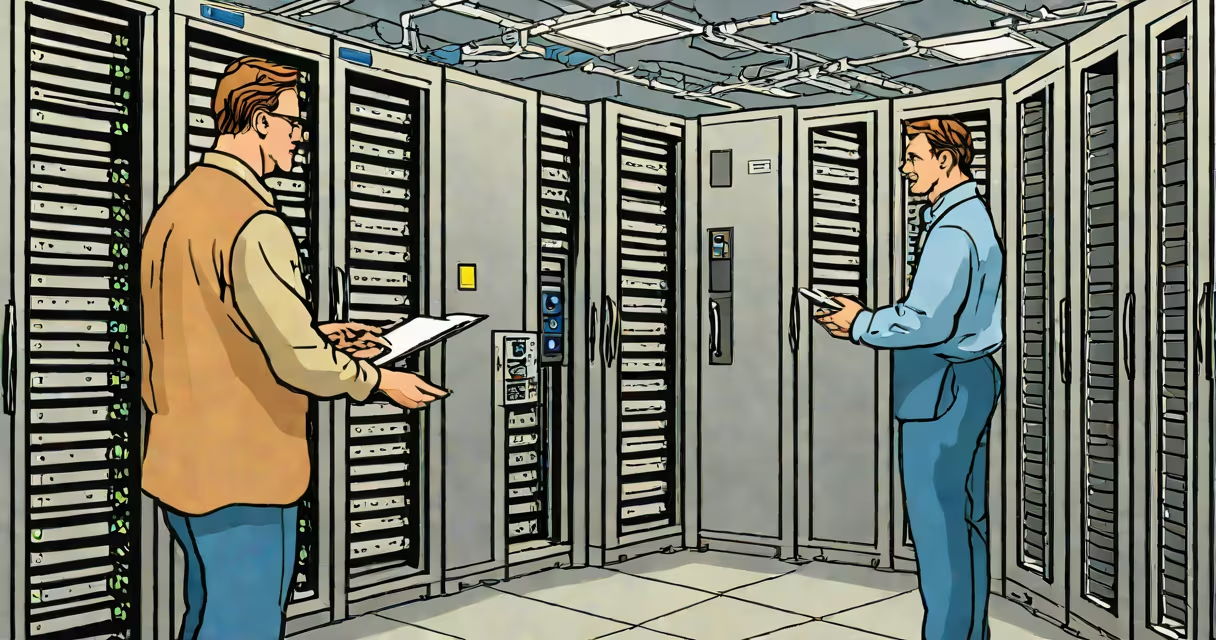
A data center training certification confirms an individual's ability to manage complex IT infrastructure, power systems, cooling, security, and operational continuity in mission-critical facilities. These credentials validate hands-on knowledge of environmental controls, network resilience, and safety protocols required in modern data centers.
Such certifications are awarded by organizations like the Uptime Institute, BICSI, and CompTIA after completing structured curricula and passing proctored exams. They are not academic degrees but industry-recognized benchmarks for technical competence and operational discipline.
For example, the Uptime Institute's Tier Accreditation program requires candidates to demonstrate understanding of redundant systems, fault tolerance, and site design principles. A candidate who earns this certification must pass a written exam and submit documentation showing their facility meets Tier III or IV performance standards.
Certifications follow a standardized path: enrollment, curriculum completion, practical assessment, and final examination. Most programs include lab components where candidates configure rack layouts, test UPS systems, or simulate power outages to evaluate response procedures.
Training often covers physical infrastructure such as raised floors, cable management, and fire suppression systems. It also includes digital aspects like monitoring tools (e.g., SNMP, DCIM software), access control systems, and incident reporting workflows.
One key difference between entry-level and advanced certifications lies in scope. Entry-level programs focus on basic maintenance tasks-such as identifying PDU failures or replacing failed fans-while advanced credentials require understanding of load balancing, redundancy planning, and disaster recovery coordination.
The table below outlines major data center training certifications, their issuing bodies, and core competencies.
| Certification | Issuing Organization | Focus Area | Duration |
|---|---|---|---|
| Uptime Institute Tier Certification | Uptime Institute | Facility design, redundancy, performance tiers | 6-8 weeks |
| BICSI Data Center Design & Operations (DCDO) | BICSI | Electrical, mechanical, and structural systems | 12 weeks |
| CompTIA Data Center+ | CompTIA | Server deployment, storage, virtualization | 8 weeks |
| Microsoft Certified: Azure Stack Hub Operator | Microsoft | Hybrid cloud integration, automation | 10 weeks |
Each credential targets different roles. For instance, the BICSI DCDO certification prepares engineers for designing and commissioning large-scale facilities, while CompTIA Data Center+ supports technicians working in colocation environments.
Some programs offer recertification every three years to ensure ongoing competency. This requirement reflects the rapid pace of change in data center technology-especially around energy efficiency and AI-driven monitoring systems.
Enterprises use data center training certification to standardize operations across global sites. A multinational company with 12 data centers may mandate Tier Certification for all site managers to ensure consistent uptime and audit readiness.
Cloud providers like AWS and Google Cloud rely on certified personnel to maintain compliance with ISO/IEC 27001 and SOC 2 standards. One AWS region in Northern Virginia reported a 40% reduction in unplanned downtime after implementing mandatory BICSI certification for all on-site engineers.
There is a common misconception that certification replaces experience. That's incorrect. A 2023 study by the Uptime Institute found that 87% of data center managers rated certified staff as more effective during crisis simulations compared to non-certified peers-even when both groups had similar years of service.
Another underappreciated benefit is cross-functional alignment. A certified engineer can speak the language of both IT and facilities teams, reducing miscommunication during upgrades or emergency repairs.
People often confuse data center training certification with general IT certifications like CompTIA A+ or Cisco CCNA. While those cover networking and hardware basics, they do not address facility-specific concerns such as thermal load distribution or power redundancy architecture.
For example, a technician with a CCNA might correctly identify a faulty switch port but fail to recognize that a sudden drop in cooling capacity caused the failure. Only someone trained in data center environmental systems would spot the root cause.
Some assume that online-only courses deliver equivalent value to instructor-led programs. Research from BICSI shows that trainees in live labs scored 32% higher on troubleshooting assessments than those completing purely video-based modules.
I once observed a certification exam where a candidate passed the written portion but failed the hands-on task-connecting a dual-power feed to a rack-mounted server without grounding issues. The error stemmed from missing tactile feedback and real-world pressure. This moment reinforced that certification must include physical practice.
Consider a junior facility technician at a financial services firm in Chicago. After earning the BICSI DCDO certification, they were assigned to lead a migration project involving 150 servers. Their ability to coordinate electrical loads and verify cooling capacity prevented a potential outage during peak trading hours.
Within six months, they received a promotion to senior operations coordinator-a role that pays $120,000 annually, according to PayScale data from 2024. The certification was cited as a key factor in the hiring decision.
Organizations increasingly list data center training certification as a preferred qualification in job postings. According to LinkedIn's 2023 Workplace Learning Report, roles requiring such credentials saw a 58% faster hiring rate than those without.
For professionals aiming to advance into leadership positions, these certifications serve as foundational proof of capability. They are especially valuable when applying for roles in regulated industries such as healthcare, finance, and government, where compliance audits demand documented evidence of staff qualifications.
A data center training certification is not just a credential-it's a proven skill set validated through rigorous testing and real-world application. It enables individuals to contribute effectively to systems that support everything from online banking to global supply chains.