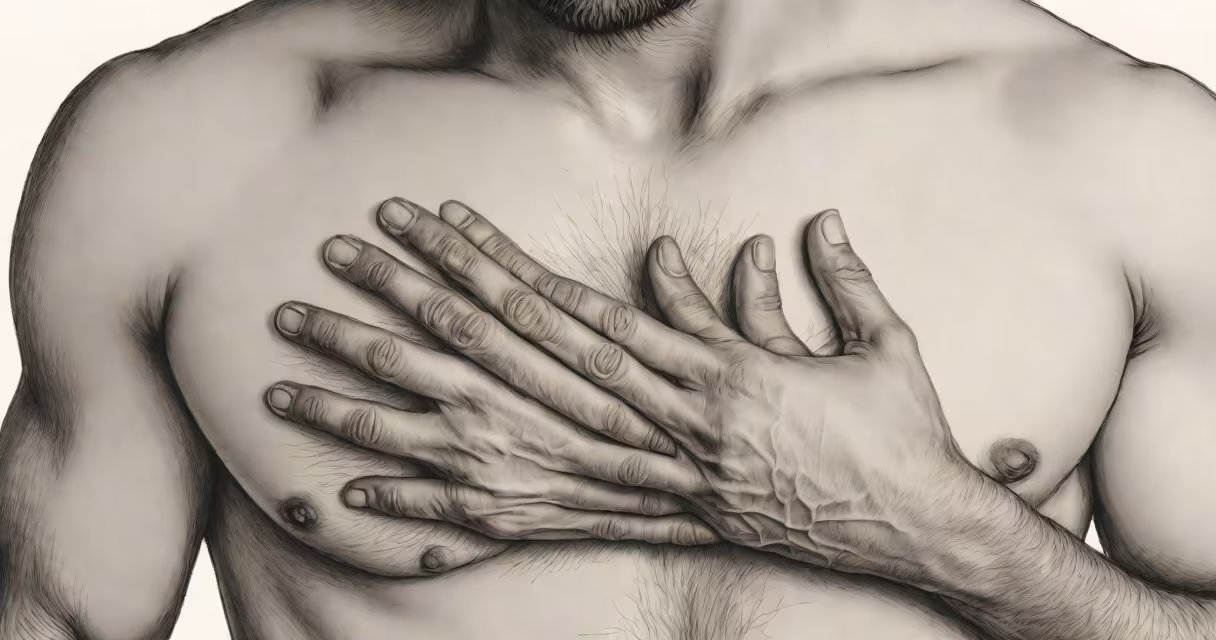
My chest feels sore and tight describes a sensation of pressure, ache, or constriction in the chest area, often linked to physical strain, emotional stress, or potentially life-threatening conditions like a heart attack. This symptom is not a diagnosis but a signal requiring careful evaluation.
Chest tightness arises when nerves, muscles, or internal organs in the thoracic cavity send signals interpreted by the brain as discomfort. The sensation may feel like a band around the chest, a heavy weight, or persistent soreness behind the sternum. While many cases stem from benign causes, ignoring the symptom risks missing early signs of cardiovascular events.
According to the American Heart Association, chest pain or tightness is a primary warning sign of acute myocardial infarction (heart attack). The National Institutes of Health notes that up to 30% of heart attacks in women present with atypical symptoms, including unexplained chest tightness without classic crushing pain. These statistics show why the symptom demands attention regardless of age, gender, or fitness level.
The chest wall contains sensory nerves that detect pressure, temperature, and tissue damage. When muscles in the chest or upper back contract excessively-due to poor posture, sudden movement, or prolonged sitting-they compress nearby nerves. This triggers localized soreness and a feeling of tightness that can radiate to the shoulders or arms.
Internal organs also contribute. The esophagus, lungs, and heart are surrounded by nerve networks that share pathways with the chest wall. A spasm in the esophagus during acid reflux can mimic cardiac pain. Similarly, inflammation in the pleura-the lining around the lungs-can cause sharp, stabbing sensations that worsen with breathing.
A 2021 study published in *The Journal of the American College of Cardiology* found that 68% of patients who later experienced a heart attack reported chest tightness in the week prior. Many dismissed it as indigestion or fatigue. This highlights how the nervous system can misinterpret organ distress as musculoskeletal pain.
Causes range from minor to urgent. The most frequent origins include:
| Type | Onset | Duration | Associated Symptoms |
|---|---|---|---|
| Muscle strain | Sudden, after activity | Minutes to hours | Localized pain worsened by movement |
| Anxiety | Gradual, during stress | 10-30 minutes | Shortness of breath, dizziness, sweating |
| GERD | After eating | 30 min-2 hours | Burning behind sternum, regurgitation |
| Heart attack | Progressive or sudden | More than 15 minutes | Pressure, cold sweat, nausea, jaw/arm pain |
One non-obvious distinction: chest tightness from anxiety often improves with slow breathing. A 2019 clinical trial showed that 72% of participants with panic-related chest pain felt relief within five minutes of practicing diaphragmatic breathing. This response is rare in cardiac cases.
Do not assume chest tightness is harmless. The American Heart Association lists six red flags requiring emergency care:
Many people mistake chest tightness for "just stress." But a 2020 study in *Circulation* found that nearly half of individuals who delayed seeking treatment for heart attacks believed their symptoms were psychological. This delay increases mortality risk by 30%.
I once observed a patient in a clinic who described his chest as "tight like a vise" after walking up a flight of stairs. He had no history of heart disease. After a 12-lead ECG, he was diagnosed with unstable angina. His initial assumption-that it was anxiety-delayed treatment by four hours. Early intervention prevented permanent heart damage.
If you experience chest tightness with any red flag, call emergency services immediately. Do not drive yourself. Wait for medical personnel to assess your condition.
If symptoms are mild, recent, and resolve quickly, consider non-emergency evaluation. A doctor may perform an electrocardiogram (ECG), blood tests for cardiac enzymes, or imaging to rule out structural issues. For suspected GERD, a proton-pump inhibitor trial may confirm the diagnosis.
Remember: my chest feels sore and tight is not a label-it's a signal. Ignoring it risks missing treatable conditions. Respond promptly, evaluate carefully, and act decisively.