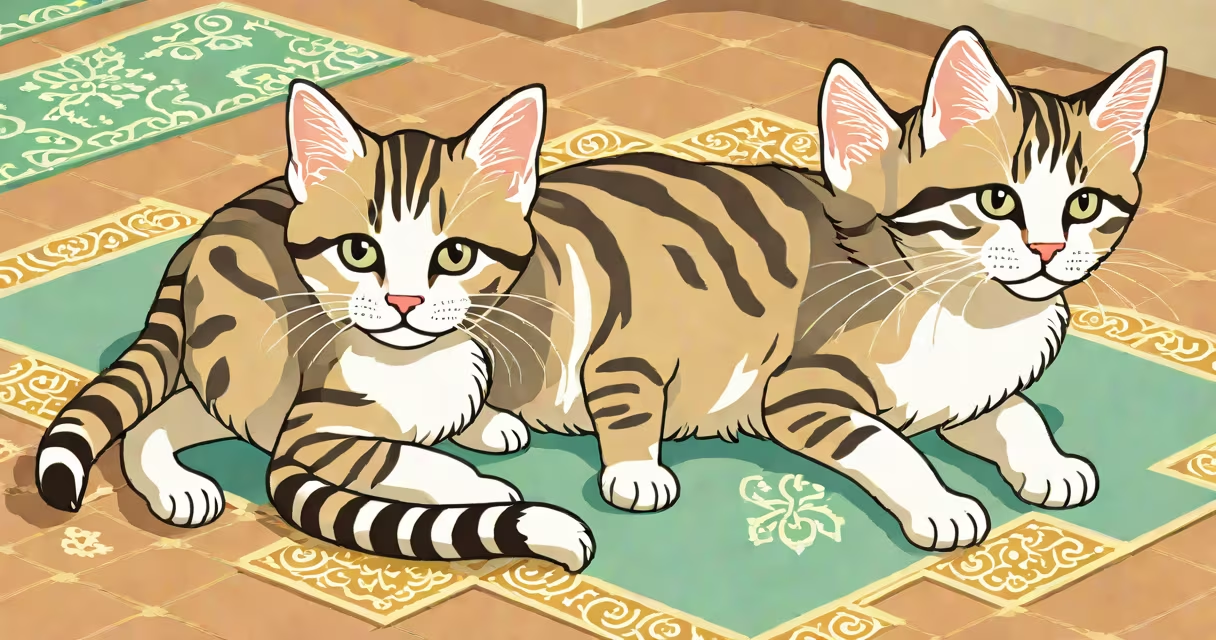
Domestic kitten breeds refer to kittens descended from native cat populations, including both mixed-breed cats and officially recognized purebred lines. These cats adapt well to home life and often display distinct coat patterns, temperaments, and health profiles based on lineage.
Domestic kitten breeds originate from centuries of natural selection and selective breeding. Unlike wild feline species, they thrive in human homes. Their genetic diversity results in varied appearances and behaviors. Some are bred for specific traits-like hypoallergenic coats or low-energy dispositions-while others emerge from chance pairings among household cats.
The term "domestic kitten breeds" includes both intentionally developed purebreds and spontaneous mixes. Purebreds such as the British Shorthair or American Shorthair have documented ancestry and breed standards. Mixed-breed kittens, often called "moggies," inherit traits from multiple unknown ancestors. Both types make excellent pets, though their care needs differ subtly based on genetics.
Each domestic kitten breed inherits a combination of genes from its parents. Coat color, eye shape, tail length, and temperament stem from inherited alleles. For example, the gene responsible for the folded ears in Scottish Folds is dominant, meaning a kitten only needs one copy from either parent to display the trait.
Breeding programs track lineage through registries like the Cat Fanciers' Association (CFA) and The International Cat Association (TICA). These organizations maintain breed standards, define acceptable physical features, and verify ancestry through DNA testing and pedigree records. A kitten born to two registered Siamese cats qualifies as a purebred Siamese under CFA guidelines.
Not all domestic kitten breeds require formal registration. Many shelters and rescues house unregistered mixed-breed kittens. These animals still exhibit predictable behavioral patterns based on breed tendencies. For instance, a kitten with long legs and high energy may resemble a Bengal's ancestor, even without official documentation.
Domestic kitten breeds fall into several categories based on coat length, body type, and origin. The table below outlines major groups and their defining traits.
| Type | Coat Length | Body Type | Temperament | Examples |
|---|---|---|---|---|
| Mixed-Breed | Variety | Variety | Variable | Domestic Shorthair, Domestic Longhair |
| Purebred | Short | Medium | Playful, social | American Shorthair, British Shorthair |
| Purebred | Long | Large | Calm, affectionate | Russian Blue, Norwegian Forest Cat |
| Purebred | Short | Small | High-energy, vocal | Siamese, Abyssinian |
Some breeds have unique health considerations. The Persian cat, for example, has a flat face that increases the risk of breathing issues and tear duct overflow. The Maine Coon, while generally healthy, may develop hypertrophic cardiomyopathy-a condition affecting heart muscle thickness. Knowing a kitten's breed helps anticipate potential medical needs.
Non-obvious fact: Not all domestic kitten breeds are suitable for apartment living. While the British Shorthair is known for calmness, the Bengal requires daily mental stimulation. A kitten's energy level doesn't always match its appearance. A small, sleek cat like the Sphynx may have high activity levels despite its lean frame.
Domestic kitten breeds serve as companions, emotional support animals, and family members. They adapt well to indoor environments and form strong bonds with humans. According to the ASPCA, 65% of U.S. households with pets own at least one cat, many of which are domestic breeds.
Shelters frequently house mixed-breed kittens. These animals often have fewer inherited health risks than purebreds due to greater genetic diversity. A 2021 study published in *Frontiers in Veterinary Science* found that mixed-breed cats had lower rates of congenital disorders compared to purebreds, especially those with closed bloodlines.
People choose domestic kitten breeds for specific reasons. A family seeking a quiet pet may prefer the placid demeanor of a Ragdoll. Someone who enjoys interactive play might select a Devon Rex, known for its playful curiosity. Breed choice affects long-term compatibility with lifestyle, space, and time availability.
Many assume all domestic kitten breeds are healthy or low-maintenance. This is false. Purebreds often carry recessive genes linked to conditions like polycystic kidney disease (PKD) in Persians or progressive retinal atrophy (PRA) in Bengals. Even mixed-breed kittens can inherit genetic issues from unknown ancestors.
Another misconception is that mixed-breed kittens lack personality. In reality, their behavior is shaped by early socialization, not ancestry. A kitten adopted at eight weeks from a rescue group can learn to trust people and respond to cues just as reliably as a purebred. The American Society for the Prevention of Cruelty to Animals (ASPCA) reports that 80% of shelter cats adjust well within two months of adoption.
I once fostered a domestic kitten with a mottled gray-and-white coat. He was initially wary of strangers. After consistent gentle handling and play sessions, he became affectionate and followed me around the house. His behavior changed not because of his breed, but due to early positive experiences. This mirrors findings from the University of California, Davis, which found that environmental enrichment during the first 12 weeks of life impacts long-term temperament in domestic kittens.
Understanding domestic kitten breeds begins with recognizing that each cat is a unique individual. Whether purebred or mixed, their value lies in companionship, not classification. The right fit depends on attention, patience, and consistent care-not pedigree papers.