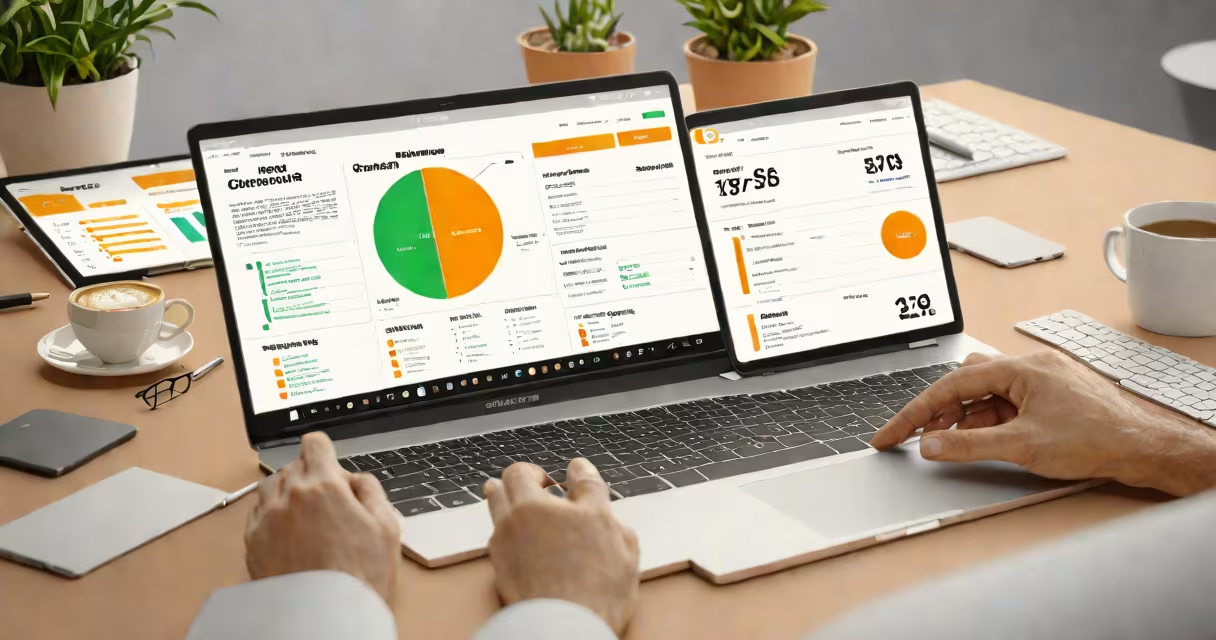
An ecommerce business plan template is a structured document that outlines the strategy, operations, financial projections, and growth goals for an online retail business. It serves as a roadmap for launching, scaling, and sustaining an online store, covering everything from product selection to marketing spend and profit margins.
Unlike generic business plans, an ecommerce-specific template includes metrics unique to digital sales-such as conversion rates, average order value, customer acquisition cost (CAC), and lifetime value (LTV)-and integrates channels like social media, email marketing, and paid search. It's designed for speed and clarity, enabling founders to move quickly from idea to launch while reducing blind spots.
Use this template to pitch investors, onboard team members, or guide daily decisions. A well-built version reduces guesswork and increases accountability. For example, a Shopify-based clothing brand used a standardized template to identify that their CAC exceeded LTV in month three, prompting a pivot to influencer partnerships and organic content.
The template functions as a living document. It begins with core assumptions-like target audience size, pricing model, and platform choice-and builds out execution steps. Each section feeds into the next, creating a cause-and-effect chain that maps strategy to results.
For instance, the "Market Analysis" section identifies demand through tools like Google Trends and SEMrush. If searches for "eco-friendly yoga mats" rose 60% over 12 months, the template prompts you to validate supply chains and set initial inventory levels. This data-driven approach prevents overstocking and underpricing.
Financial forecasting is embedded in most templates. You enter projected monthly sales based on traffic estimates and conversion benchmarks. The template then auto-calculates gross margin, operating expenses, and net profit. One founder reported saving 14 hours per week by using a template with built-in formulas instead of manually updating spreadsheets.
Most templates include these sections:
Templates vary by business model. A B2C-focused template emphasizes customer acquisition and retention, while a B2B ecommerce business plan template includes contract terms, bulk ordering workflows, and enterprise sales cycles. The latter often features a "sales cycle timeline" and "account manager capacity" section not found in consumer-facing versions.
Some templates are industry-specific. A beauty brand template may include a "product launch rollout calendar," while a tech accessories template features "compatibility matrix" and "warranty support structure." These nuances improve accuracy and reduce revision time.
Many users treat the template as a checklist rather than a strategic tool. They fill in blanks without testing assumptions. For example, entering "$50,000 in Year 1 revenue" without validating whether traffic goals are achievable. This leads to unrealistic budgets and burnout.
Another error is ignoring unit economics. A template that doesn't calculate CAC vs. LTV risks prioritizing flashy campaigns over sustainable growth. According to a 2023 report by Shopify, 62% of failed online stores cited poor unit economics as a root cause-often because they skipped this step during planning.
Some assume templates are one-size-fits-all. But a dropshipping model requires different fulfillment logic than a made-to-order service. Using a generic template for a high-touch B2B sale can misrepresent staffing needs and client onboarding timelines. Always tailor the template to your operational reality.
A founder launched a clean skincare line using a customizable ecommerce business plan template. She began with a $15,000 seed budget and targeted women aged 25-40 in urban U.S. markets.
She filled in the template with:
Using these inputs, the template projected $12,000 in monthly revenue and a 34% gross margin. After subtracting $3,200 in ad spend and $1,800 in fulfillment, she had $7,000 in gross profit. This revealed a need for higher AOV or lower CAC to reach profitability.
She adjusted her strategy: added a referral program (estimated 15% increase in LTV), reduced ad spend by 20%, and introduced a subscription option. The revised plan showed positive cash flow by month nine.
This process took less than two weeks. Without the template, she estimated it would have taken six weeks to build the same model manually.
Free templates from platforms like HubSpot, Canva, and LivePlan offer basic structures. Paid versions from Shopify's Business Center or Figma-based design systems include advanced features such as changing charts, automated data imports, and exportable PDFs.
When selecting a template, prioritize those with editable fields, clear instructions, and built-in validation checks. Avoid templates that require manual recalculations for every change. Look for ones labeled "for startups" or "for SaaS/e-commerce" to ensure relevance.
Customization should reflect your actual operations. If you're selling handmade ceramics, include a "production lead time" column and a "quality control pass rate" metric. If you're doing B2B wholesale, add a "contract approval workflow" and "bulk order minimums" section.
Remember: the template is not the plan. It's the scaffold. Your decisions-on pricing, channel mix, and team roles-must drive the content. A template without strategy is just a spreadsheet.
Use the ecommerce business plan template not as a formality, but as a decision-making engine. Update it quarterly. Track deviations. Learn from them. The best plans evolve.