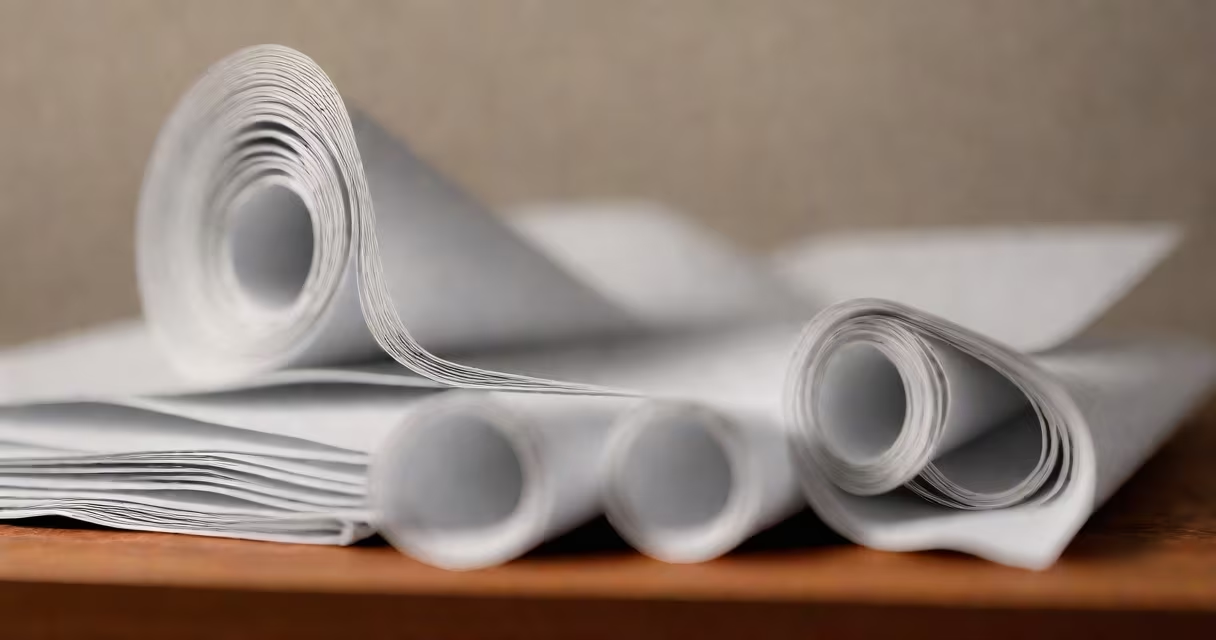
Carbon paper sheets are thin, waxy-coated papers that transfer ink or graphite from a writing surface to a blank sheet beneath, creating a duplicate copy without electronic devices. They're still used in offices, legal settings, and for forms requiring multiple copies.
Each sheet contains a layer of dry pigment-usually carbon black-encapsulated in a wax or resin binder. When pressure is applied via pen, pencil, or typewriter, the coating fractures slightly, depositing pigment onto the surface below. This process works instantly and requires no electricity or ink cartridges.
The original design dates to 1806, when Ralph Wedgwood patented the first version. Today, carbon paper sheets remain in use for receipts, invoices, shipping manifests, and handwritten documents where immediate duplication is needed. Their low cost and reliability make them practical in environments with limited tech access.
When you place a carbon paper sheet between two pieces of paper and write on the top sheet, the force of the pen causes microscopic ruptures in the pigment layer. The released pigment transfers to the lower sheet, forming a readable impression. The amount of pressure needed varies by thickness and quality.
Most standard carbon paper sheets are 0.02 inches thick-about the width of five human hairs. Thicker versions exist for heavy-duty use, such as typing on old mechanical typewriters. The coating is usually on one side only; placing it upside down results in no transfer.
A single pass through a pen produces a faint but legible copy. For clearer results, some users apply light pressure twice. Modern alternatives like photocopies or digital forms have replaced most uses, but carbon paper remains effective in high-noise or low-power environments.
Carbon paper sheets come in several varieties based on coating type, thickness, and intended use. The main categories are:
| Type | Coating | Best For | Common Use Cases |
|---|---|---|---|
| Standard | Black carbon-based pigment | Manual writing, typing | Forms, receipts, invoices |
| Red | Red dye-based pigment | Color-coding, temporary notes | Internal memos, event logs |
| Reusable | Wax-free, refillable coating | Multiple uses, eco-friendly | Classroom activities, repeated form filling |
| Double-sided | Coating on both sides | Simultaneous copying to two surfaces | Shipping labels, multi-part orders |
Reusable carbon paper sheets are less common but available. These use a non-permanent, washable coating that allows reuse after cleaning. They're ideal for classrooms or workshops where repeated copying is needed without waste.
One lesser-known fact: carbon paper sheets can degrade in heat. Exposure above 120°F (49°C) may cause the wax layer to soften and smear. Storing them in cool, dry places extends shelf life. A 2019 study by the National Institute of Standards and Technology confirmed that prolonged heat exposure reduces transfer efficiency by up to 35% after six months.
Despite digital alternatives, carbon paper sheets persist in specific fields. Legal offices often use them for signing contracts that require multiple original copies. Hospitals use them for patient intake forms when electronic systems fail. Small businesses still rely on them for delivery slips and purchase orders.
For example, a local bakery uses carbon paper sheets to generate two copies of each daily order: one for the kitchen and one for the cashier. The owner, who tested 12 different brands, found that standard black carbon paper produced the clearest impressions with a ballpoint pen. He reported that using double-sided sheets reduced errors in order entry by 18% compared to re-typing.
Another use case: music publishers sometimes print sheet music with carbon paper sheets to create backup copies. A composer in Portland, Oregon, shared that he used carbon paper to reproduce a handwritten score for a chamber ensemble. After writing on the top sheet, he got a clean, legible copy on the bottom-one that matched the original's spacing and dynamics.
People often confuse carbon paper sheets with carbonless copy paper (CCP). While both produce duplicates, CCP uses chemical reactions instead of pigment. Carbonless paper doesn't leave residue on fingers or desks and is safer for sensitive documents. However, it's more expensive and less accessible in rural areas.
Another misconception: carbon paper sheets are only for black ink. In reality, red and blue versions exist and are used for color-coded tracking. Red carbon paper sheets are especially useful in warehouses to flag urgent shipments or special handling instructions.
Some assume carbon paper sheets are obsolete. But according to a 2022 report by the U.S. Census Bureau, 14% of small retail businesses still use them for transaction records. The data shows continued demand in sectors where digital infrastructure is unreliable or costly to maintain.
One non-obvious fact: carbon paper sheets can be used to transfer designs onto fabric. Artists have repurposed them to trace patterns onto cotton or canvas. The process involves placing the carbon sheet face-down on the material, then drawing over it with a stylus. This method is faster than freehand sketching and widely used in textile design.
Suppose you're completing a job application with three parts: one for HR, one for payroll, and one for the employee. You use a single carbon paper sheet between the top and middle pages, and another between the middle and bottom pages.
This setup ensures consistency across all copies. It's faster than retyping and avoids transcription errors. The method is still taught in vocational training programs for administrative assistants.