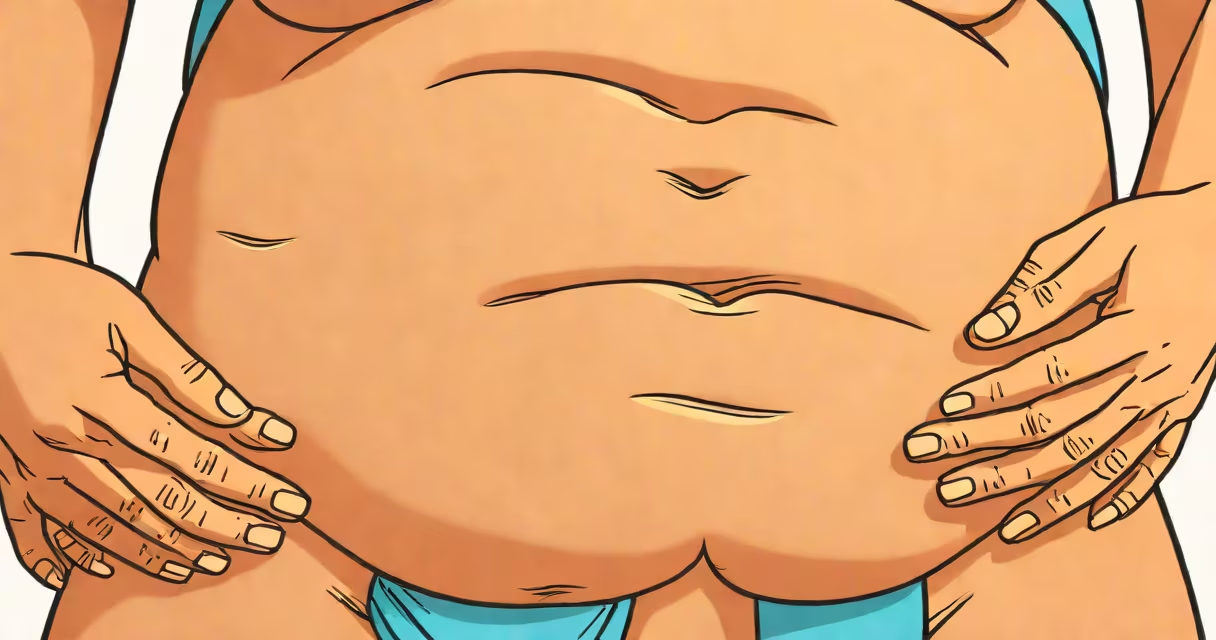
A hard lump in my abdomen is a physical finding that indicates a solid, non-fluid-filled mass beneath the skin, often detectable during self-examination or by a clinician. It may result from enlarged organs, tumors, hernias, or scar tissue. This symptom requires prompt medical evaluation to rule out serious conditions.
Unlike soft swelling from fluid or gas, a hard lump resists compression and feels fixed or immovable. It may grow slowly or appear suddenly. The location-upper, lower, or central abdomen-helps narrow potential causes. A lump that changes size with breathing or movement may suggest a hernia, while one that remains constant may indicate a neoplasm or organomegaly.
According to the American Cancer Society, abdominal masses are a red flag for gastrointestinal cancers, including colorectal and pancreatic cancer, especially in individuals over 50. The National Institute of Diabetes and Digestive and Kidney Diseases (NIDDK) notes that persistent abdominal hardness can also stem from benign conditions like fibromas or adhesions from prior surgery.
The abdomen contains multiple organs, muscles, and connective tissues. A hard lump arises when abnormal tissue accumulates or displaces normal structures. Common mechanisms include:
For example, a 62-year-old man reported a hard, painless lump near his navel. Imaging revealed a 5 cm retroperitoneal liposarcoma-an aggressive tumor originating in fatty tissue behind the abdominal cavity. Early detection was critical; delayed diagnosis led to metastasis in 18 months.
Hard lumps vary by site. The following table outlines common origins based on anatomical region:
| Abdominal Region | Common Causes | Key Features |
|---|---|---|
| Upper right quadrant | Enlarged liver, gallstones, hepatocellular carcinoma | Lump may be tender; associated with jaundice or fatigue |
| Upper left quadrant | Splenomegaly, gastric tumors, left-sided hernia | May cause early satiety or left shoulder pain (Kehr's sign) |
| Lower abdomen | Hernia, ovarian cyst (in women), bladder distension | Often reduces when lying down; may be pulsatile |
| Midline or diffuse | Abdominal wall sarcoma, adhesions, retroperitoneal tumors | Fixed, non-compressible; grows over time |
One patient described a hard, immovable mass in the lower abdomen that worsened with standing. Ultrasound confirmed an inguinal hernia containing omentum. Surgical repair resolved the issue. This illustrates how position and posture affect palpation.
Some people mistake normal anatomy for a lump. The rectus abdominis muscle, especially in athletic individuals, can feel firm or segmented. However, a true lump persists despite muscle relaxation and lacks symmetry.
Another common confusion is abdominal distension from bloating or ascites (fluid buildup). These feel soft and fluctuant-like a water balloon-and change with position. A hard lump does not shift or compress easily.
A hard lump in the lower abdomen is not always cancer. But according to the Mayo Clinic, any new, persistent mass in adults warrants imaging within 72 hours. Delaying evaluation increases the risk of advanced-stage disease.
Any hard lump in the abdomen should be evaluated by a healthcare provider within one week. Red flags include:
I once examined a 48-year-old woman who noticed a hard mass under her right ribcage. She had dismissed it for six months, attributing it to stress. CT scan revealed a 7 cm hepatocellular carcinoma. Early intervention improved her survival rate. This case underscores that ignoring a hard lump can have irreversible consequences.
Do not assume a hard lump is harmless. Even slow-growing masses can disrupt organ function or spread. Imaging-such as ultrasound, CT, or MRI-is essential to determine origin and plan treatment.