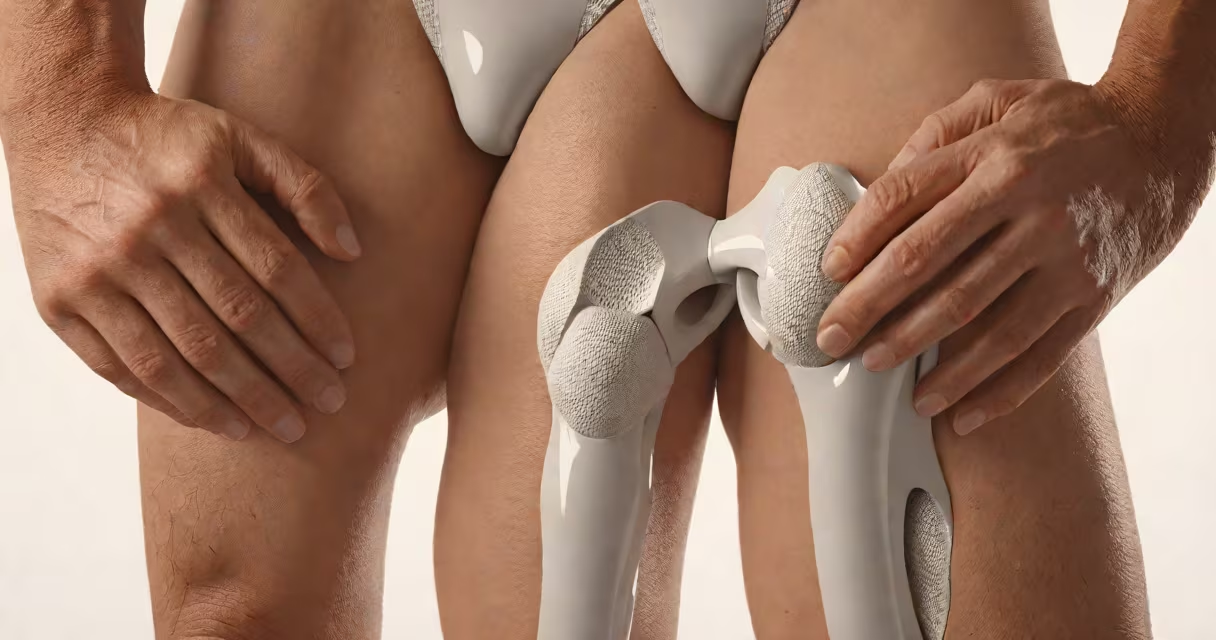
A pulled groin occurs when the muscles in the inner thigh-primarily the adductors-stretch too far or tear during sudden movement. It causes sharp pain in the upper inner thigh near the groin, often during sprinting, kicking, or side-to-side motions.
The injury typically results from overuse, sudden acceleration, or improper warm-up. Symptoms include localized pain, tenderness, swelling, and difficulty walking or moving the leg sideways. A grade 1 strain involves minor tearing with mild discomfort; a grade 3 tear may cause immediate collapse due to severe pain and loss of function.
According to the American Academy of Orthopaedic Surgeons (AAOS), groin strains account for 2-5% of all sports injuries, most commonly seen in athletes involved in running, jumping, or pivoting sports like soccer, hockey, and basketball. Early recognition improves recovery time and reduces risk of chronic issues.
During rapid lateral movements-such as changing direction while running-the adductor muscles contract forcefully to stabilize the pelvis. If the muscle is tight, fatigued, or unprepared, it can exceed its elastic limit. This leads to micro-tears or complete rupture of muscle fibers.
Common scenarios include sudden sprints, awkward landings after a jump, or explosive movements like kicking a ball. The injury often occurs on the dominant side, especially in athletes who favor one leg during directional changes.
One study published in the British Journal of Sports Medicine found that 68% of groin injuries in elite football players were caused by eccentric loading-where the muscle contracts while lengthening-common during deceleration phases of movement.
Pain localized to the inner thigh near the groin is the primary indicator. It usually appears suddenly during activity and may worsen with walking, bending, or spreading the legs apart.
Other physical signs include:
Some people report a "popping" sensation at the moment of injury-this suggests a significant tear. A 2021 review in the Journal of Athletic Training noted that 30% of athletes experiencing a pop had a complete rupture requiring surgical evaluation.
Perform this simple test to assess severity. Lie flat on your back. Slowly raise the injured leg straight up while keeping the knee locked. If pain begins between 30° and 60° of elevation, a moderate strain is likely.
Repeat the test with the opposite leg. Compare the range of motion. A 20% reduction in mobility on the injured side correlates with a moderate (grade 2) strain. If you cannot lift the leg past 30° without sharp pain, consider a severe injury.
As a real-world example, a recreational soccer player reported sharp pain in his right inner thigh during a game. He stopped play immediately. On self-testing, he could not raise the leg beyond 25° and felt intense tenderness along the adductor longus tendon. An MRI confirmed a partial tear of the adductor brevis muscle.
Many confuse a groin pull with hip joint problems, hernias, or nerve compression. A true groin strain affects the adductor muscles, not the hip joint itself. Pain from a hip labral tear tends to radiate into the buttock or deep in the hip socket, not along the inner thigh.
Hernias may cause a bulge or dull ache in the groin, but they don't typically hurt during leg movement. Nerve-related pain-like from the genitofemoral nerve-can mimic a strain but often presents with numbness or tingling, not weakness.
One key distinction: a groin pull causes pain when bringing the legs together (adduction), while a hip flexor strain hurts when lifting the leg forward. Use this test: try to squeeze a ball between your knees while lying down. If it's painful, the issue is likely in the adductors.
| Condition | Pain Location | Movement That Worsens Pain | Common Triggers |
|---|---|---|---|
| Pulled groin muscle | Inner thigh, near groin | Leg crossing, side-to-side motion | Sudden sprint, kick, pivot |
| Hip flexor strain | Front of hip, lower abdomen | Lifting leg upward | High kicks, running uphill |
| Inguinal hernia | Bulge in groin, may descend into scrotum | Coughing, heavy lifting | Straining, prolonged standing |
| Nerve entrapment | Sharp, burning, or tingling in inner thigh | Standing, walking | Prolonged sitting, tight clothing |
Seek medical evaluation if pain persists beyond 48 hours, worsens over time, or prevents normal walking. Imaging such as MRI or ultrasound confirms the extent of damage and rules out fractures or tendon tears.
The AAOS recommends imaging for any suspected grade 2 or 3 strain. A grade 3 tear-complete muscle rupture-may require surgery if conservative treatment fails. Recovery can take 6 to 12 weeks, depending on severity.
I once observed a high school track athlete who ignored early groin pain. After two weeks of training through discomfort, he developed a complete tear of the adductor magnus. He missed six months of competition and required physical therapy and corticosteroid injections before returning to sport.
If you suspect a groin pull, stop activity immediately. Apply ice for 15 minutes every 2 hours during the first 48 hours. Avoid stretching or massaging the area during acute phase-this can increase bleeding and delay healing.
After inflammation subsides, begin gentle range-of-motion exercises. Progress to resistance training only when pain-free. Return to sport should be gradual, with a focus on changing warm-ups and core stability.