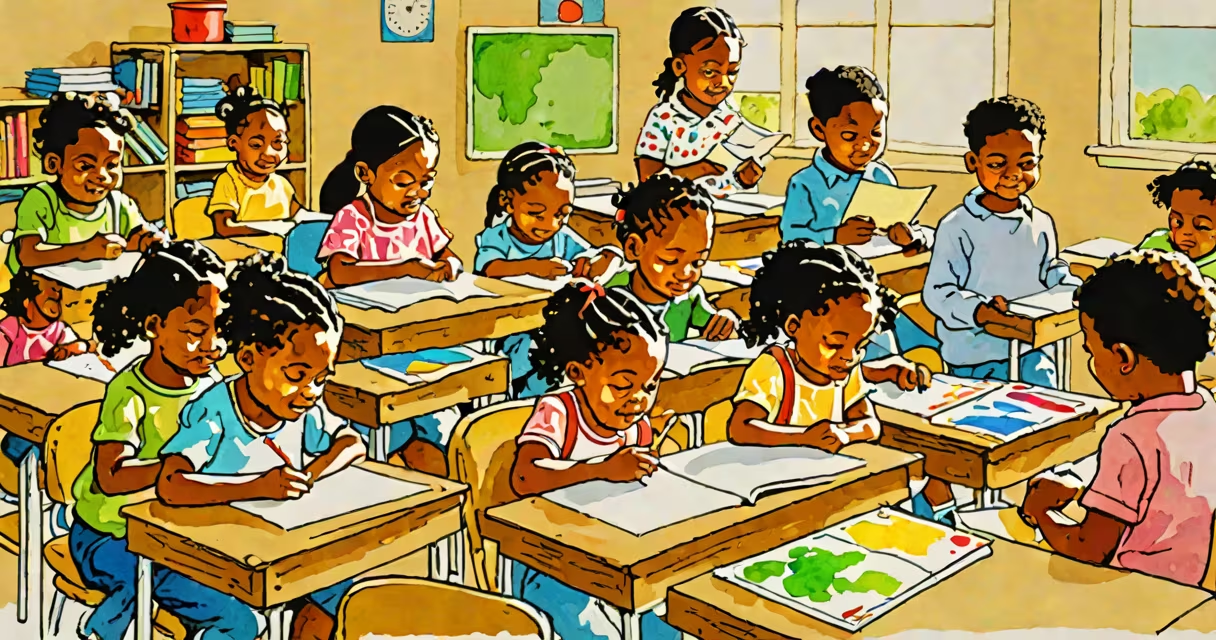
A pre-K student is typically between the ages of 3 and 5 years old, depending on state regulations, school district policies, and the child's birthdate relative to the academic cutoff. Most programs serve children who turn 4 by a specific date in the fall, though some accept 3-year-olds based on developmental readiness.
Pre-K is a structured educational program designed for children before they enter kindergarten. It is not the same as informal preschool, which may operate on a flexible schedule and lack formal curricula. Pre-K programs are often publicly funded and follow state-approved standards for early learning.
The U.S. Department of Education defines pre-K as part of early childhood education, emphasizing development in language, math, social-emotional skills, and motor coordination. Children in pre-K are expected to engage in guided play, circle time, storytelling, and basic literacy and numeracy exercises.
Most pre-K programs enroll children who are 4 years old by a specified cut-off date, usually September 1 or October 1. For example, in California, children must be 4 on or before September 1 to qualify for state-funded pre-K. In New York, the cutoff is December 1. These dates vary widely by state and can affect access to free programs.
Some states offer universal pre-K, meaning all 4-year-olds are eligible regardless of income. Others limit eligibility to low-income families or children with special needs. In Texas, for instance, the Pre-K for All initiative provides free pre-K to all 4-year-olds whose families meet income thresholds.
Children aged 3 may attend pre-K if they are developmentally ready and space allows. This is common in urban districts with high demand. A 3-year-old enrolled in pre-K must demonstrate age-appropriate behavior, communication, and self-regulation skills.
Pre-K programs come in several formats: public school-based, private, nonprofit, and Head Start. Public pre-K is typically offered through local school districts and follows state-mandated curricula. Private pre-K programs may have more flexibility in scheduling and teaching methods.
Public pre-K programs in the U.S. are increasingly aligned with the Common Core State Standards for early grades. They focus on foundational skills such as letter recognition, counting to 20, sorting shapes, and identifying emotions. Teachers use daily routines, thematic units, and hands-on activities to support learning.
For example, a typical pre-K classroom in a Chicago public school includes 15 minutes of phonemic awareness drills, 20 minutes of math games using blocks, and 30 minutes of free play with structured prompts. Children rotate through centers focused on fine motor skills, dramatic play, and science exploration.
| Program Type | Age Range | Funding Source | Curriculum Standard |
|---|---|---|---|
| Public School Pre-K | 3-5 (usually 4 by cutoff) | State/local government | State-approved standards |
| Private Pre-K | 3-5 (varies by school) | Parent tuition | Independent or national frameworks |
| Head Start | 3-5 (income-based) | Federal grant | National Early Learning Structure |
Pre-K is not synonymous with preschool. While both serve young children, preschool is often a private, non-academic program focused on socialization and play. Pre-K is more structured and academically oriented, with measurable learning goals.
Another misconception is that all pre-K students are 4 years old. Some states allow 3-year-olds to enroll if they meet developmental benchmarks. In Massachusetts, children who turn 4 by December 1 are eligible, but those turning 4 in January may still be admitted if assessed as ready.
A lesser-known fact: the federal government does not mandate pre-K. Instead, it funds programs through the Child Care and Development Block Grant (CCDBG) and the Head Start program. States choose whether to offer universal pre-K, and only 22 states currently do so.
In a public pre-K classroom in Portland, Oregon, a 4-year-old named Mateo arrived at 8:30 a.m. He was born on August 29, making him 4 years old by the September 1 cutoff. His teacher reviewed his Individualized Family Service Plan (IFSP) from last year, noting he had strong verbal skills but needed support with sharing toys.
During morning circle, Mateo participated in a counting game using 10 red and blue blocks. He correctly identified five red blocks and said "five" aloud. Later, during art time, he drew a house with four windows and two doors, demonstrating spatial awareness and fine motor control.
By the end of the day, Mateo had completed a self-assessment checklist: "I used my words," "I waited my turn," and "I cleaned up." His teacher recorded progress toward state standards in language and social-emotional development.
When asked about the difference between pre-K and preschool, a lead teacher in Denver noted: "Pre-K is a bridge to kindergarten. It teaches routines, expectations, and foundational academics. Preschool is more about exploration and freedom within safe boundaries."
Pre-K is not a single uniform experience. It varies by location, funding model, and child development stage. The goal remains consistent: preparing children for success in kindergarten through intentional, research-backed instruction.