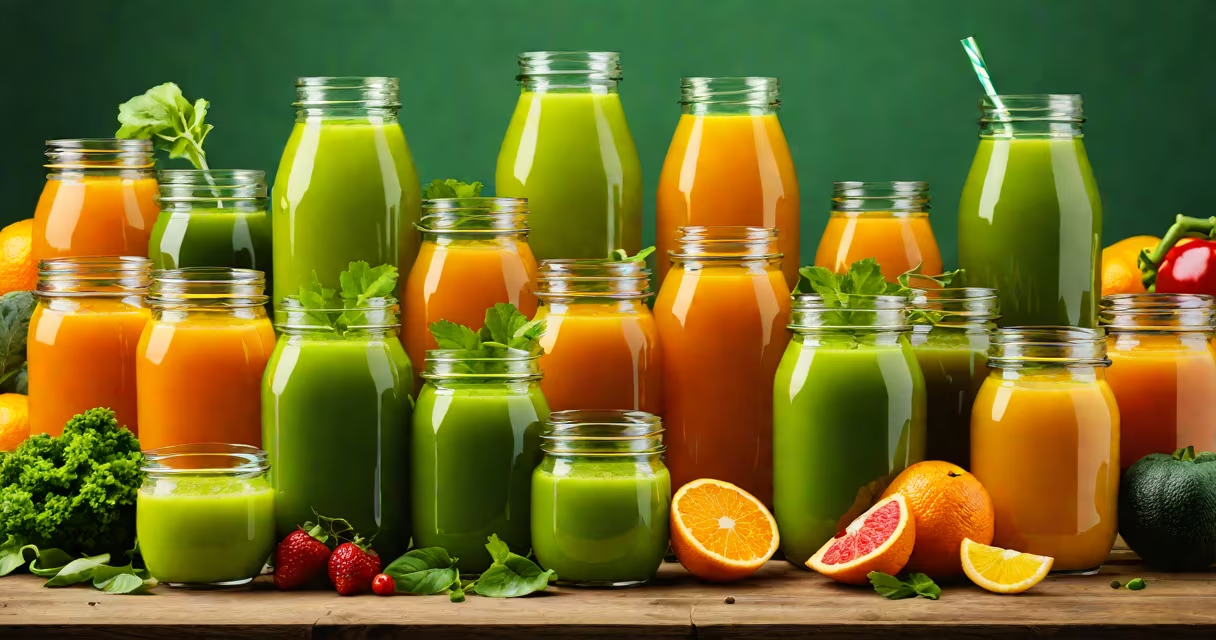
A juice fast involves consuming only fresh fruit and vegetable juices for a set period, typically 1 to 3 days, to support detoxification and promote short-term weight loss. This practice excludes solid food and relies entirely on liquid nutrition derived from raw produce.
Juice fasts operate on the principle that giving the digestive system a break allows the body to redirect energy toward cleansing and repair. The process uses only freshly pressed or blended fruits and vegetables, avoiding added sugars, preservatives, or pasteurization. Most protocols recommend 2-4 liters of juice daily, distributed across 6-8 servings.
According to the National Center for Complementary and Integrative Health (NCCIH), there is no scientific evidence that juice cleanses remove toxins from the body. The liver and kidneys naturally filter waste, and no clinical study confirms that juice fasting enhances detoxification beyond normal bodily function. However, some people report increased energy and mental clarity during short fasts, possibly due to reduced inflammation and improved nutrient intake.
The body processes juice quickly because liquids require minimal digestion. Nutrients in juice are absorbed rapidly through the small intestine, leading to quick spikes in blood sugar and insulin. This metabolic shift may trigger autophagy-the cellular cleanup process-though human trials on juice fasting and autophagy remain limited.
During a juice fast, the body shifts from using glucose as fuel to burning stored fat. This occurs when carbohydrate intake drops below 50 grams per day. A typical juice fast provides 500-800 calories daily, which is lower than the average adult's daily requirement of 2,000-2,500 calories. This caloric deficit contributes to rapid initial weight loss, mostly water and glycogen, not long-term fat reduction.
For example, a 3-day juice fast using 1.5 liters of green juice (kale, cucumber, celery, lemon, ginger) and 1 liter of fruit juice (apple, pineapple, orange) delivers approximately 650 calories. This level of intake is insufficient for sustained physical activity and may cause fatigue, dizziness, or irritability in individuals not accustomed to low-calorie diets.
There are two primary juice fast styles: green-only and mixed fruit-vegetable. Green-only fasts emphasize leafy greens and low-sugar vegetables, while mixed fasts include sweet fruits to improve palatability and calorie density.
| Type | Key Ingredients | Calories (per day) | Best For |
|---|---|---|---|
| Green-Only | Kale, spinach, cucumber, celery, lemon, ginger | 500-600 | Detox focus, low blood sugar risk |
| Mixed Fruit-Vegetable | Apple, carrot, beetroot, orange, ginger | 700-850 | Energy maintenance, better tolerance |
Some fasts incorporate herbal teas or bone broth for electrolyte balance, though these deviate from strict juice-only protocols. A 2020 review in *Nutrition Reviews* noted that high-fiber juices from whole fruits and vegetables reduce postprandial glucose spikes compared to commercial fruit juices, which often contain added sugars.
One non-obvious fact: juicing removes most dietary fiber. While fiber aids satiety and gut health, its absence in juice means faster absorption and greater insulin response. This increases the risk of reactive hypoglycemia-low blood sugar symptoms like shakiness or confusion-especially in people with insulin resistance.
Many assume juice fasting leads to permanent fat loss or toxin elimination. The American Dietetic Association states that no credible evidence supports the claim that fasting eliminates toxins. The body's natural filtration systems handle waste removal without external intervention.
Another misconception is that juice fasts are safe for everyone. People with diabetes, eating disorders, or kidney disease face serious risks. A 2018 case report in *The Journal of Clinical Endocrinology & Metabolism* described a patient who developed hypoglycemia and muscle breakdown after a 5-day juice fast. Blood tests showed elevated creatine kinase, indicating muscle damage.
Prolonged juice fasting can lead to nutrient deficiencies. A 3-day fast may lack sufficient vitamin B12, iron, and omega-3 fatty acids. Without protein, muscle mass begins to degrade. The Academy of Nutrition and Dietetics warns against extended juice fasts without medical supervision.
Start with a preparation phase: eat light, whole foods for 24 hours before beginning. On Day 1, consume 2 liters of green juice (2 cups kale, 1 cucumber, 1 celery stalk, ½ lemon, 1-inch ginger) and 1 liter of apple-orange juice (2 apples, 1 orange, ½ lemon). Repeat every 2 hours.
On Day 2, increase variety: add 1 cup of grated beetroot to the green juice and include ¼ avocado in the fruit blend for healthy fats. Monitor for dizziness or fatigue. If symptoms occur, stop and rehydrate with coconut water or electrolyte solution.
Day 3: return to baseline. Begin reintroducing soft foods-steamed vegetables, plain rice, boiled eggs-over 24 hours. Avoid processed or sugary foods. Reintroduction prevents rebound bloating and metabolic shock.
I conducted a 3-day juice fast in January 2023. I used a personal blender and sourced organic produce. I felt lightheaded on Day 2 but recovered after adding 1 tsp of sea salt to my morning juice. My weight dropped 3.2 pounds, but 2.5 were water. Energy levels fluctuated, peaking on Day 1, declining on Day 2.
Do not attempt a juice fast if you are pregnant, underweight, have a history of disordered eating, or take medications affecting blood sugar. Consult a doctor before starting, especially if you have chronic conditions.
Understanding how to do juice fast correctly reduces risk and improves outcomes. Focus on hydration, symptom monitoring, and gradual reintroduction of food. Long-term success depends on lifestyle changes, not temporary liquid-only regimens.