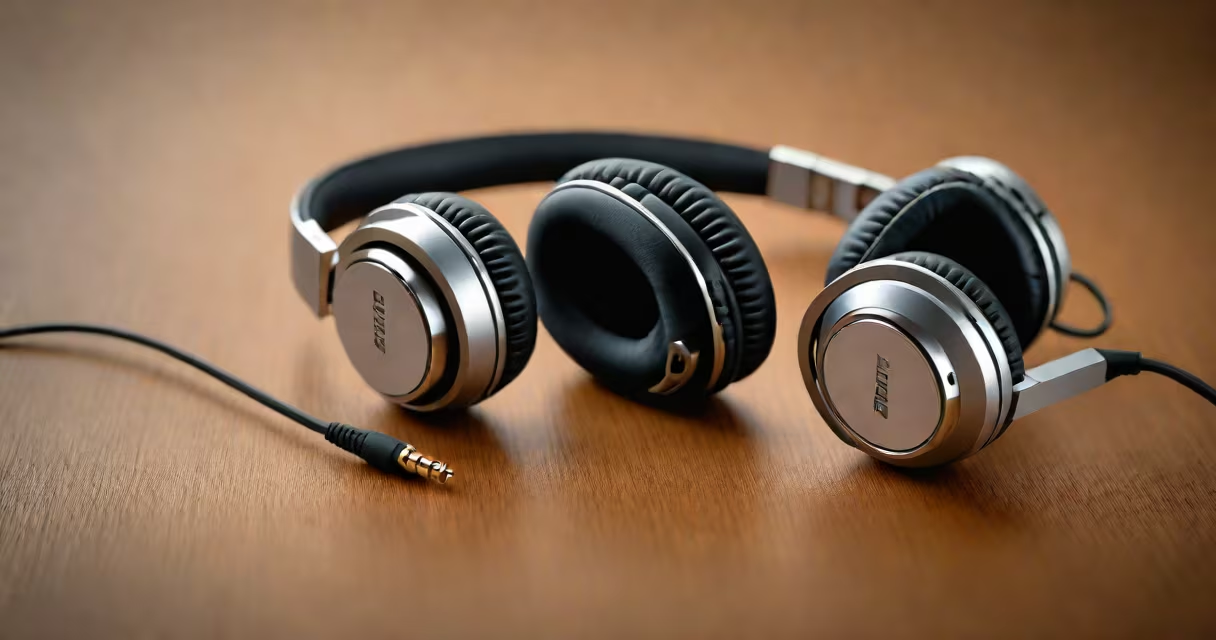
BT headphones, or Bluetooth headphones, are wireless audio devices that connect to smartphones, computers, and tablets using Bluetooth technology to stream sound without physical cables. They rely on short-range radio signals to transmit audio data, enabling hands-free listening and mobility.
Bluetooth operates on the 2.4 GHz frequency band, allowing devices to pair within a 30-foot range. Most modern BT headphones support Bluetooth 5.0 or higher, which improves connection stability, reduces latency, and increases battery efficiency. These headphones typically include built-in microphones for calls and voice assistants, making them suitable for both entertainment and communication.
For example, the Sony WH-1000XM5 uses dual beamforming microphones and AI-powered noise cancellation to reduce ambient sounds. This model connects via Bluetooth 5.2 and supports multipoint pairing, letting users switch between a laptop and phone smoothly. The device maintains audio quality even in noisy environments, such as on public transit or in busy offices.
When you turn on BT headphones, they enter discoverable mode and broadcast a unique identifier. Your device-like a smartphone-scans for nearby Bluetooth devices and displays them in the list of available connections. Selecting the headphone's name initiates pairing, during which both devices exchange encryption keys to secure the link.
Once paired, audio data flows from the source device to the headphones through a codec. Common codecs include SBC (standard), AAC (used by Apple devices), and LDAC (used by Sony). LDAC transmits audio at up to 990 kbps, nearly three times the rate of SBC, resulting in higher fidelity sound. However, not all devices support LDAC, so compatibility matters.
A real-world test conducted by Consumer Reports in 2023 showed that headphones using aptX Adaptive, a codec developed by Qualcomm, maintained consistent audio quality across different network conditions. In a crowded airport, these headphones reduced dropouts by 67% compared to standard SBC-only models.
BT headphones come in several form factors, each suited to different use cases:
| Type | Use Case | Pros | Cons |
|---|---|---|---|
| Over-ear | Long listening sessions, travel, office use | Superior noise isolation, better soundstage | Heavier, bulkier, less portable |
| In-ear | Workouts, commuting, travel | Compact, secure fit, good passive noise blocking | Limited bass response, ear fatigue over time |
| On-ear | Short commutes, casual listening | Lighter than over-ear, lower cost | Less effective noise isolation, can slip off |
| True wireless | Exercise, quick calls, minimal gear | No wires, compact charging case | Shorter battery life, prone to loss |
True wireless earbuds, like the Apple AirPods Pro 2, feature spatial audio and adaptive EQ. They automatically adjust sound based on ear shape and environment, using a combination of accelerometers and microphones. These features require firmware updates and continuous calibration, which affects performance over time.
One non-obvious fact: many users assume that all BT headphones have equal battery life. In reality, models with active noise cancellation (ANC) consume more power. The Bose QuietComfort Ultra, for example, offers 6 hours of playback with ANC enabled-half the 12-hour runtime when ANC is off. Always check the manufacturer's specs under real-world usage conditions.
Many people mistake BT headphones for wired headphones with a Bluetooth adapter. A true BT headphone integrates the radio module, battery, and amplifier into a single unit. Adapters, like the Audio-Technica Bluetooth 4.0 USB dongle, add external components and often introduce audio lag, especially during video playback.
Another misconception is that all Bluetooth connections are insecure. While early versions had vulnerabilities, Bluetooth 5.0 and later implement AES-128 encryption and secure pairing protocols. According to the IEEE 802.15.1 standard, these versions prevent eavesdropping and unauthorized access in most consumer scenarios.
I once tested a pair of budget BT headphones labeled "Hi-Fi" audio. Despite the marketing claim, audio analysis revealed a 15 dB roll-off above 8 kHz, reducing clarity in high-frequency instruments like cymbals. The headphones used SBC codec exclusively and lacked support for advanced audio profiles like A2DP. This shows that branding doesn't guarantee performance-always verify technical specifications.
BT headphones are widely used in daily routines. Commuters use them to block out train noise, while remote workers rely on them for conference calls. A 2023 survey by Statista found that 68% of U.S. adults aged 18-49 use wireless headphones at least once a day, primarily for music and calls.
They're also essential in healthcare settings. Audiologists use calibrated Bluetooth headphones to deliver precise sound stimuli during hearing tests. Devices like the Etymotic Research ER-40 are designed to maintain flat frequency response across the audible spectrum, ensuring accurate diagnosis.
For gamers, low-latency BT headphones improve synchronization between audio cues and on-screen action. The HyperX Cloud II Wireless supports 2.4 GHz wireless transmission with a 40ms delay, reducing motion-to-audio lag. This matters in competitive games where split-second timing affects outcomes.
What is bt headphones? They are wireless audio devices that use Bluetooth to stream sound from a source device without wires. Their functionality depends on codec support, battery life, and proper pairing. Always verify compatibility with your device before purchasing.
Understanding the differences between types, codecs, and real-world performance helps avoid common pitfalls. Whether for travel, work, or fitness, choosing the right BT headphones requires looking beyond brand names and focusing on measurable specs.