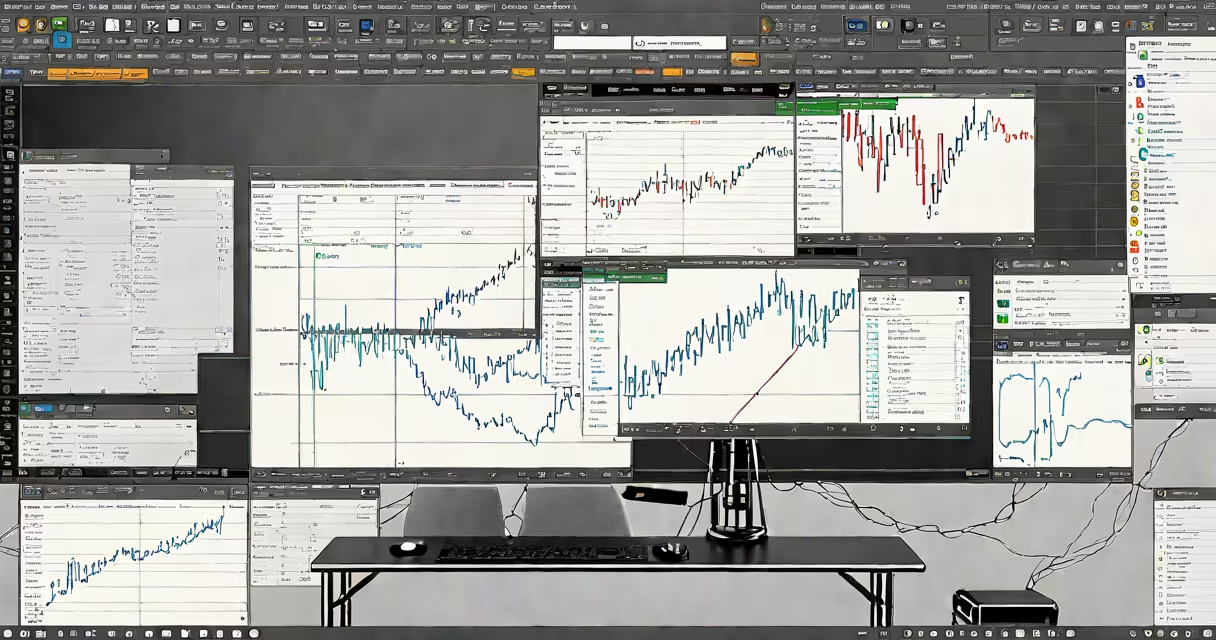
thinkorswim is a professional-grade trading platform developed by TD Ameritrade that enables users to buy and sell options contracts through a customizable interface with advanced charting, real-time data, and automated strategy builders. It supports both paper trading and live account execution, making it ideal for learning and executing options strategies.
Options trading in thinkorswim begins with accessing the Options Chain, which displays all available strike prices, expiration dates, bid/ask spreads, and implied volatility for a specific underlying asset. Users select an option type-call or put-and specify whether they want to buy or sell. The platform then calculates potential profit and loss based on current market conditions and user-defined parameters.
Once the trade setup is confirmed, users enter the quantity, choose a order type (market, limit, stop-loss), and submit the order. thinkorswim provides real-time risk analysis via the Risk Profile tool, which visualizes how changes in the underlying price affect the position's value. This feature is critical for understanding exposure before entering a trade.
Trading options in thinkorswim follows a structured workflow. After logging in, users open the Options tab from the main menu. They enter a ticker symbol-such as SPY for the S&P 500 ETF-and click "Options" to load the Options Chain. The chain shows all available calls and puts for multiple expirations, sorted by strike price and time to expiry.
For example, if you're interested in selling a put on SPY with a strike of $500 expiring in 30 days, you'd select the relevant row under the "Put" column. The platform displays the current bid ($1.20) and ask ($1.25), indicating the price at which you can sell the contract. You can then set the number of contracts (e.g., 1 contract = 100 shares) and choose a sell limit order at $1.25 to ensure execution at or better.
Before submitting, review the risk profile. thinkorswim overlays a graph showing maximum gain, breakeven point, and maximum loss. For a short put, the max gain is the premium received, and the max loss occurs if the stock falls below the strike price. In this case, selling the $500 put on SPY at $1.25 gives a maximum profit of $125 per contract if SPY stays above $500 at expiry.
thinkorswim includes several tools that distinguish it from basic retail platforms. The Probability Graph estimates the likelihood of the underlying stock reaching certain levels by expiration. For instance, if SPY is trading at $505, the graph may show a 60% chance it stays above $500 by expiry-a useful signal for selling puts.
The Strategy Builder allows users to construct complex strategies like spreads, straddles, and butterflies. By dragging and dropping option legs, users can simulate outcomes and adjust parameters in real time. A vertical call spread, for example, involves buying a lower-strike call and selling a higher-strike call simultaneously. thinkorswim automatically adjusts the net debit or credit and displays the payoff diagram.
Another unique feature is the ability to backtest strategies using historical data. You can apply a strategy to past price movements and see how it would have performed. This functionality helps validate assumptions before risking capital. According to TD Ameritrade's documentation, over 80% of active traders use the Strategy Builder to design and refine their approaches.
A frequent error is assuming that selling options guarantees income. While premium collection is immediate, losses can exceed initial gains if the underlying moves sharply against the position. For example, selling a naked put on a volatile stock like NVDA without proper risk management can lead to margin calls or forced liquidation.
Users often confuse the Options Chain with the Options Summary. The Chain shows individual contract details; the Summary provides aggregated data such as volume, open interest, and implied volatility. Failing to check open interest can result in trading illiquid options-those with low trading volume and wide bid-ask spreads. For instance, a put with only 10 contracts traded daily may not fill quickly, leading to slippage.
Another misconception is that thinkorswim's tools eliminate risk. The platform offers useful analytics, but it doesn't prevent losses. In my experience, a client who sold out-of-the-money calls on a tech stock during earnings season lost nearly 40% of their portfolio because the stock surged 15% post-earnings-far beyond the breakeven point.
Understanding the differences between option types and common strategies is essential. Below is a breakdown of four core strategies used in thinkorswim:
| Strategy | Use Case | Max Profit | Max Loss | thinkorswim Tool |
|---|---|---|---|---|
| Long Call | Bullish outlook on underlying | Unlimited (above strike) | Cost of premium | Options Chain + Risk Profile |
| Short Put | Neutral to bullish; collect premium | Premium received | Stock drops below strike | Probability Graph + Strategy Builder |
| Covered Call | Own stock; generate income | Premium + limited upside | Stock drops below cost basis | Trade Entry Panel |
| Iron Condor | Range-bound market; low volatility | Net premium collected | Large move beyond either wing | Strategy Builder + Backtester |
Each strategy has distinct risk-reward profiles. For example, a covered call on Apple (AAPL) at $180 strike with a $2.50 premium generates $250 per contract in income. If AAPL stays below $180 at expiry, the option expires worthless, and you keep the premium. But if AAPL rises above $180, you must sell shares at $180-capping upside at $20 per share plus the premium.
Let's walk through a real trade. On March 15, 2024, AAPL closed at $195.20. You own 100 shares and want to generate income. Using thinkorswim, you select AAPL, go to Options, and find the April 19, 2024, $195 call. The bid is $3.10, ask $3.15.
You decide to sell one contract (100 shares) at $3.10. The platform confirms the trade as a "Sell to Open" call. Your maximum profit is $310 (100 × $3.10). If AAPL stays below $195 at expiry, you keep the premium and continue holding the stock. If AAPL rises above $195, you must deliver shares at $195, resulting in a $15 gain per share plus the $3.10 premium-total $1,810 profit on 100 shares.
This strategy reduces downside risk compared to holding stock alone. If AAPL drops to $180, you still keep the $310 premium, reducing your effective cost basis to $192.10 per share. However, you forfeit upside above $195.
thinkorswim's integration with TD Ameritrade's clearing system helps assignments and deliveries are handled automatically. You don't need to manually deliver shares unless you're trading in a cash account without sufficient funds.
Always verify that your brokerage account has options approval. thinkorswim requires users to complete a quiz and pass a risk assessment before enabling options trading. This step prevents inexperienced users from taking on unintended risk.