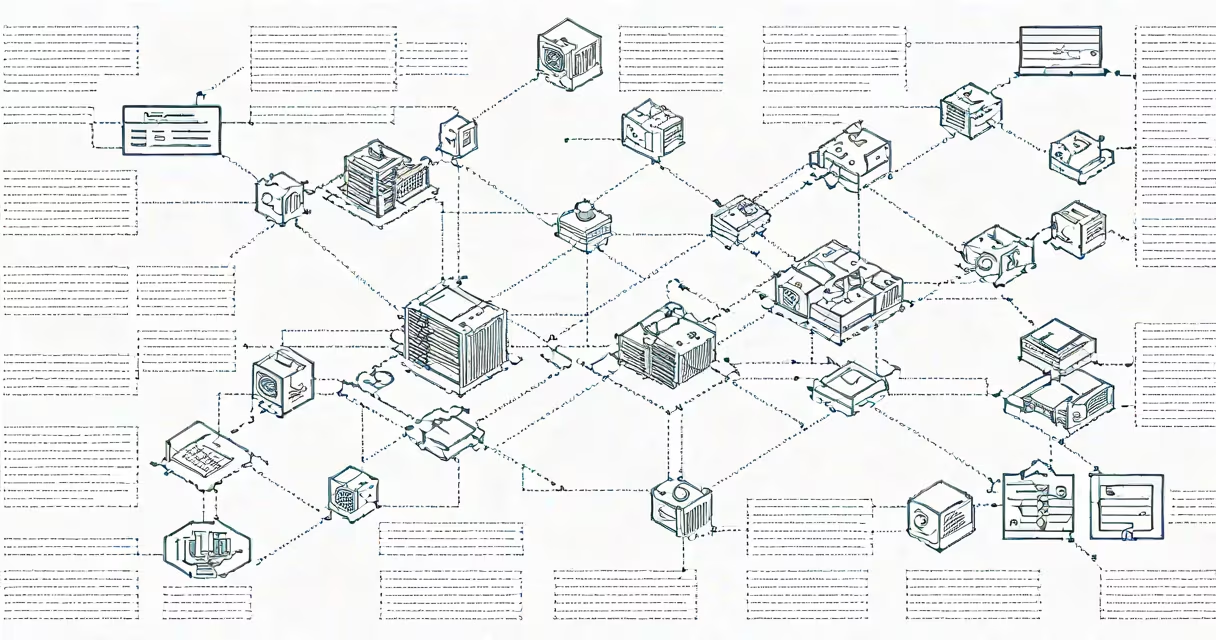
Data lineage definition describes the complete path of data from its origin through every transformation, storage, and usage point across systems. It documents where data comes from, how it changes, and where it ends up-enabling traceability, accountability, and compliance.
Every piece of data in an enterprise system has a history. Data lineage captures that history in structured form. It maps inputs to outputs, identifies transformations applied (such as filtering, aggregation, or merging), and records who or what processed the data. This creates a transparent record of data movement across databases, ETL pipelines, analytics tools, and reporting platforms.
For example, a sales revenue figure reported in a quarterly executive dashboard may originate from a CRM system, pass through a data warehouse, undergo cleansing and currency conversion, and finally appear in a visualization tool. Data lineage tracks each step: which fields were pulled, how null values were handled, and whether the exchange rate was updated daily. Without this, discrepancies between reports can go undetected for months.
Data lineage operates through automated discovery and mapping. Tools scan metadata from databases, APIs, scripts, and workflow engines to reconstruct data flows. They identify source tables, transformation logic, and destination targets. Some systems use code parsing to detect SQL queries, Python scripts, or SQL-like expressions in ETL jobs.
Modern lineage tools integrate with cloud platforms like AWS Glue, Azure Data Factory, and Google Cloud Composer. These services generate execution logs and metadata that lineage systems consume. For instance, when a job runs in AWS Glue, the tool captures which input S3 bucket was read, which Spark transformation was applied, and which output database was written to. This generates a visual graph of data movement.
Manual configuration is still required for complex business logic. A rule like "if customer lifetime value exceeds $10,000, flag for premium service" must be explicitly mapped. Lineage tools don't infer intent-they track what happens, not why. So data engineers must annotate workflows with business context to make lineage meaningful beyond technical flow.
Lineage varies by scope and detail level. The most common types serve different operational needs.
| Type | Scope | Use Case | Example |
|---|---|---|---|
| Technical | System-level | Debugging pipeline failures | Tracking which SQL query caused a downstream error in a data lake |
| Business | Process-level | Validating KPI calculations | Verifying that a marketing ROI metric uses correct attribution logic |
| End-to-end | Organization-wide | Regulatory audits | Proving to auditors that customer PII was encrypted during transit and stored securely |
Technical lineage focuses on infrastructure-tables, columns, and code. Business lineage connects data to decisions, linking metrics to their underlying definitions. End-to-end lineage spans multiple departments and systems, essential for GDPR or HIPAA compliance.
A common mistake is assuming all lineage is the same. A financial firm may require end-to-end lineage for transaction data under SOX regulations. A retail company might only need technical lineage for inventory updates. The choice depends on risk exposure and regulatory requirements.
Without data lineage, organizations operate with blind spots. A 2023 Gartner study found that 60% of data-related errors stem from poor understanding of data origins. Misattributed metrics, incorrect forecasts, and failed audits often trace back to untracked data changes.
Lineage enables faster troubleshooting. When a report shows unexpected results, teams can trace the issue to a specific transformation step. In one case, a healthcare provider discovered a patient count discrepancy by reviewing lineage-it revealed that a duplicate record had been merged incorrectly during a nightly sync. Fixing the merge logic restored accuracy.
Compliance relies heavily on lineage. Under GDPR, organizations must prove they've processed personal data lawfully. Data lineage provides evidence of consent handling, data retention periods, and access controls. Similarly, under SEC Rule 17a-4, broker-dealers must maintain records of all trading data. Lineage ensures those records are complete and verifiable.
People often confuse data lineage with data provenance. While related, they differ in scope. Provenance focuses on origin and ownership-"who created this data?"-while lineage tracks movement and transformation. Provenance is a subset of lineage, not interchangeable.
Another confusion: lineage is not the same as data documentation. Documentation explains what data means-e.g., "Revenue = net sales minus returns." Lineage shows how it was computed-e.g., "Revenue was calculated from the Orders table, filtered for status='shipped', then joined with the Returns table." One defines meaning; the other tracks process.
I once observed a team spend weeks building a detailed lineage map for a legacy system. The output looked impressive-color-coded graphs with 200+ nodes. But when asked to explain why a report showed a 15% drop in user signups, they couldn't pinpoint the cause. The issue wasn't missing lineage-it was missing context. The system had silently dropped records during a migration. Lineage showed the flow, but not the failure. This taught me that lineage must be combined with monitoring and validation.
Consider a bank using data lineage to meet Basel III capital reporting requirements. The bank collects transaction data from 12 regional branches, processes it through a central data warehouse, and feeds it into a risk modeling engine.
Each transaction must be traced from source to final capital ratio calculation. Lineage tools map:
When regulators requested a review, the bank provided a lineage diagram showing every step. Auditors confirmed that data passed through encryption, was validated against thresholds, and had no unauthorized modifications. The report was accepted without delay.
This example shows lineage isn't just technical-it's strategic. It reduces audit time, improves decision-making, and builds stakeholder confidence. Without it, the bank would have spent days recreating the flow manually.
Understanding data lineage definition is the first step toward data maturity. It turns opaque systems into transparent ones. It transforms data from a black box into a trusted asset. And in an era of increasing regulation and AI-driven analytics, it's no longer a luxury-it's a necessity.
With proper implementation, data lineage delivers clarity, compliance, and control. It's not just about knowing where data came from-it's about knowing what it means, how it changed, and whether it can be trusted.