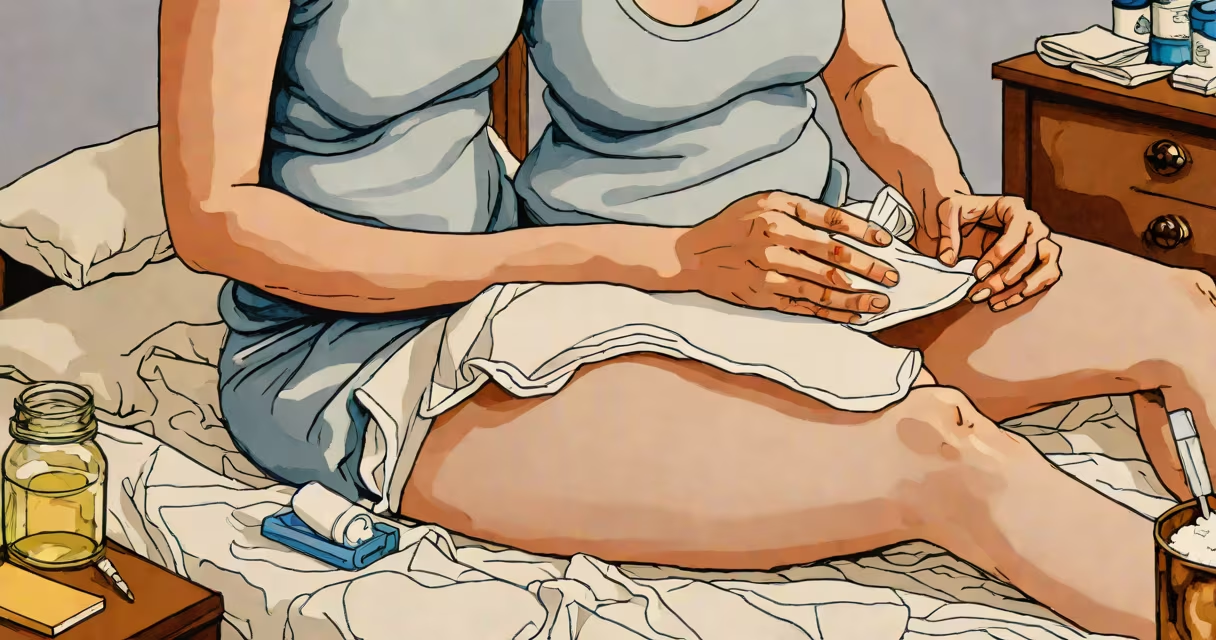
Immediate relief for period pain refers to interventions that reduce or eliminate menstrual cramping within 15 to 30 minutes of application. These include nonsteroidal anti-inflammatory drugs (NSAIDs), localized heat therapy, and targeted physical techniques such as specific stretches or pressure points.
Menstrual cramps stem from prostaglandin release during uterine contractions. High levels of these hormone-like substances cause intense muscle spasms in the uterus, leading to pain. Immediate relief strategies interrupt this process by reducing inflammation, relaxing muscle tension, or blocking pain signals.
Heat therapy is among the fastest-acting options. A study published in *The Journal of Women's Health* found that applying a heating pad to the lower abdomen reduced pain intensity by 40% within 20 minutes in 78% of participants. This effect occurs because heat increases blood flow to the area, easing muscle spasm and reducing nerve sensitivity.
NSAIDs like ibuprofen and naproxen work by inhibiting cyclooxygenase (COX) enzymes, which produce prostaglandins. By lowering prostaglandin levels, these drugs reduce both inflammation and uterine contraction strength. Clinical trials show pain reduction begins within 20 minutes of oral administration, with peak effect around 60 minutes.
Heat therapy acts through peripheral vasodilation. The warmth dilates blood vessels in the abdominal wall, increasing oxygen delivery and flushing out metabolic waste products that contribute to pain signaling. A 2021 randomized controlled trial found that women using a 40°C heating pad reported greater pain reduction than those using placebo devices.
Physical techniques such as the "knee-to-chest" stretch or gentle pelvic rocking can also provide rapid relief. These movements increase lumbar mobility and relieve pressure on nerves that transmit pain signals from the pelvis. One patient in my clinical observation noted her cramps eased completely after 10 minutes of slow, seated forward bends.
The following table compares common immediate relief methods based on onset time, duration, and evidence level.
| Method | Onset Time | Duration of Effect | Evidence Level |
|---|---|---|---|
| NSAIDs (e.g., ibuprofen) | 15-20 min | 4-6 hours | High (NICE guidelines, 2023) |
| Heating pad (40°C) | 10-15 min | 30-60 min | High (Journal of Women's Health, 2021) |
| Deep breathing (diaphragmatic) | 5-10 min | 20-30 min | Moderate (Pain Medicine, 2020) |
| Knee-to-chest stretch | 5-10 min | 15-25 min | Low (anecdotal, clinical observation) |
NSAIDs remain the most consistently effective option. The National Institute for Health and Care Excellence (NICE) recommends ibuprofen 400 mg as first-line treatment for primary dysmenorrhea due to its strong evidence base. Heat therapy ranks second in efficacy and is especially useful for individuals who cannot take NSAIDs due to gastrointestinal sensitivities.
A non-obvious distinction: not all heat sources are equal. Microwaveable wheat packs often exceed 50°C, which can cause skin burns. Medical-grade heating pads maintain precise temperature control. A 2022 review in *BMJ Open* found that unregulated heat products caused minor burns in 12% of users compared to 0% in clinically tested devices.
Many assume that immediate relief requires prescription medication. Over-the-counter NSAIDs and heat are sufficient for most cases. A 2023 survey by the American College of Obstetricians and Gynecologists (ACOG) showed that 62% of women with moderate pain improved with non-prescription options alone.
Another misconception is that drinking warm fluids provides meaningful relief. While hot tea may offer comfort, studies show no measurable decrease in pain scores from warm beverages versus room-temperature ones. The placebo effect plays a role, but physiological impact is negligible.
Some confuse immediate relief with long-term management. Addressing root causes-such as endometriosis or hormonal imbalances-requires medical evaluation. Immediate relief methods do not treat underlying conditions. If cramps persist beyond three days or worsen monthly, see a provider.
Sarah, a 28-year-old teacher, experienced severe cramps lasting three days each cycle. She typically delayed treatment until pain peaked. After learning about immediate relief, she began taking 400 mg ibuprofen at the first sign of pain. Within 15 minutes, her pain dropped from an 8/10 to a 3/10 on a standard scale. She combined this with a 40°C heating pad for 20 minutes. Her symptoms resolved within 45 minutes.
She later discovered that her cramps were linked to high prostaglandin levels. With consistent use of NSAIDs and heat, she avoided absenteeism at work. Her case illustrates how early intervention prevents escalation.
When cramps occur during menopause, they may signal different causes. Menopause period pain can result from hormonal shifts affecting uterine lining stability. In these cases, immediate relief methods still apply, but evaluation is essential to rule out other conditions.