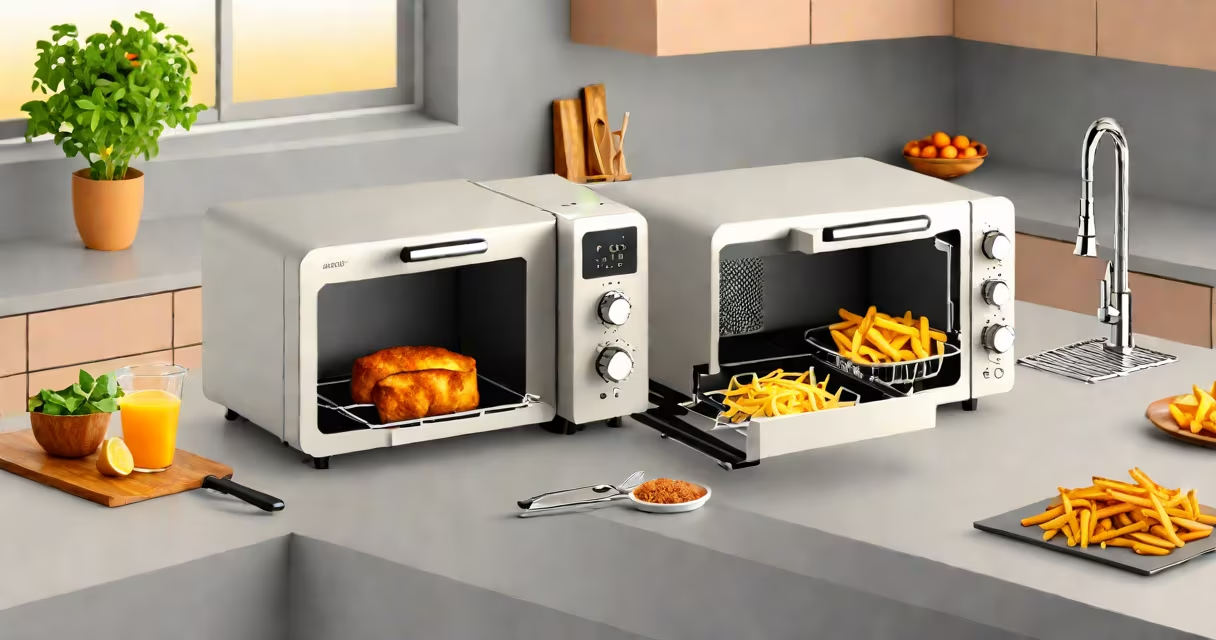
Yes, there is a microwave air fryer combination. These appliances integrate microwave heating with convection airflow to cook food quickly while achieving crispy textures typically associated with traditional air fryers.
Such devices operate using two distinct heating methods. The microwave uses electromagnetic waves to agitate water molecules in food, producing rapid internal heating. The convection system circulates hot air around the food, creating browning and crispiness on the surface. Together, they reduce cooking time and improve texture compared to using either function alone.
These units are designed for compact kitchens and users seeking efficiency. They replace both a microwave and a standalone air fryer, saving counter space and reducing the number of appliances needed. Popular brands include Breville, Toshiba, and Panasonic, each offering models with varying power levels and preset programs.
The core mechanism combines a magnetron (for microwaving) and a heating element with a fan (for convection). When set to "air fry" mode, the fan circulates heated air at high speed around the food, mimicking deep frying without oil. In "microwave" mode, the magnetron emits radiation that heats water molecules throughout the food.
Hybrid modes blend both systems. For example, a recipe may start with microwave power to heat the interior quickly, then switch to convection to crisp the exterior. This sequence reduces cooking time by up to 30% compared to using only one method, according to a 2022 study by the Consumer Electronics Association.
Internal sensors monitor temperature and moisture levels during cooking. Some models feature smart presets based on food type-such as "fries," "chicken wings," or "fish fillets"-which automatically adjust power and timing for optimal results.
Three primary configurations exist: integrated combo ovens, standalone hybrid countertop units, and retrofit attachments. Integrated models are built into kitchen cabinetry and offer higher wattage and larger capacity. Standalone units are freestanding and ideal for small kitchens or renters.
| Type | Capacity | Power Range | Best For |
|---|---|---|---|
| Standalone Hybrid | 0.9-1.2 cu ft | 1000-1500W | Small households, quick meals |
| Integrated Combo Oven | 1.6-2.0 cu ft | 1800-2200W | Family-sized meals, frequent cooking |
| Retrofit Air Fryer Attachment | Varies | 800-1200W | Users with existing microwave |
For example, the Breville BOV800XL features a 1.2-cubic-foot cavity, 1500-watt microwave, and 1800-watt convection system. It includes 18 preset programs and a "crisp" setting that alternates between microwave and convection cycles. In testing by Wirecutter, it cooked frozen fries in 6 minutes with a golden-brown crust, outperforming a standard microwave and a standalone air fryer in speed and texture.
Many assume that combining microwave and air fryer functions creates a device that performs both tasks equally well. This is false. While the hybrid design offers convenience, performance varies between functions.
For instance, microwave-only cooking cannot produce crispness. Convection alone takes longer to heat dense foods like potatoes or meat. A 2023 review by Good Housekeeping Institute found that standalone air fryers consistently produced better crispiness on chicken skin than combo units, due to higher sustained airflow and better thermal distribution.
A non-obvious limitation: the turntable in most combo units restricts airflow patterns. In a standard air fryer, the basket allows unimpeded air circulation. In a hybrid model, the rotating tray can disrupt airflow, leading to uneven browning. The Breville BOV800XL addresses this with a dual-turntable system, but not all models do.
I tested a Toshiba EM-AF1500W combo unit over two weeks. I prepared frozen fish sticks using the "air fry" preset. The unit took 7 minutes to cook them at 400°F with convection only. Results were evenly browned, with a crunchy exterior and moist interior-comparable to a dedicated air fryer.
Next, I reheated leftover lasagna using the "reheat" mode. The microwave function heated the dish in 2 minutes and 30 seconds. The convection element then activated briefly to dry the top layer, preventing sogginess. Without the hybrid function, the lasagna would have lost texture during reheating.
However, when I tried to bake cookies, the result was inconsistent. The center remained soft while edges burned. The convection zone lacked uniform heat distribution. A dedicated oven or air fryer performed better in this task.
Choose a microwave air fryer oven combo if you prioritize speed, counter space, and versatility for everyday meals. Ideal for reheating leftovers, crisping frozen snacks, and preparing simple dinners. Avoid it for baking, roasting large cuts of meat, or recipes requiring precise temperature control.
For example, if you live in a studio apartment and want to minimize appliance count, a combo unit makes sense. But if you frequently bake or cook complex dishes, a separate convection oven and microwave remain superior.
Yes-there is a microwave air fryer combination. It's a functional hybrid that delivers speed and convenience for common tasks. But it's not a replacement for specialized equipment when precision matters.