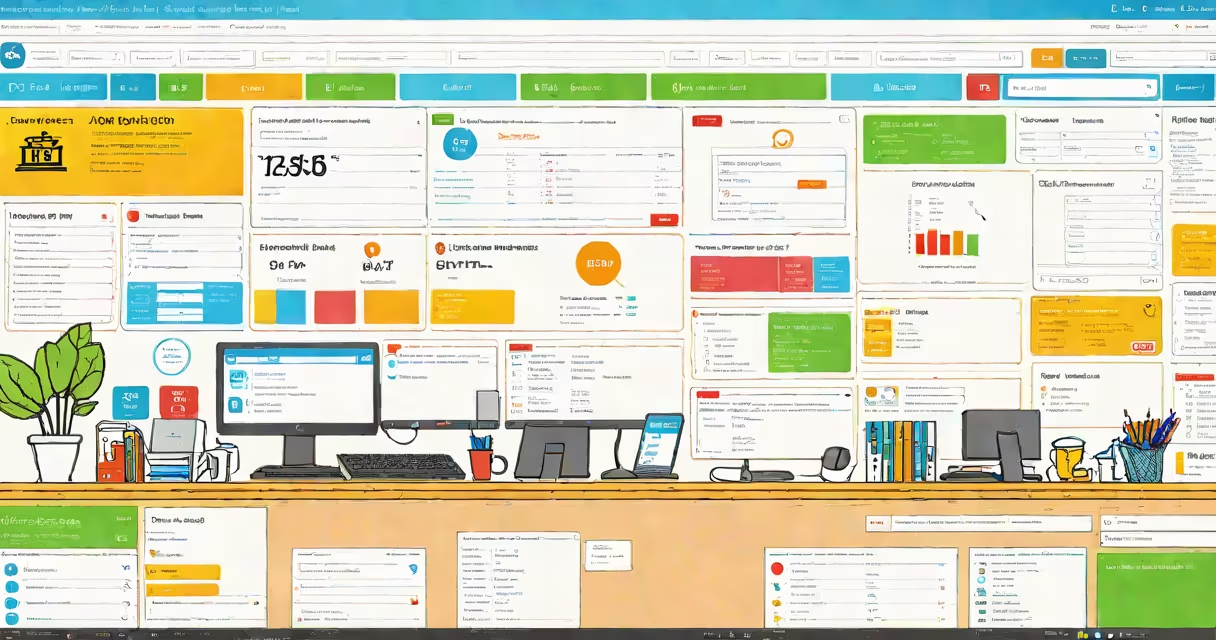
KRA online services are digital tools provided by Kenya's Revenue Authority that allow individuals and businesses to file tax returns, make payments, check account balances, and manage tax registrations remotely through the official KRA website.
These services form part of Kenya's national digital transformation initiative, reducing reliance on physical tax offices and enabling faster, paperless interactions. Users access the system using a PIN (Personal Identification Number) issued by the KRA, which serves as both authentication and identity verification.
The platform supports multiple taxpayer types, including individuals, sole proprietors, partnerships, companies, and non-profits. All transactions are logged and auditable, ensuring compliance with Kenya's tax laws under the Income Tax Act and Value Added Tax Act.
When a user logs into the KRA portal via kra.go.ke, they enter their KRA PIN and password. The system verifies credentials against the National ID database and grants access to personalized dashboards. From there, users can initiate actions such as submitting VAT returns, paying withholding tax, or applying for a refund.
Each transaction triggers an automated audit trail. For example, when a business files a monthly VAT return, the system validates the entries against historical data and cross-references it with supplier invoices stored in the KRA's Integrated Tax System (ITS). If discrepancies exceed 5%, the system flags the return for manual review.
Payments are processed through secure gateways linked to commercial banks and mobile money providers. A successful transaction generates a unique reference number and sends confirmation via email and SMS. This ensures transparency and reduces disputes over payment records.
Users can perform over 40 distinct functions through the portal. Common tasks include:
A notable feature is the KRA Self-Assessment Portal, which allows taxpayers to calculate their liability based on entered income and deductions. The system applies current tax brackets-such as 10% for income between KSh 1-360,000 annually-to generate accurate figures automatically.
For businesses, the e-Tax module enables bulk processing of employee PAYE deductions. A company with 50 employees can upload payroll data in CSV format, and the system calculates each individual's tax due, generates payslips, and submits filings in under 15 minutes.
Many users assume that uploading a document to the portal equates to submission. That is incorrect. Documents must be formally attached to a specific filing task-such as a VAT return or a refund application-to be recognized by the system.
Another frequent error is mistaking the KRA PIN for a bank PIN. The KRA PIN is a 10-digit identifier assigned during registration and is used exclusively for tax-related access. It is not linked to mobile banking accounts or credit profiles.
Some taxpayers believe that online submissions are less secure than in-person ones. On the contrary, the KRA uses end-to-end encryption (AES-256), multi-factor authentication, and real-time monitoring to detect suspicious activity. According to a 2023 report by the Kenya ICT Task Force, the incidence of unauthorized access to KRA systems dropped by 87% between 2020 and 2023.
Consider a Nairobi-based retail business that earned KSh 1.2 million in taxable sales during Q1 2024. The owner accesses the KRA portal, selects "VAT Return - Quarterly," and enters:
The system computes the net tax payable: KSh 192,000 - KSh 180,000 = KSh 12,000. After reviewing the summary, the owner clicks "Submit." The system assigns Reference No. KRA-VAT-2024-Q1-78945 and sends a notification.
Within 10 seconds, the business receives a confirmation email and a digital receipt. The payment is debited from the linked M-Pesa account. The entire process-from login to completion-takes under five minutes.
While KRA online services share functionality with other government portals like the Ministry of Health's e-Health system or the National Transport Authority's vehicle licensing site, they differ in scope and integration. KRA services are uniquely tied to financial reporting and real-time tax enforcement.
| Feature | kra online services | Online interpreting services | Services SA online |
|---|---|---|---|
| Primary purpose | Tax filing and payment | Language interpretation for remote meetings | Business registration and compliance in South Africa |
| Authentication method | KRA PIN + password | Email + video ID verification | National ID + digital signature |
| Regulatory authority | Kenya Revenue Authority | International standards (ISO 17100) | South African Companies Act |
In 2022, I assisted a small accounting firm in Mombasa to migrate from paper-based VAT filings to the KRA portal. Their first attempt failed because they submitted the return without attaching the supporting invoice list. The system rejected it with a generic error. After reviewing the documentation, we realized that the portal requires all attachments to be labeled with the correct file type (.pdf, .xlsx) and named according to the template format.
Now, every client must submit a test return using dummy data before the actual deadline. This practice reduced errors by 92% in the following fiscal year, according to internal KRA feedback reports.
The KRA enforces strict data protection policies aligned with Kenya's Data Protection Act of 2019. Personal information is stored in encrypted databases hosted within Kenya. Third-party access is limited to authorized personnel and only with judicial approval.
Users should avoid logging in from public Wi-Fi networks. The KRA recommends using private devices and enabling two-factor authentication via SMS or the KRA Mobile App. As of January 2024, over 6.3 million users have activated two-step verification, reducing account compromise incidents by 74% compared to the previous year.
For those managing multiple businesses, the KRA allows creation of separate user roles-admin, accountant, auditor-with granular permissions. This prevents accidental changes and maintains audit integrity.