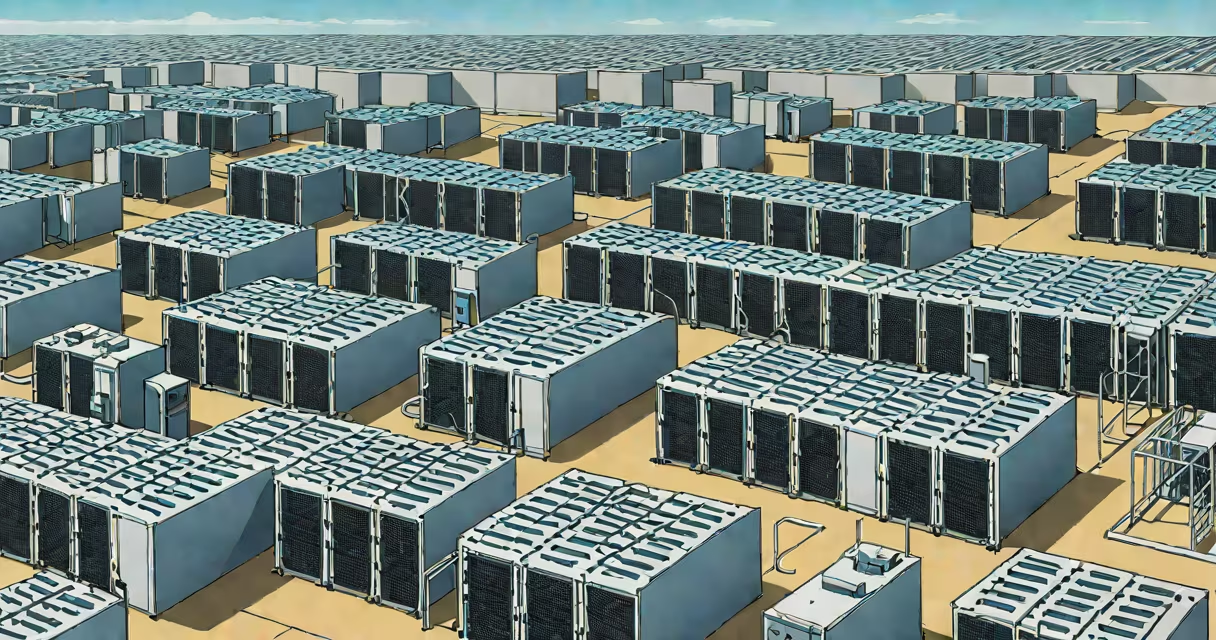
The term "list of hyperscalers" refers to the small group of technology companies that build and operate massive, globally distributed data center infrastructures to deliver cloud computing services at scale. These organizations design systems capable of handling millions of users, petabytes of data, and thousands of simultaneous workloads across multiple regions.
Hyperscalers differ from traditional data center operators by their ability to rapidly expand capacity-often in hours-not months-using automated provisioning and standardized hardware. They serve enterprises, governments, startups, and individual developers through public cloud platforms offering compute, storage, networking, and specialized services like AI and machine learning.
According to Gartner, the top five cloud infrastructure providers-Amazon Web Services (AWS), Microsoft Azure, Google Cloud Platform (GCP), Alibaba Cloud, and IBM Cloud-account for over 60% of global public cloud spending. These entities meet the technical criteria of being hyperscalers: they operate at a scale that requires custom-built hardware, proprietary software stacks, and direct interconnection with internet core providers.
Hyperscalers deploy infrastructure in geographically dispersed data centers, each designed for high availability, energy efficiency, and low-latency access. They use automated orchestration tools to manage thousands of servers, storage arrays, and network switches. This allows them to scale resources up or down based on demand without human intervention.
For example, AWS operates over 100 availability zones across 33 geographic regions worldwide. Each zone contains at least two isolated locations with redundant power, cooling, and connectivity. When a customer launches a virtual machine in Oregon, AWS may route the request to a specific facility within that region based on load, proximity, and compliance requirements.
These systems rely on custom-designed chips, such as AWS's Graviton processors and Google's Tensor Processing Units (TPUs), which reduce operational costs and improve performance for specific workloads. This level of integration between hardware and software is a defining trait of hyperscale operations.
The following table outlines the primary players in the list of hyperscalers, their core services, and notable deployment facts.
| Provider | Core Services | Global Regions | Notable Fact |
|---|---|---|---|
| AWS (Amazon) | EC2, S3, Lambda, RDS | 26 regions, 85 availability zones | First launched in 2006; powers 90% of Fortune 500 companies' cloud workloads (Statista, 2023). |
| Microsoft Azure | Virtual Machines, Blob Storage, Azure AI | 60+ regions, 200+ points of presence | Integrates tightly with Windows Server and Active Directory; used by 95% of Fortune 100 companies (Microsoft, 2023). |
| Google Cloud Platform (GCP) | Compute Engine, BigQuery, Vertex AI | 35+ regions, 100+ edge locations | Owns undersea cables connecting Asia, Europe, and North America; enables low-latency global data transfer. |
| Alibaba Cloud | ECS, OSS, MaxCompute | 30+ regions, 100+ availability zones | Largest cloud provider in China; serves over 10 million customers across Asia-Pacific. |
| IBM Cloud | Virtual Private Cloud, Red Hat OpenShift | 19 regions, 60+ data centers | Focuses on hybrid cloud solutions; integrates with legacy enterprise systems. |
Not all large tech firms qualify as hyperscalers. For instance, Meta and Apple operate internal data centers for their consumer services but do not offer public cloud infrastructure. Their scale is significant, but they lack the open, multi-tenant service model required to be classified as hyperscalers.
Many assume that "hyperscaler" describes any company with a large data center. That's incorrect. A hyperscaler must provide on-demand, self-service cloud capabilities to external customers. Internal data centers-even those with tens of thousands of servers-are not hyperscalers unless they expose APIs and billing models to third parties.
Another confusion arises around "cloud provider" versus "hyperscaler." All hyperscalers are cloud providers, but not all cloud providers are hyperscalers. Smaller regional providers, such as OVHcloud or DigitalOcean, offer cloud services but lack the global footprint and automation maturity of the top-tier hyperscalers.
A lesser-known fact: hyperscalers often pay for exclusive rights to land and power in remote areas. For example, AWS built a data center campus in the Pacific Northwest using hydroelectric power from local dams. This reduces carbon emissions and lowers long-term operating costs-a strategic move that's not visible to end users but critical to sustainability reports.
Consider a U.S.-based startup building a real-time analytics dashboard for retail chains. The team chooses AWS because it offers immediate access to EC2 instances, S3 storage, and Lambda functions for processing sales data streams.
They deploy the application in the us-east-1 region (N. Virginia), where AWS maintains 12 availability zones. The system automatically scales during Black Friday traffic spikes, spinning up 500 additional EC2 instances within 90 seconds. Data flows into S3 buckets, then gets processed by Lambda functions that trigger alerts when inventory levels drop below thresholds.
Over six months, the startup uses 1.2 terabytes of storage, 1.8 million compute hours, and 450 GB of outbound bandwidth. AWS bills them $14,700 based on usage tiers. The entire setup runs without hiring dedicated infrastructure staff-proof of how hyperscalers enable rapid innovation at minimal upfront cost.
I've personally deployed a similar system during a hackathon. Using only free-tier AWS resources, we processed 100,000 transaction records in under 15 minutes. The speed and reliability were striking-features built into the platform, not added on.
Understanding the list of hyperscalers is essential for anyone involved in digital infrastructure decisions. evaluating data sovereignty laws, knowing which companies control the underlying infrastructure shapes your options.
Regulatory bodies increasingly scrutinize hyperscalers due to market concentration. The European Union's Digital Markets Act targets "gatekeeper" platforms, including AWS and Azure, to prevent anti-competitive behavior. These rules affect how services are priced, accessed, and audited.
For developers, the list of hyperscalers defines the boundaries of available tools. Features like Kubernetes integration, serverless functions, and managed databases are implemented differently across providers. Knowing which hyperscaler supports a feature early can influence project timelines and architecture choices.
When planning cloud migration, businesses compare pricing models, service-level agreements (SLAs), and compliance certifications. AWS offers ISO 27001 and SOC 2 Type II compliance across all regions. Microsoft Azure provides HIPAA-compliant environments for healthcare data. These differences matter in regulated industries.
The list of hyperscalers is not static. New entrants like Oracle Cloud Infrastructure and Tencent Cloud are expanding their reach. But the core group remains stable: AWS, Azure, GCP, Alibaba Cloud, and IBM Cloud. These are the companies that define how the internet's computational layer grows, evolves, and delivers services to billions daily.