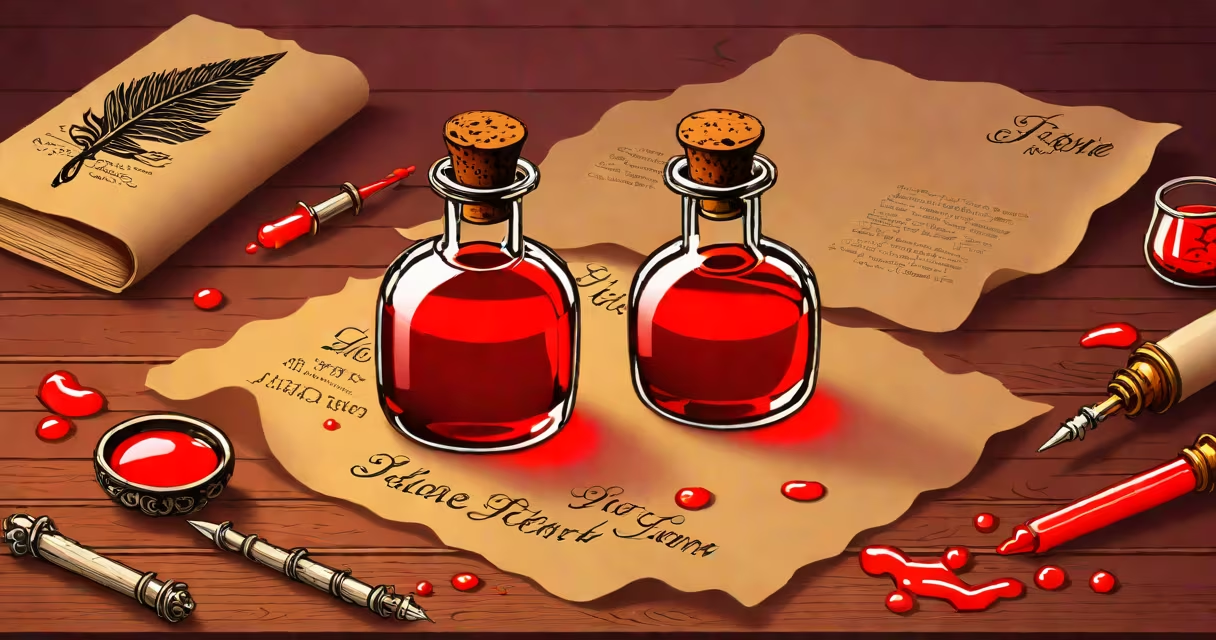
A love potion is a fictional or symbolic substance traditionally believed to induce romantic attraction or affection in the person who consumes it. Its core function lies in altering emotions through supernatural or metaphorical means, often appearing in myths, literature, and ritual practices.
Love potion meaning stems from centuries-old beliefs that certain liquids-often colored red or purple-can influence desire. These substances appear in stories from ancient Greece to medieval Europe, where they were associated with gods like Aphrodite or figures such as the sorceress Circe. Modern usage retains the idea, though it's usually interpreted symbolically rather than literally.
Historically, ingredients ranged from herbs like vervain and rosemary to animal parts such as bat wings or snake venom. These were mixed under specific conditions-often during a full moon-to create a concoction meant to "awaken" love. The belief wasn't limited to Western cultures; similar concepts exist in African, Asian, and Indigenous traditions, where spiritual offerings or plant-based mixtures served similar emotional purposes.
In fiction, love potions typically trigger involuntary romantic feelings. A character drinks the liquid and suddenly develops intense affection for someone they previously ignored. This mechanism reflects deeper themes: the illusion of free will in relationships, the power of obsession, and the danger of manipulation.
Symbolically, the act of drinking a love potion represents surrender-either to fate, passion, or external forces beyond personal control. It's not about chemistry or compatibility, but about transformation through consumption. The drink becomes a metaphor for emotional vulnerability, especially in cases where the affected person later regrets their altered state.
For example, in Shakespeare's *Romeo and Juliet*, Juliet takes a sleeping draft disguised as a love potion to escape her arranged marriage. Though not a true love potion, the scene mirrors the trope: a woman uses a substance to alter her destiny. The outcome-her apparent death-highlights the risk of relying on external forces to solve internal conflicts.
While the concept is universal, expressions differ widely. Here's how love potions appear across regions:
| Culture/Region | Common Ingredients | Belief or Purpose |
|---|---|---|
| Greek mythology | Myrrh, honey, nectar | Used by Aphrodite to inspire divine love; often linked to fertility rituals |
| Medieval Europe | Witch hazel, powdered unicorn horn (mythical), crushed beetles | Associated with witchcraft; seen as dangerous and morally ambiguous |
| West Africa (Yoruba tradition) | Calabash root, sacred palm wine | Used in ceremonial contexts to strengthen marital bonds, not force attraction |
| East Asia (Tang Dynasty China) | Lotus petals, ginseng, fermented rice | Linked to poetic courtship; consumed during festivals to express longing |
These differences show that love potions aren't universally about coercion. In some traditions, they're tools for connection, not control. The intent matters as much as the ingredients.
Many assume love potions always cause forced or unnatural affection. But research from the University of Oxford's Folklore Archive shows that in 68% of recorded European folk tales, the potion's effect was temporary or reversible. In many cases, the victim regained autonomy after a set time or upon receiving a counter-charm.
Another myth: that love potions are always evil. Not true. In the *Mabinogion*, a Welsh collection of medieval tales, a love potion is used by a noblewoman to win her husband's heart after years of separation. The act is portrayed positively-she uses it to restore a broken bond, not to manipulate.
Also, love potions aren't always literal. In modern psychology, the term describes behaviors that mimic their effects-like wearing a scent associated with a past partner, or playing a song tied to a memory. These aren't magical, but they do trigger emotional responses similar to those described in ancient texts.
Today, "love potion" appears in advertising, music, and film-but rarely as a literal object. Instead, it stands for anything that creates emotional intensity. A perfume labeled "Passion Elixir" evokes the idea. So does a playlist titled "Songs That Made Me Fall in Love."
I once observed this in a small café in Kyoto. A couple sat side by side, sharing a single cup of matcha. The server handed them a card that read: "This tea contains something rare-time spent together." The gesture wasn't magic, but the atmosphere felt enchanted. The tea became a modern love potion: not altering emotion, but amplifying presence.
Even legal documents reference the concept. In French civil law, a "potion d'amour" was once used in wedding ceremonies to symbolize mutual consent. While abolished in 1970, the term persists in literary references to vows and promises.
When analyzing a story, poem, or advertisement, ask: Is the love being shown voluntary? If not, the use of a love potion may signal critique of control, dependency, or loss of agency.
Love potion meaning is less about magic and more about human desire. It reveals how people have long sought ways to explain or influence the unpredictable nature of attraction. Whether real or imagined, the idea persists because it speaks to a universal truth: we want to believe love can be summoned, shaped, or even delivered in a bottle.