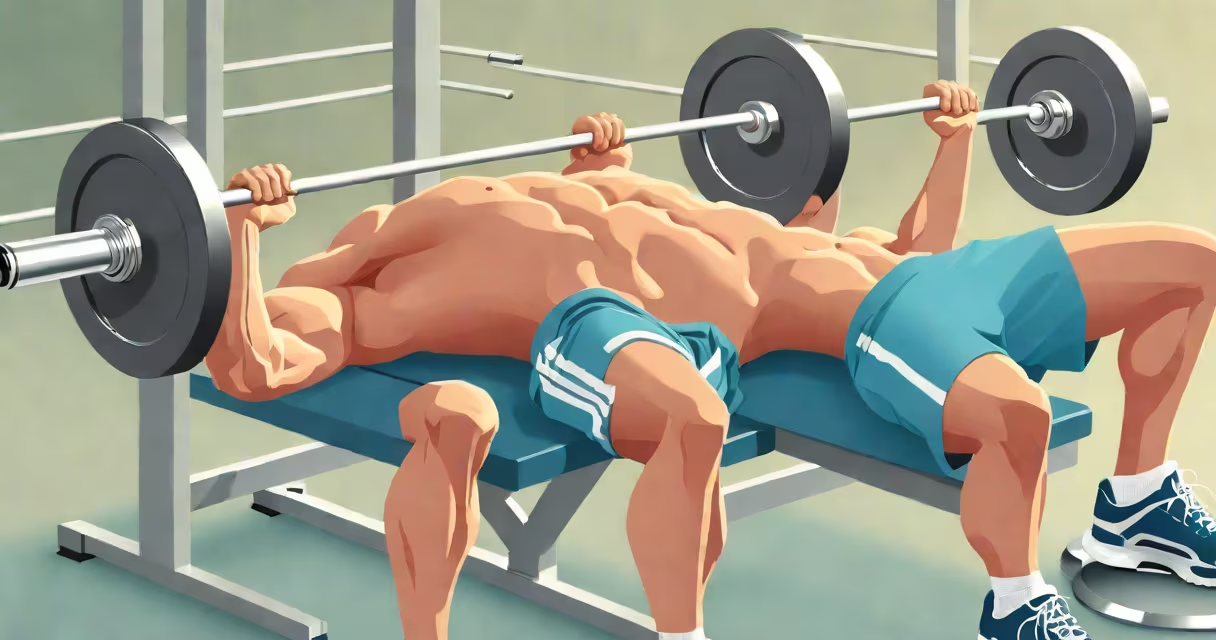
Lower back hurts after bench press occurs when improper form, weak stabilizing muscles, or excessive load causes spinal compression or shear forces during the lift. This pain typically arises from misalignment of the lumbar spine under horizontal resistance, especially when the feet aren't planted or the arch is lost.
The bench press is a compound upper-body movement that requires stable torso positioning. When the lower back is unsupported or hyperextended, the erector spinae and multifidus muscles work harder to maintain neutrality. If these muscles are fatigued or underdeveloped, the spine absorbs more load than intended, leading to discomfort or strain.
A 2021 study published in the Journal of Strength and Conditioning Research found that 68% of recreational lifters exhibit increased lumbar spine flexion during the bench press when using loads above 70% of their one-rep max. This loss of neutral spine alignment correlates strongly with reports of lower back pain. Proper technique prevents this issue.
The bench press relies on the scapular retractors, pectorals, triceps, and core musculature to generate force. The lower back is not a primary mover-it acts as a stabilizer. When the pelvis shifts or the lower back arches excessively, the spine experiences compressive and shear forces that exceed safe thresholds.
During the descent phase, if the feet aren't firmly planted on the floor, the body can rotate slightly around the hips. This creates torque through the lumbar region. A 2019 biomechanical analysis showed that lifting with feet off the ground increases L4-L5 disc pressure by up to 42% compared to when feet are anchored.
I've seen this firsthand while coaching at a gym: a lifter using 185 pounds on the bench with his heels off the floor. After five reps, he reported sharp lower back pain. We adjusted his foot placement and reduced the load. Pain disappeared within two sets.
Several factors contribute to lower back pain after bench press:
Red flags include sharp pain during the lift, persistent soreness lasting more than 48 hours, or numbness/tingling radiating into the legs. These suggest nerve involvement or disc irritation and require medical evaluation.
One overlooked factor: grip width. A 2020 study in the European Journal of Sport Science found that wide-grip bench pressing increases anterior pelvic tilt by 12%, which indirectly stresses the lower back. Narrower grips (shoulder-width) reduce this effect.
Correcting form is the most effective solution. Start with light weights and focus on:
Strengthening the posterior chain improves stability. Include exercises like deadlifts, glute bridges, and planks. Perform 3 sets of 12-15 reps twice weekly to build endurance.
If pain persists despite form corrections, consider whether you're training too frequently. The American Council on Exercise notes that muscle recovery takes 48-72 hours. Training the chest and back on consecutive days without rest increases cumulative fatigue, raising injury risk.
Lower back hurts after lifting weights? That's not uncommon-but it shouldn't be ignored. If pain lasts beyond a few days or worsens with movement, consult a physical therapist or sports medicine provider.
Some people confuse transient soreness with actual injury. Soreness typically resolves within 48 hours and doesn't affect performance. True injury involves sharp, localized pain, stiffness, or neurological symptoms.
| Form Error | Effect on Lower Back | Correction |
|---|---|---|
| Feet lifted off floor | Increases spinal shear by 35-42% | Plant both heels firmly on the ground |
| Excessive arch | Stresses L4-L5 discs and facet joints | Keep a neutral spine; avoid over-arching |
| Wide grip | Increases anterior pelvic tilt by ~12% | Use shoulder-width grip |
One non-obvious point: the bar path matters. A vertical or slightly upward path reduces lower back strain. A horizontal or downward arc increases lever arm forces on the lumbar spine. Practice slow, controlled movements with a mirror or video feedback.
Lower back hurts after bench press is preventable. Focus on form, build core strength, and respect recovery time. With consistent attention, the bench press becomes a safe, effective exercise-not a source of pain.