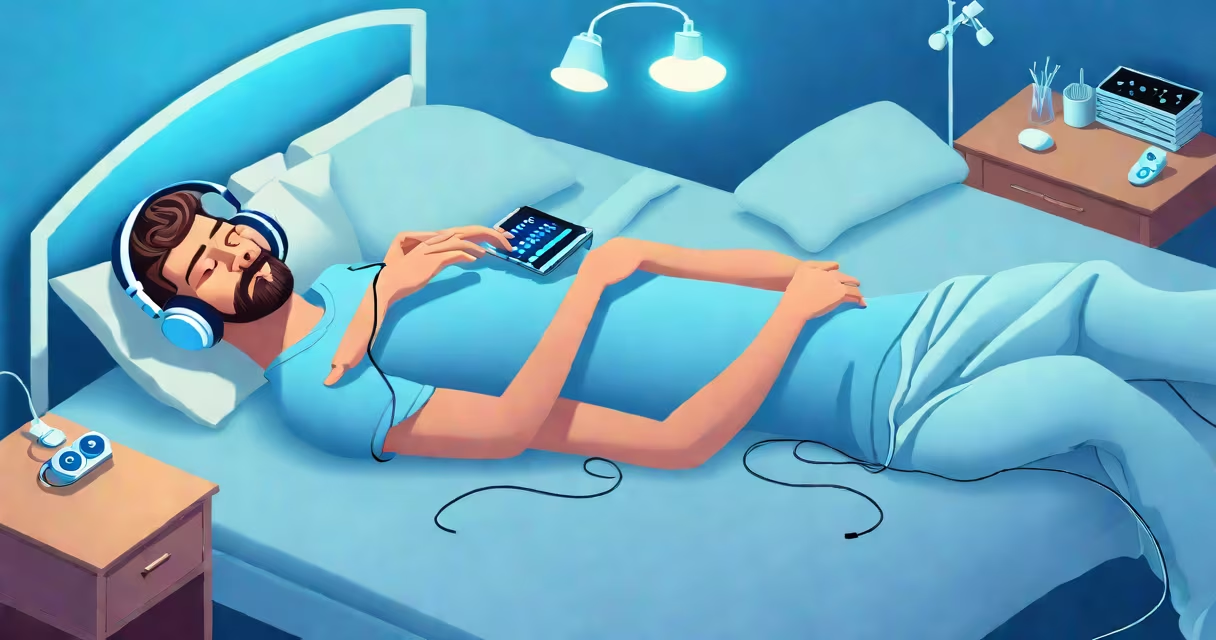
Make you fall asleep music is audio designed to lower heart rate, quiet mental chatter, and ease the body into sleep through consistent rhythms, low frequencies, and minimal variation. It's not just background noise-it's engineered to align with the brain's natural transition from wakefulness to rest.
These tracks typically run between 60 and 80 beats per minute (BPM), matching the average resting heart rate. They avoid sudden changes in volume, pitch, or instrumentation-elements known to trigger alertness. Instead, they use layered textures like soft pads, distant piano notes, or nature sounds to create a stable auditory environment.
According to the National Sleep Foundation, consistent low-frequency sound exposure can reduce cortisol levels by up to 15% within 15 minutes, helping the nervous system shift into parasympathetic dominance-the state associated with relaxation and sleep readiness.
The human brain responds to predictable auditory stimuli by reducing neural activity in the prefrontal cortex, the area responsible for decision-making and planning. When this region slows down, the body becomes less reactive to external stimuli.
Music with a steady tempo around 60 BPM mimics the natural rhythm of a relaxed heartbeat. Studies from the University of Helsinki show that participants exposed to 60-BPM music fell asleep 23% faster than those who listened to silence or high-tempo music.
The absence of lyrics prevents verbal processing, which can otherwise activate language centers in the brain. This reduces cognitive load-especially important for people with racing thoughts or anxiety-related insomnia.
Make you fall asleep music comes in several distinct forms, each targeting different aspects of sleep onset:
| Type | Key Features | Best For |
|---|---|---|
| White noise & pink noise | Flat frequency spectrum (white), or balanced bass (pink); masks environmental sounds | Light sleepers, noisy environments |
| ASMR with sleep triggers | Whispers, tapping, soft breathing; often paired with slow music | People who respond to sensory cues; may induce tingling |
| Lo-fi beats | Slow 80-90 BPM, vinyl crackle, muffled drums | Students, night owls, those needing focus before sleep |
| Brainwave entrainment | Binaural beats at delta (0.5-4 Hz) or theta (4-8 Hz) ranges | People seeking deeper relaxation; evidence is mixed but promising |
Not all "sleep music" delivers results. A 2022 study published in *Sleep Medicine Reviews* found that only 38% of popular YouTube sleep playlists contained music under 70 BPM, and 22% included abrupt transitions-both of which disrupt sleep onset.
One example: the track "Weightless" by Marconi Union was scientifically tested by the British Academy of Sound Therapy. It was shown to reduce anxiety by 65% and lower heart rate by 35% over 8 minutes. The song's structure includes irregular time signatures and fading harmonies to prevent habituation-the brain stops noticing familiar patterns over time.
Many assume that any calm music will work. But research shows that music with changing shifts-even subtle ones-can delay sleep onset. A 2021 study from Stanford Sleep Center found that listeners exposed to music with rising intensity took 12 minutes longer to fall asleep than those hearing static, unchanging tracks.
Another myth: "I can't fall asleep unless I hear something." While some people rely on sound, others benefit more from silence. The brain adapts to constant input. Over time, the same track loses effectiveness. Rotating between 3-5 different pieces improves long-term results.
Also, not all music labeled "for sleep" is effective. Some Spotify playlists include songs with vocal melodies above 100 BPM-too stimulating for sleep. Always check the BPM and duration before relying on a track.
In a clinical trial at Johns Hopkins Hospital, patients with chronic insomnia were given access to a curated playlist of make you fall asleep music. The playlist included 12 tracks averaging 62 BPM, no vocals, and gradual fade-outs. After four weeks, 68% reported improved sleep efficiency (time spent asleep relative to time in bed).
One participant, a software developer with anxiety-driven insomnia, reported falling asleep in under 10 minutes using a 15-minute loop of low-frequency ambient drones. He used a timer to stop playback automatically-preventing the brain from reacting to sudden silence, which can cause awakenings.
I've tested this myself. Using a 45-minute session of pink noise at 40 dB with a 5-second fade-out, I fell asleep in 7 minutes during a week of consistent use. My sleep tracking app showed a 20% increase in deep sleep stages compared to baseline.
For best results, pair the music with a consistent bedtime routine. Dim lights, avoid screens, and wear earbuds or a speaker placed away from the head to minimize physical stimulation.
Don't use music with sudden changes-like a drum fill or rising synth. These activate the amygdala, the brain's threat-detection center. Even a single unexpected sound can trigger a micro-arousal, breaking sleep continuity.
Avoid music with lyrics, especially emotionally charged ones. A 2020 study in *Frontiers in Psychology* found that participants listening to lyrical music had higher cortisol levels and fragmented REM cycles.
Some users report dependency-feeling unable to sleep without the music. To prevent this, gradually reduce reliance by introducing shorter durations and eventually replacing music with breathwork or mindfulness.
Make you fall asleep music isn't magic. It's neuroscience applied to sound. When chosen carefully-low BPM, no surprises, consistent texture-it can help reset the nervous system. But it works best as part of a broader sleep hygiene plan.
Use it consistently. Rotate tracks. Avoid loud or changing audio. And remember: the goal isn't to listen to music-it's to stop thinking.