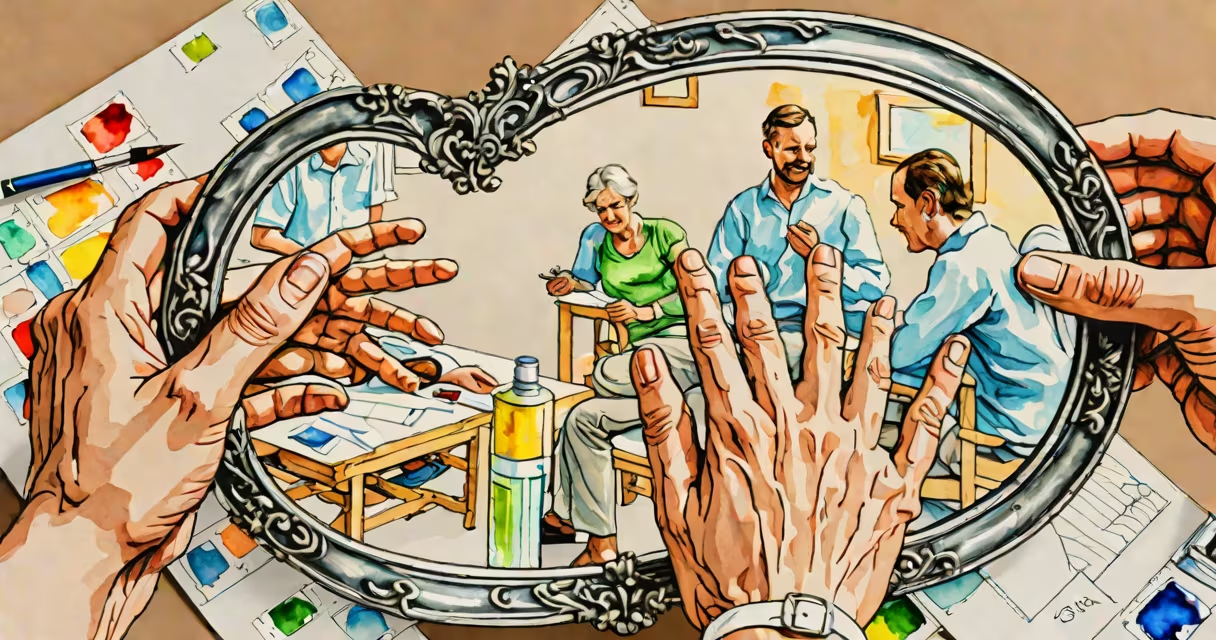
Mirror therapy for phantom limb pain is a non-invasive rehabilitation technique that uses a mirror box to create the illusion of movement in a missing limb, reducing pain through visual feedback and neural reorganization. It leverages the brain's plasticity to correct misfiring signals from the motor cortex after amputation.
The therapy relies on the principle that the brain maps body parts to specific regions in the sensorimotor cortex. After limb loss, these areas don't deactivate-they remain active and sometimes fire erratically, leading to painful sensations. Mirror therapy redirects attention to the intact limb while creating a visual illusion of the missing limb moving, which helps recalibrate faulty neural circuits.
Patients sit with their intact limb placed on one side of a mirror box and the stump on the other. Looking into the mirror, they see the reflection of their healthy hand, making it appear as though both limbs are present and moving together. This synchronized visual input helps reduce the mismatch between expected and actual sensory feedback, a core driver of phantom pain.
When a person moves their intact hand while looking at its reflection in the mirror, the brain interprets the image as the missing limb moving. This creates a coherent sensory-motor loop that was disrupted by amputation. Over time, repeated sessions help the brain update its internal model of the body, reducing the frequency and intensity of phantom limb pain.
Functional MRI studies show that mirror therapy activates the primary motor cortex and somatosensory areas associated with the missing limb. These changes correlate with reduced pain reports. A 2016 study published in *Neurorehabilitation and Neural Repair* found that 70% of participants experienced significant pain reduction after four weeks of daily 15-minute sessions.
Research from the University of Pittsburgh confirms that mirror therapy improves motor imagery accuracy and reduces cortical reorganization abnormalities linked to chronic pain. The effect is strongest when therapy begins within six months of amputation, suggesting early intervention yields better outcomes.
While the classic setup uses a mirror box, several formats exist:
| Type | Setup | Use Case | Effectiveness |
|---|---|---|---|
| Mirror Box | Flat mirror split vertically; stump on one side, intact limb on the other | Lower-limb amputations, upper-limb cases | High (70-80% pain reduction in trials) |
| Digital Mirror Therapy | Video feed via tablet or VR headset showing live reflection | Home use, remote therapy, patients with limited mobility | Comparable to physical boxes; higher adherence due to convenience |
| Full-Body Mirror Setup | Large mirror placed at waist level; patient stands facing it | Upper-body amputations, complex movements | Limited evidence; useful for gait training and coordination |
A 2020 randomized controlled trial comparing mirror box and digital mirror therapy found no significant difference in pain reduction at 12 weeks. Digital versions showed higher compliance, especially among older adults who struggled with physical setup.
One common mistake is treating mirror therapy as a standalone solution. It works best when combined with other interventions like graded motor imagery, cognitive behavioral therapy, and physical therapy. A 2021 review in *PLOS ONE* emphasized that multimodal approaches outperform isolated mirror therapy by 35% in long-term pain relief.
Mirror therapy is widely used in rehabilitation centers, prosthetic clinics, and outpatient physical therapy settings. It's recommended by the American Academy of Physical Medicine and Rehabilitation (AAPM&R) for patients with persistent phantom limb pain lasting more than three months post-amputation.
It's particularly effective for patients experiencing "cramping" or "burning" sensations in the missing limb-types of pain often resistant to medication. For example, a 2019 case study documented a 62-year-old veteran with severe right-hand phantom pain after a traumatic amputation. After eight weeks of daily mirror therapy, his pain score dropped from 8/10 to 2/10 on the Visual Analog Scale.
Contrary to popular belief, mirror therapy doesn't work for everyone. About 15-20% of patients report no improvement or even increased discomfort. This may stem from underlying psychological factors such as depression or high anxiety, which interfere with neural plasticity. Patients with dissociative symptoms or PTSD should undergo screening before starting.
Many assume mirror therapy is purely psychological or placebo-driven. This is incorrect. The pain relief stems from measurable changes in brain activity, not imagination. fMRI scans confirm activation in the dorsal premotor cortex and supplementary motor area during mirror tasks-even in patients who report no subjective change.
Another misconception is that mirror therapy can restore sensation or function in the missing limb. It cannot. The goal is pain reduction and improved motor control of the remaining limb. The illusion does not regenerate nerves or restore touch perception.
Some patients avoid mirror therapy because they fear confronting the absence of their limb. This emotional resistance is valid. A therapist should assess readiness before beginning. One clinician reported that patients who engaged in preparatory counseling had a 40% higher retention rate during treatment.
In 2022, a 44-year-old woman lost her left leg below the knee due to complications from diabetes. She experienced severe phantom pain, rated 9/10, interfering with sleep and mobility. Her care team prescribed mirror therapy using a digital mirror app paired with weekly physical therapy sessions.
She performed 15 minutes of bilateral hand and foot movements daily for six weeks. By week four, she reported a 50% drop in pain. At six weeks, her pain score was 3/10. Brain imaging showed normalized activity in the motor cortex. She later resumed walking with a prosthesis, citing improved confidence and reduced fear of movement.
This case illustrates that mirror therapy is most effective when integrated into a broader rehabilitation plan. It's not a cure, but a tool to help the nervous system adapt.
Despite its simplicity, mirror therapy for phantom limb pain is backed by neuroscience, clinical trials, and real-world results. It's not magic-it's neuroplasticity in action.